
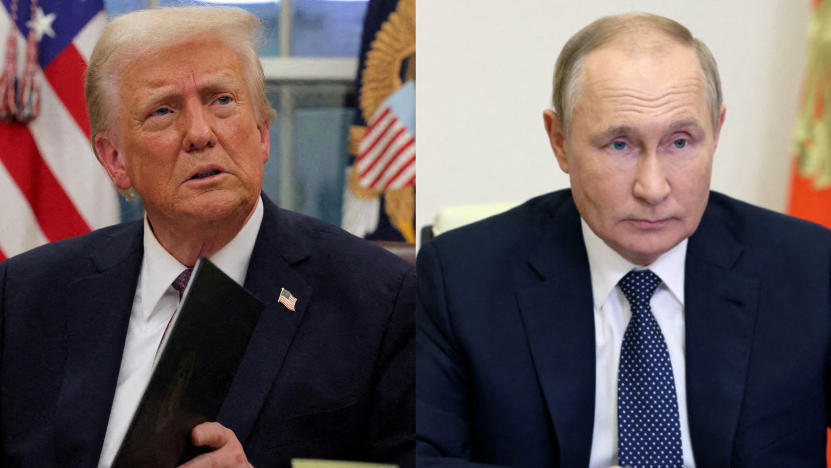

US President Donald Trump’s latest statement about the Ukraine war has raised concerns that he may have indirectly helped Russian President Vladimir Putin. On Monday, Trump announced that he would impose a 100% tariff on Russia if Putin did not agree to a peace deal within 50 days. While Trump’s supporters called this an ultimatum, many experts believe it actually benefits Russia by giving Putin more time to continue his attacks.
Putin Free to Continue Attacks for 60 Days
According to reports from Axios, Putin told Trump during a phone call on July 3 that Russia would launch a major ground offensive in the next 60 days to capture more Ukrainian territory. This offensive is expected to end by September 1.
After this call, Trump publicly said he was “disappointed” with Putin and complained about receiving “a lot of bullshit” from him.
However, Trump’s tariff deadline is set for 50 days from his announcement, which will fall after Putin’s planned offensive ends. As a result, analysts believe Trump’s plan allows Russia to continue its attacks freely for the next two months, knowing that the US will not take action until the offensive concludes.
Why Trump’s Tariff Threat Won’t Work
Trump has long believed that tariffs can solve major problems, including wars. But experts say this strategy won’t work against Russia. Last year, trade between the US and Russia was only $3.5 billion, with Russia exporting $3 billion worth of goods to the US and importing just $500 million. This limited trade relationship gives the US little power to pressure Russia using tariffs.
Moreover, tariffs are taxes paid by US importers, not by the exporting country. So, even if Trump imposes 100% or even 500% tariffs, the financial burden will fall on American businesses that buy goods from Russia, not on Russia itself.
The Only Possible Option: Secondary Tariffs
One possible way Trump could use trade as leverage is by imposing ‘secondary tariffs.’ These would apply to countries that continue trading with Russia. A bipartisan Senate bill has proposed imposing 500% secondary tariffs on countries like China and India that buy Russian oil and gas. The goal is to reduce Russia’s revenue and weaken its ability to fund the war.
Senator Lindsey Graham, who supports the proposal, called secondary tariffs a “sledgehammer” against Russia’s war machine. However, these tariffs could also damage US trade relations with countries like China and India.
If Trump were to impose secondary tariffs, it could harm ongoing trade negotiations with both nations. China, in particular, holds significant influence due to its control over rare earth minerals, which are essential to US industries. If China faces tariffs, it could cut off rare earth supplies, forcing Trump to reconsider his actions.
Trump Still Has Options to Support Ukraine
Even though Trump’s current plan may help Putin in the short term, there are still ways he can support Ukraine if he chooses to act. If Trump follows through on his promises to send Patriot air defense systems and long-range missiles, Ukraine’s military could better protect its civilians and even strike deeper into Russian territory.
Ukraine has already shown its ability to carry out successful attacks inside Russia using drones. Its “Operation Spider Web” destroyed about one-third of Russia’s long-range bombers and surveillance planes.
The Financial Times recently reported that Trump asked Ukrainian President Volodymyr Zelenskyy whether Ukraine could strike Moscow. Zelenskyy replied that Ukraine could hit Moscow if given the right weapons. Last week, Trump said he planned to send “very sophisticated” military equipment to Ukraine.
Earlier Actions Raised Doubts About Trump’s Support
However, doubts remain about whether Trump will genuinely support Ukraine. Earlier this year, Trump and his deputy, JD Vance, criticized Zelenskyy during his visit to the White House. Shortly after, Trump stopped military aid and intelligence-sharing with Ukraine. He also blocked US commercial satellite companies from helping Ukraine.
This pause in US support allowed Russia to launch a counterattack in Kursk province, where Ukraine had earlier captured large areas. Ukraine had hoped to use control over Kursk as a bargaining chip during future peace talks. But Russia’s victory, made easier by Trump’s restrictions, forced Ukraine to give up that advantage.