
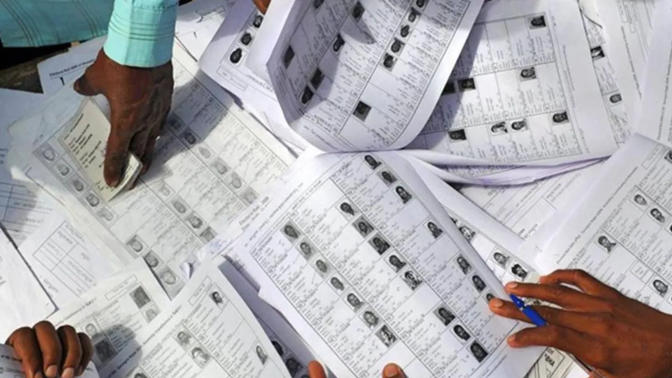

The Election Commission recently released the draft electoral roll for Bihar after the Summary Intensive Revision (SIR). This draft reveals a clear shift in voter demographics across the state. The main reason behind this change is large-scale migration — both within the state and to other states or countries. A closer look at the data shows that voters have been deleted from electoral rolls across nearly every district in a consistent pattern.
Patna Records the Highest Number of Deletions
Patna, Bihar’s largest district with 14 assembly constituencies, recorded the most deletions in the draft list. A total of 3,95,500 names were removed from the voter rolls here. Out of the 14 seats, seven saw above-average deletions, with more than 27,000 names deleted per constituency.
In the 2020 Assembly elections, the Rashtriya Janata Dal (RJD) had won six of these 14 seats. The Bharatiya Janata Party (BJP) secured five, while RJD’s ally CPI (ML) won two, and Congress won one. The voter deletion pattern in Patna suggests the movement of a significant population, likely due to urban migration, job searches, or shifting to other states for better opportunities.
Madhubani Sees Massive Drop Due to Out-Migration
Madhubani district ranked second with 3,53,545 voters removed from the list. This district has long been a stronghold of the BJP-JDU alliance. In the 2020 elections, BJP won five out of ten seats, JDU secured three, and RJD won only two.
Madhubani is known for its high migration rates, especially to metro cities like Delhi and Mumbai. People often move in search of employment, education, and better living standards. This outflow has now reflected in the reduced number of voters, explaining why the district has recorded such a sharp drop.
East Champaran Sees Deletions in BJP Stronghold
East Champaran, another BJP-dominated district, also saw a significant number of deletions. In 2020, BJP had a strong showing, winning seven out of 11 seats, while JDU won one and RJD took the remaining three.
The deletions here mirror a growing trend where people are moving out of their hometowns for better prospects. The change in the voter list could affect political strategies in future elections, especially in areas where small margins can decide results.
Gopalganj Hit by Both Migration and Floods
Gopalganj lost 3,10,363 voters from its electoral list. This district has six assembly constituencies. In the last elections, BJP, JDU, and RJD won two seats each, showing a closely contested political landscape.
However, this region faces regular flooding and limited healthcare and education infrastructure, which has led to steady migration. Many families have relocated to nearby cities like Gorakhpur in Uttar Pradesh. Others have moved abroad, especially to Gulf countries, for work. These factors combined have reduced the number of registered voters significantly.
Samastipur Continues to See a Tight Political Battle
Samastipur is one of the districts where elections have always been closely contested between the NDA and RJD. This time, the district reported a voter deletion of 2,83,955 names. Out of its ten constituencies in 2020, RJD won four, JDU three, BJP two, and CPI (ML) one.
The steady loss of voters suggests significant internal migration, possibly for work and education. Given the narrow margins in past elections, such demographic changes could have a big impact on the balance of power in the district.
Purnia Tops Seemanchal in Voter Deletions
Among the four major districts in the Seemanchal region, Purnia stands out with 2,73,920 voters deleted across seven assembly constituencies. Although other Seemanchal districts also face challenges, Purnia is the only one to feature in the top ten in terms of voter deletions.
Migration, especially among the youth and working population, is likely behind these numbers. Many move to cities outside Bihar or other countries for jobs. The voter roll reflects this demographic shift.
Migration Alters Bihar’s Political Map
Overall, the draft electoral roll shows that migration is changing Bihar’s voter landscape. People are leaving for jobs, education, or to escape natural disasters like floods. Some have settled in other Indian states, while others have gone abroad.
This shift in voters is not just a demographic issue but a political one. With fewer voters in key districts, political parties will need to rework their strategies. It remains to be seen how these changes will influence the upcoming 2025 Bihar Assembly elections and national political dynamics.