
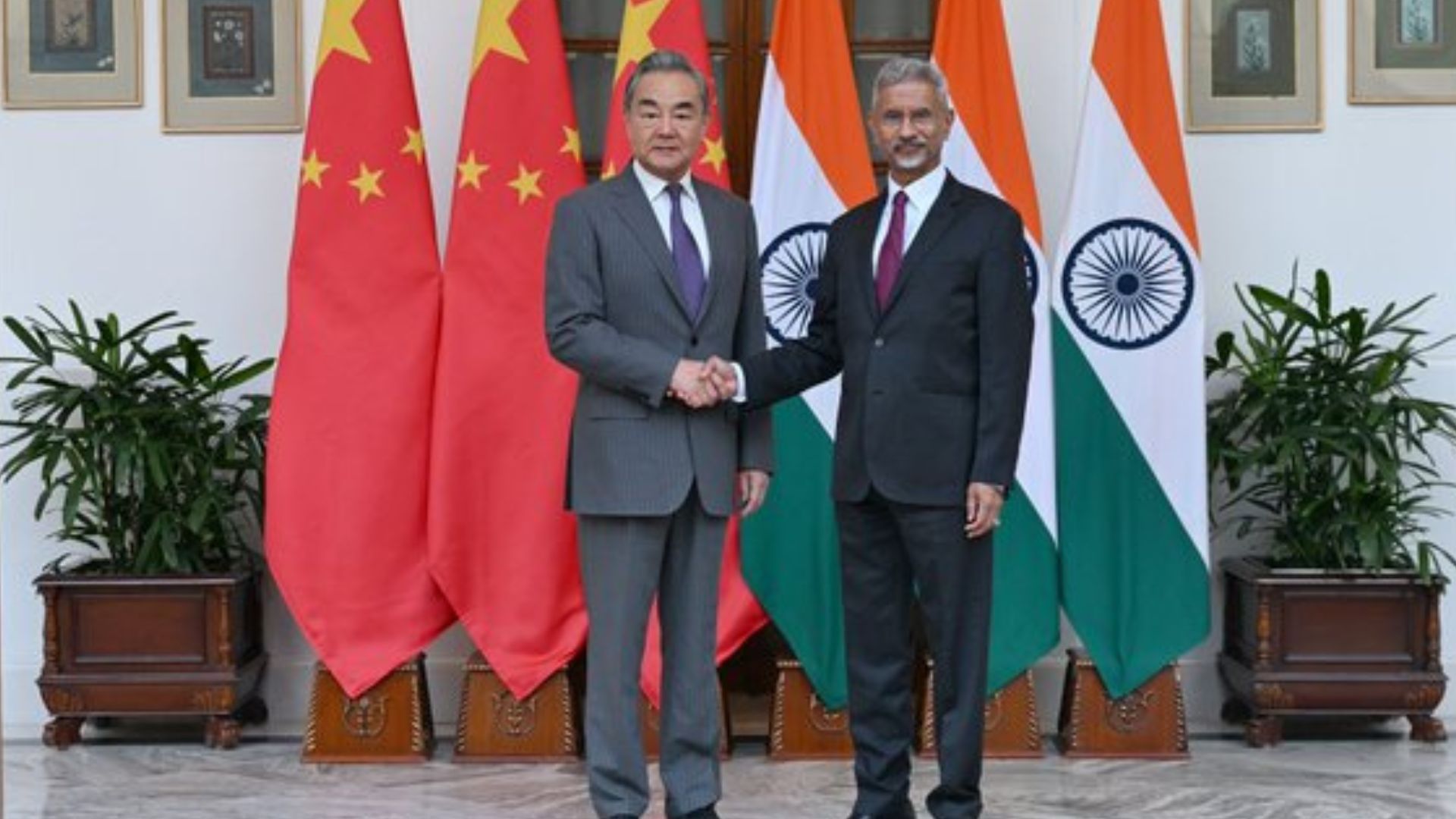

During Chinese Foreign Minister Wang Yi’s visit to New Delhi, India and China reaffirmed their commitment to maintain the momentum of their relationship, as both nations prepare to celebrate 75 years of diplomatic ties in 2025.
Wang Yi held discussions with External Affairs Minister Dr. S. Jaishankar, where the two sides touched on a wide range of issues, including the changing world order, threats to free trade, and the responsibilities of major powers in shaping global stability.
Wang Yi’s Remarks on Global Challenges
According to Xinhua News, Wang Yi said the international situation is changing rapidly, with “unilateral bullying practices” threatening free trade and the global order. He emphasized that India and China, with a combined population of 2.8 billion people, must “demonstrate a sense of global responsibility, act as major powers, set an example for developing countries in pursuit of strength through unity, and contribute to promoting world multipolarization and democratization of international relations.”
He added that both countries have already implemented agreements made by their leaders, resumed exchanges at various levels, maintained peace along border areas, and allowed Indian pilgrims to continue their journeys to sacred sites in Tibet. “China-India relations are showing a positive trend toward returning to cooperation,” Wang remarked.
Partnership Over Rivalry
Looking ahead to the 75th anniversary of bilateral ties, Wang Yi stressed that both nations should view each other as partners and opportunities rather than rivals or threats. He urged India and China to put their resources into development and revitalization rather than confrontation.
Xinhua quoted him as saying the two sides should find the right way to coexist as neighbors, build mutual trust and respect, and pursue win-win cooperation.
Wang Yi also underlined that China is ready to uphold the principles of amity, sincerity, mutual benefit, and inclusiveness, and work with India to build a peaceful, secure, prosperous, and friendly neighborhood.
“India and China should remain confident, move in the same direction, remove barriers, expand cooperation, and consolidate the improvement momentum of bilateral relations, so that revitalization processes of the two great eastern civilizations can be mutually beneficial, providing certainty and stability to Asia and the world at large,” he said. The Chinese Ambassador to India, Xu Feihong, shared key highlights of Wang’s remarks on X.
India’s Position
Earlier in the meeting, Dr. Jaishankar outlined the agenda, noting that the talks would cover economic and trade ties, pilgrimages, river data sharing, border trade, connectivity, and cultural exchanges.
He emphasized that as neighboring nations and major economies, India and China have diverse and complex relations. Jaishankar cautioned that while differences are natural, they should not become disputes or lead to conflict. He also said Wang Yi’s visit was a timely opportunity to review bilateral ties and exchange views on the global situation and issues of shared concern.