
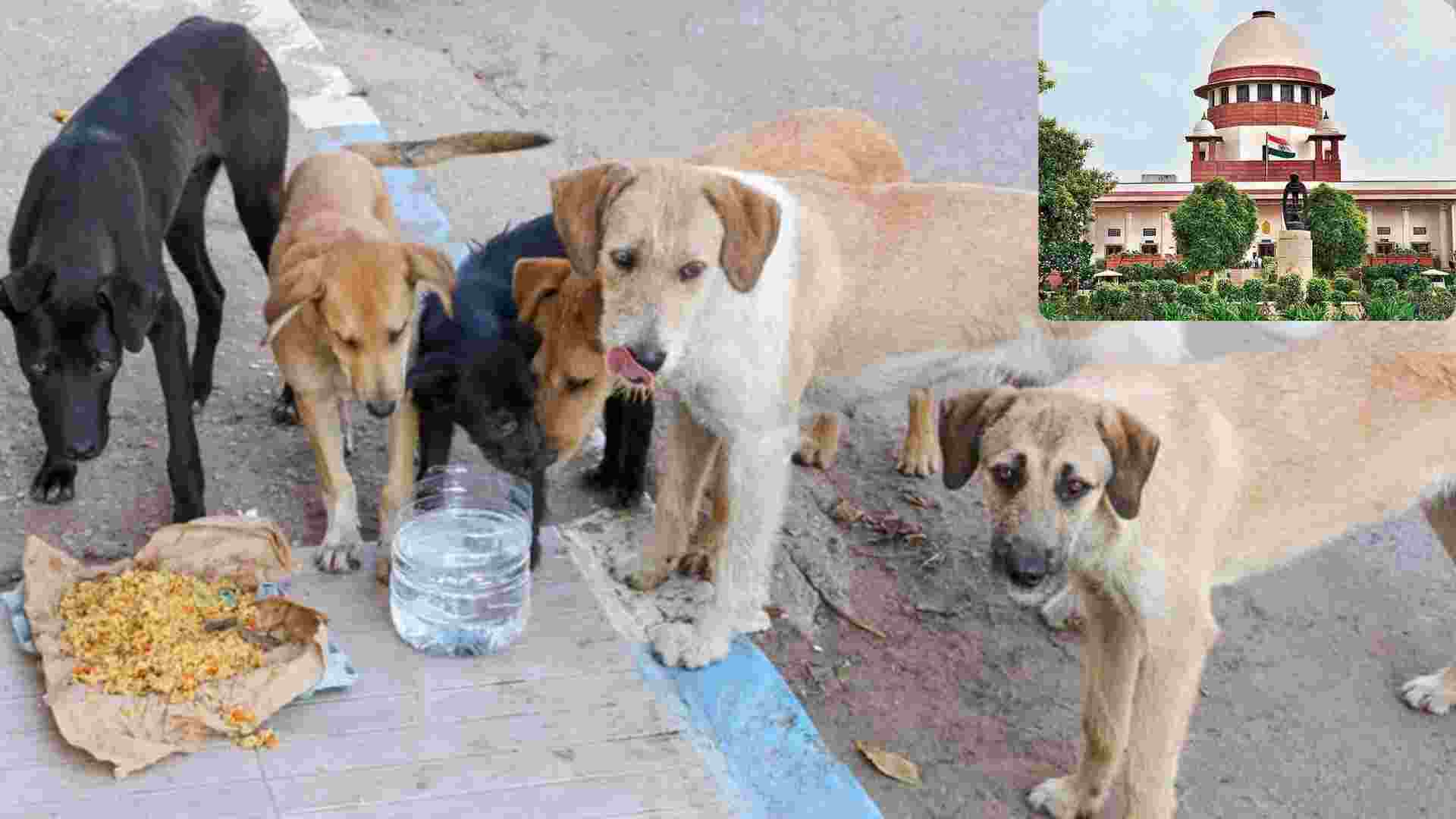

The Supreme Court on Friday, August 22, changed its earlier decision on stray dogs in Delhi NCR. On August 11, a two-judge bench had ordered the removal of all stray dogs and their permanent stay in shelters.
However, a three-judge bench of Justice Vikram Nath, Justice Sandeep Mehta, and Justice NV Anjaria corrected that order. They clarified that the blanket removal of strays would not apply. Instead, only aggressive or rabid dogs will be shifted to shelters.
This new direction reduces fear among residents while also ensuring animal rights remain protected.
Aggressive and Rabid Dogs to Stay in Shelters
The Court made a clear distinction. Only dogs showing aggressive behaviour or infected with rabies should be kept in shelter homes.
Earlier, civic authorities were struggling to find space for all stray dogs in the National Capital Region. The earlier order required them to remove every dog within eight weeks, which experts said was nearly impossible.
According to estimates, Delhi NCR has around 4–5 lakh stray dogs. Removing all of them would have created both practical and ethical challenges.
Feeding Rules Made Stricter
The bench also set rules on how and where stray dogs can be fed. It allowed feeding only at specific spots created for that purpose.
Municipalities must now identify safe areas for feeding. At the same time, they must prevent nuisance or health hazards in residential colonies.
The order strictly banned public feeding. The bench said, “No public feeding of dogs allowed. Dedicated feeding spaces of stray dogs to be created. Action will be taken against persons found to be feeding dogs on the streets.”
Dogs to Return After Vaccination or Sterilisation
The Court upheld the existing system under the Animal Birth Control (ABC) Rules, 2023. Dogs picked up for sterilisation or vaccination will be released back into their original neighbourhoods.
This method helps control the stray population and prevents the spread of rabies, without removing all dogs from their environment.
India reports about 18,000–20,000 rabies deaths each year, one of the highest in the world. Vaccination drives remain a key tool in reducing this risk.
Animal Lovers Can Adopt Shelter Dogs
In a new step, the Court allowed citizens to adopt stray dogs from shelters. Animal lovers can now formally approach authorities and take the dogs into their care.
This move will help reduce crowding in shelters and also ensure better treatment for the animals.
Municipal Work Cannot Be Obstructed
The bench issued a warning against interference. It said no individual or group can block municipal officers when they pick up dogs for sterilisation, vaccination, or removal of aggressive strays.
The Court linked this directly to public safety, noting that obstruction can put both people and dogs at risk.
Order Extended to All of India
The judges widened the scope of the case. What began as a Delhi NCR matter now applies across the country.
The Court impleaded all States and Union Territories. It also said that similar cases pending in High Courts will be shifted to the Supreme Court. The goal is to frame a uniform national policy on stray dogs.
India is home to an estimated 62 million stray dogs, according to government data. The issue therefore has national importance.
Shelters Must Still Be Built
The Court said municipal bodies must continue building dog shelters and pounds. These instructions were already part of the August 11 order and remain in place.
Infrastructure will play a major role in housing aggressive or rabid dogs, and in ensuring proper sterilisation drives.
Deposits to Prevent Frivolous Petitions
The judges also set a financial requirement. Each individual petitioner must deposit ₹25,000 and each NGO must deposit ₹2 lakh with the court registry.
They said this measure ensures accountability and discourages repetitive or careless petitions.
Next Hearing After Eight Weeks
The Court scheduled the next hearing after eight weeks. Authorities must file reports on:
-
Progress in sterilisation and vaccination.
-
Shelter construction and management.
-
Enforcement of feeding restrictions.
The bench said stray dog management affects both public safety and animal welfare. It stressed that the issue requires constant monitoring until a consistent nationwide system is in place.
How the Case Began
The case started on July 28, when a two-judge bench of Justice JB Pardiwala and Justice R Mahadevan took suo motu notice of a Times of India report titled “City hounded by strays and kids pay price.”
The report highlighted increasing dog bite cases in Delhi NCR. Civic records show over 4,000 dog bite cases every day in India, with Delhi NCR reporting some of the highest numbers.
The Supreme Court has now stepped in to balance public safety concerns with animal rights protections.