
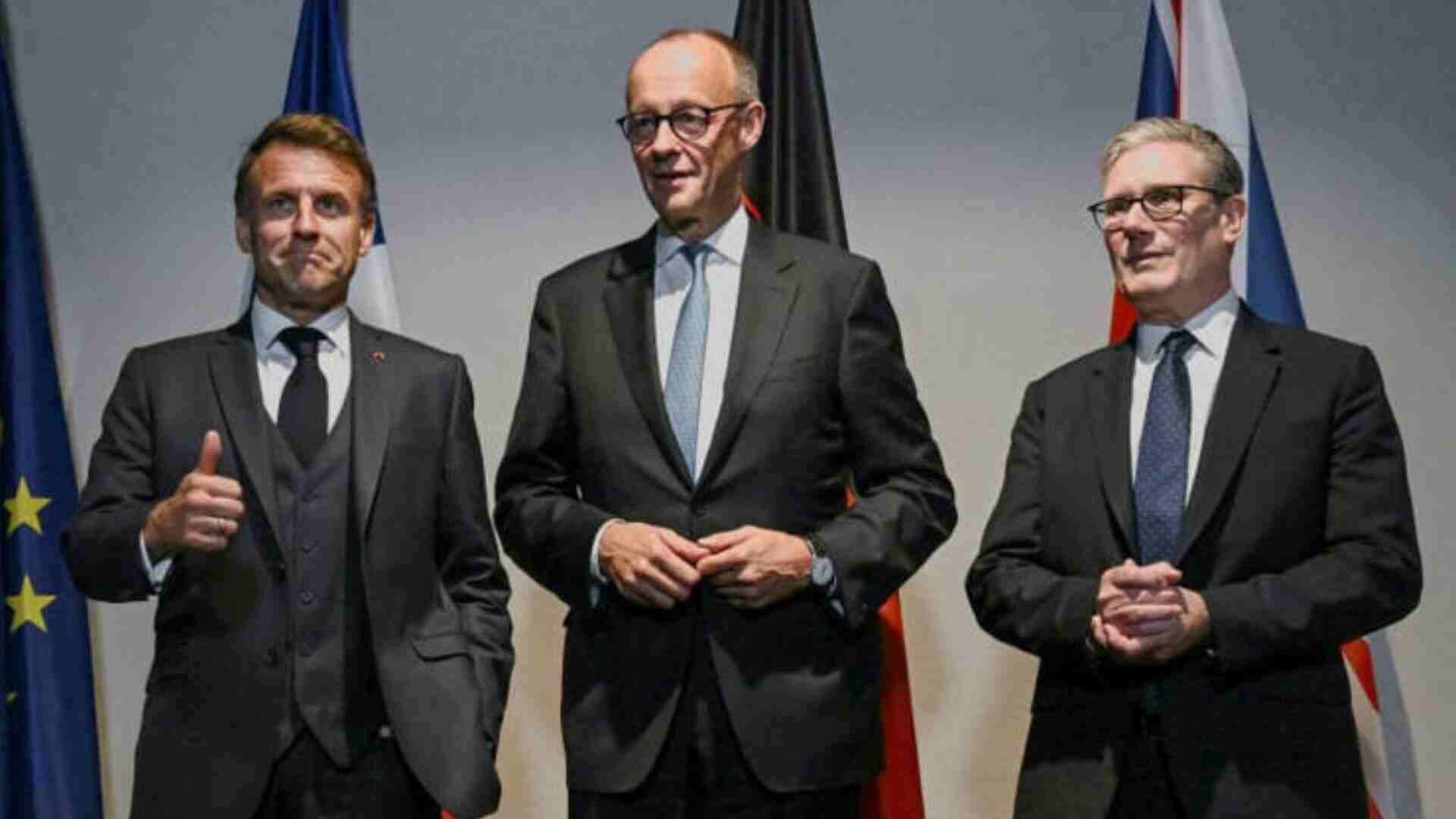

Britain, France, and Germany, known together as the E3, urged Iran on Friday to accept three conditions to delay the return of UN sanctions on its nuclear programme.
E3 Issues Demands
In a joint statement before a closed-door UN Security Council meeting, the E3 asked Tehran to restore full access for UN nuclear inspectors, resolve concerns about its enriched uranium stockpile, and agree to direct talks with the United States.
This call came after the E3 triggered a 30-day process to activate the “snapback” mechanism, which would reinstate UN sanctions on Iran. However, they said they could postpone this step for up to six months if Iran takes meaningful actions.
Britain Calls Demands Fair
Britain’s UN Ambassador Barbara Woodward defended the offer. “Our asks were fair and realistic,” she said, standing with her French and German counterparts.
“However, as of today, Iran has shown no indication that it is serious about meeting them. We urge Iran to reconsider this position, to reach an agreement based on our offer, and to help create the space for a diplomatic solution to this issue for the long term.”
Iran Rejects the Offer
Iran’s UN Ambassador Amir Saeid Iravani rejected the proposal. He called the conditions “full of unrealistic preconditions.”
“They are demanding conditions that should be the outcome of negotiations, not the starting point, and they know these demands cannot be met,” Iravani told reporters.
Instead, he urged the E3 to support “a short, unconditional technical extension of Resolution 2231,” which upholds the 2015 nuclear deal that lifted sanctions in exchange for limits on Iran’s nuclear activities.
Russia and China Step In
Russia and China, close allies of Iran, introduced a draft resolution at the UN Security Council. The draft proposes extending the 2015 nuclear deal for six months and calls on all sides to return to talks.
The new version removed earlier controversial clauses that would have blocked the E3 from reimposing sanctions. A resolution will need at least nine votes and no vetoes from the five permanent members — the US, France, Britain, Russia, and China.
Iravani welcomed the Russian and Chinese initiative, calling it a “practical step” to give diplomacy more time.
Inspectors Return, But Issues Remain
Meanwhile, UN nuclear inspectors have returned to Iran after months of suspension. Tehran halted cooperation in June after attacks on its nuclear sites, which it blamed on Israel and the US. Still, Iran has not agreed on how to fully resume work with the International Atomic Energy Agency (IAEA).