
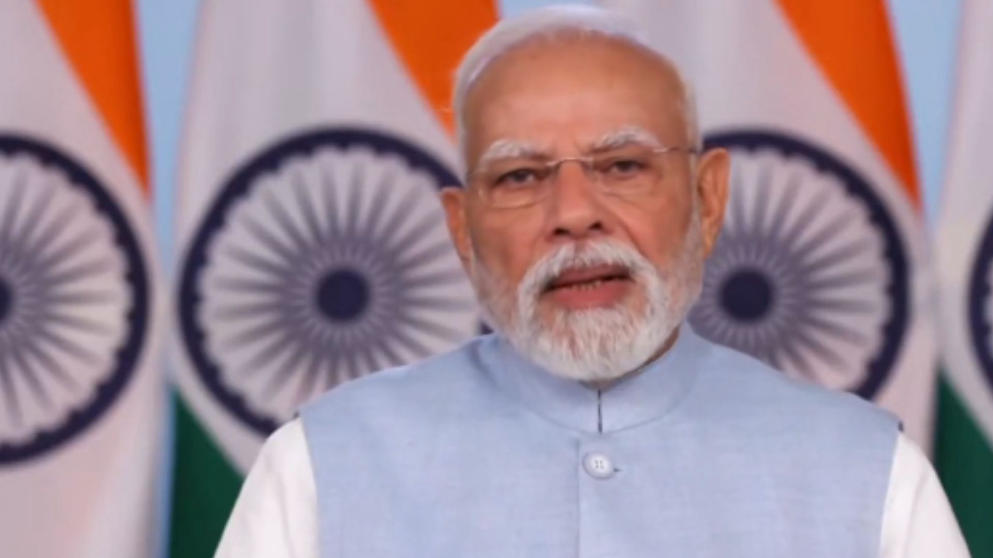

Prime Minister Narendra Modi addressed the nation on Sunday, September 21, announcing a major overhaul of the Goods and Services Tax (GST) system. He started his speech by extending Navratri greetings to the nation. The new reforms, called "GST Bachat Utsav" (Savings Festival), will take effect from September 22. These reforms aim to simplify taxation, lower costs, and provide relief to the poor and middle class.
During his address, PM Modi stressed the importance of producing and consuming goods made in India. He said, “Whatever we can make in our country, we must,” emphasizing the need for self-reliance or 'aatmanirbharta'. His remarks come amid rising trade tensions with the United States, including higher tariffs and recent changes to the H-1B visa system that impact skilled Indian workers.
My address to the nation. https://t.co/OmgbHSmhsi
— Narendra Modi (@narendramodi) September 21, 2025
Simplifying GST Structure
PM Modi announced a streamlined tax structure. The number of GST slabs will reduce from four to two — 5% and 18%.
He said that 99% of goods that were earlier taxed at 12% will now be under the 5% category. This move will make essential goods cheaper and help millions of families manage household expenses better.
Greater Savings for Citizens
The Prime Minister said that the combined benefits of GST and income tax reforms will generate annual savings of over ₹2.5 lakh crore for Indians.
Calling this a “double bonanza,” he explained that the reforms aim to reduce financial stress on households and boost economic activity by leaving more disposable income in the hands of citizens.
Support for Small Businesses
PM Modi highlighted the role of Micro, Small, and Medium Enterprises (MSMEs) in the Indian economy.
He said the new GST framework will cut compliance costs and tax burdens for these businesses. This will create a business-friendly environment and encourage MSMEs to grow, innovate, and generate jobs.
Push for 'Swadeshi' Movement
Linking the reforms to the broader Atmanirbhar Bharat mission, PM Modi urged Indians to buy local products. He appealed to the people to take pride in supporting domestic industries. By doing so, he said, citizens would strengthen local businesses and reduce dependence on imports.
Call to State Governments
PM Modi asked state governments to play an active role in making India self-reliant. He encouraged them to increase manufacturing capacity and create policies that would help businesses flourish. According to him, achieving self-reliance requires cooperation between the central government, states, businesses, and citizens.
Strengthening National Unity
Reflecting on the tax system's progress, PM Modi said GST has fulfilled the vision of “One Nation, One Tax.”
He expressed confidence that the updated GST model would bring the nation closer together, simplify tax processes, and drive economic growth.
Looking Ahead
The launch of GST 2.0 coincides with the start of the Navratri festival, symbolizing new beginnings.
PM Modi said the reforms would stimulate demand, encourage local production, and create a sustainable growth model. The government hopes that these steps will build a stronger economy and protect India from external economic shocks.
He concluded by stressing that the success of GST 2.0 depends on collective effort. Citizens, businesses, and governments must work together to make India financially stronger and self-reliant.
With these reforms, India takes a bold step toward a unified, resilient, and future-ready economy.