
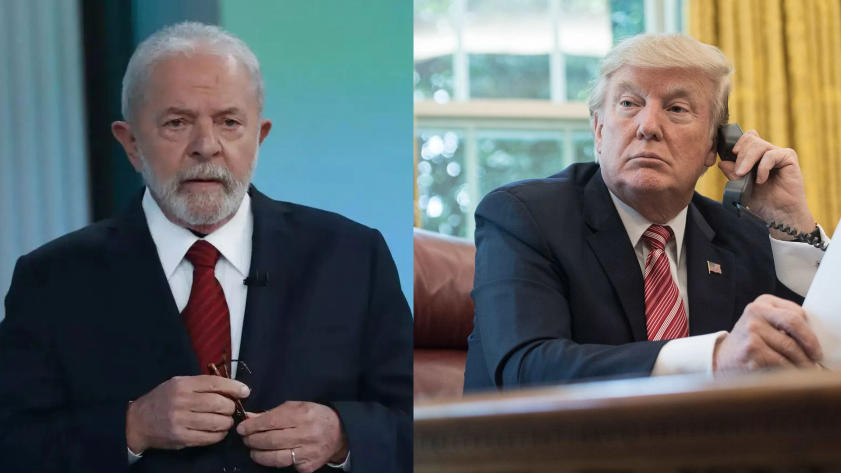

Brazilian President Luiz Inacio Lula da Silva called US President Donald Trump on Monday. They spoke for 30 minutes in a “friendly tone,” according to the Brazilian presidency.
Lula asked Trump to remove tariffs on Brazilian products and lift sanctions on officials. He also suggested a face-to-face meeting at the ASEAN summit in Malaysia next month. Lula re-invited Trump to COP-30 in Belem, Brazil, in November, and said he was willing to visit the United States.
Trump called the conversation a “very good telephone call” on Truth Social. He added, “We will be having further discussions, and will get together in the not too distant future, both in Brazil and the United States.”
Background of Tensions
Relations deteriorated after Trump grew upset over the trial and conviction of his ally, former president Jair Bolsonaro. Bolsonaro was sentenced to 27 years in prison for a failed coup attempt after losing the 2022 election to Lula.
Trump responded by imposing 50% tariffs on Brazilian products and sanctioning several top officials, including a Supreme Court judge. He called Brazil’s judicial process against Bolsonaro a “witch hunt.”
Brazilian Vice President Geraldo Alckmin said the call went “even better than we expected.” He also said the two presidents exchanged personal phone numbers.
UN Encounters and Diplomacy
The call followed a brief UN General Assembly encounter last month. Trump described meeting Lula as having “excellent chemistry.”
Lula criticized attacks on Brazil’s judicial independence, calling them “unacceptable.” Trump initially accused Brazil of “censorship, repression” and “judicial corruption”, but later called Lula “a very nice man, actually.”
Private Sector Influence
Brazil’s private sector helped improve ties. Billionaire Joesley Batista of JBS met Trump at the White House. Brazilian aircraft maker Embraer also pressured the US government.
Trade and Economic Impact
Trump’s tariffs mainly target Brazil’s beef, coffee, and sugar exports. September trade data showed exports to the US fell 20.3%, while imports from the US rose 14.3%.
Brazil has expanded trade with Asia and other markets. Overall exports grew 7.2% in September, with strong demand from China, India, Singapore, Argentina, Peru, and Panama.