
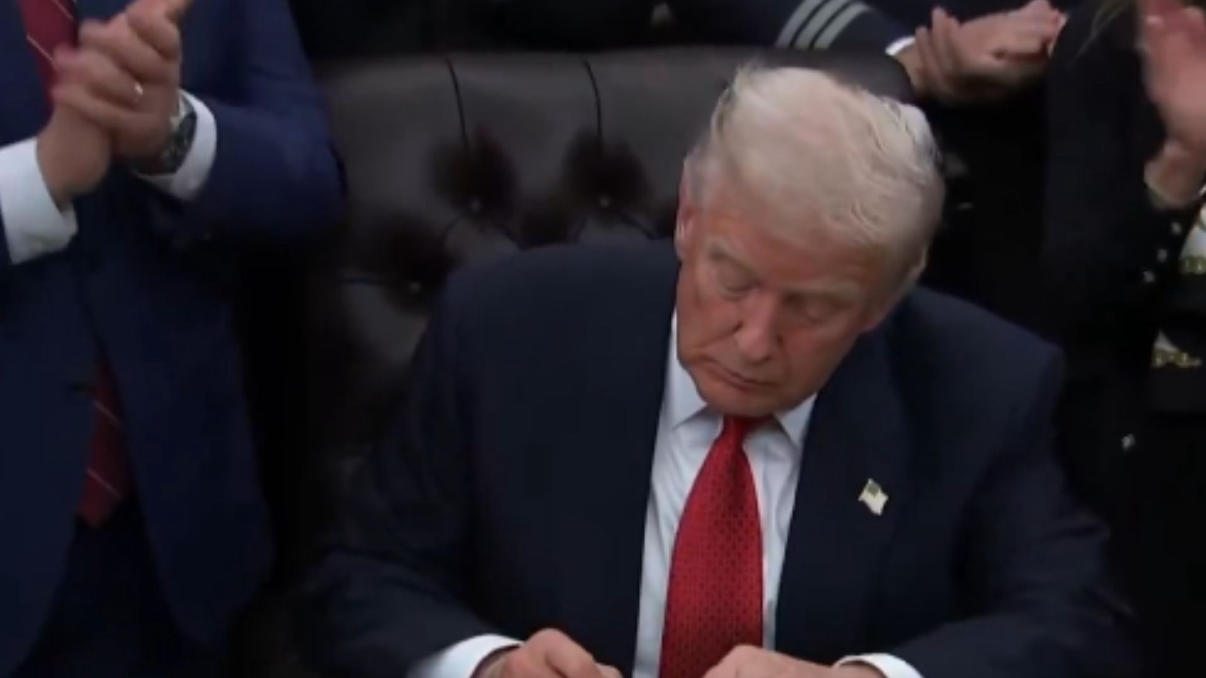

US President Donald Trump on Wednesday night signed a government funding bill, ending the 43-day federal shutdown that had caused economic and personal hardship for millions. The shutdown left thousands of workers without pay, delayed flights, and caused long lines at food banks across the country.
The political deadlock deepened divisions in Washington. Trump took several aggressive steps — including canceling federal projects and attempting to fire workers — to pressure Democrats into accepting his terms.
In a televised address, the president blamed Democrats for the crisis. “So I just want to tell the American people, you should not forget this,” Trump said. “When we come up to midterms and other things, don’t forget what they’ve done to our country.”
The bill was passed by the House earlier in the day with a narrow 222–209 vote, mostly along party lines. The Senate had approved it on Monday.
Dispute Over Health Care Subsidies
The shutdown stemmed from disagreements over health insurance tax credits under the Affordable Care Act (ACA). Democrats demanded an extension of the enhanced tax credits that lower healthcare costs for Americans. They refused to back a spending bill that did not include this provision.
Republicans, however, argued that the issue should be debated separately. “We told you 43 days ago from bitter experience that government shutdowns don’t work,” said Rep. Tom Cole, the Republican chairman of the House Appropriations Committee.
The stalemate dragged on for weeks, intensifying frustration in Congress.
Tempers Flare in Congress
Debate over the bill was tense. Republican House Speaker Mike Johnson accused Democrats of deliberately prolonging the shutdown for political gain. “They knew it would cause pain and they did it anyway,” he said.
Democrats countered that Republicans had previously passed tax breaks benefiting the wealthy while ignoring middle-class needs. “This bill leaves families twisting in the wind with zero guarantee there will ever, ever be a vote to extend tax credits to help everyday people pay for their health care,” said Rep. Jim McGovern.
Democratic leader Hakeem Jeffries vowed that the party would continue pushing for the subsidy extension. “This fight is not over,” he said. “We’re just getting started.”
Key Provisions in the New Law
The bill was crafted after eight senators from both parties reached a compromise, acknowledging that Republicans would not agree to link healthcare subsidies to government funding.
The agreement funds three major spending bills and extends overall federal funding through January 30. Republicans also pledged to vote on extending healthcare subsidies by mid-December, though success is uncertain.
The legislation reverses Trump’s earlier decision to fire certain federal workers and guarantees their pay. It protects employees from layoffs until the end of January.
It also allocates $203.5 million for enhanced security for lawmakers and $28 million for Supreme Court justices. Additionally, funding for food assistance programs under the Agriculture Department will continue without disruption.
However, Democrats criticized a clause allowing senators to sue if federal agencies access their electronic records without notice, with compensation up to $500,000 per violation. Speaker Johnson expressed anger over the provision, saying it was added “at the last minute.”
Health Care Battle Far From Over
The biggest unresolved issue remains the enhanced ACA tax credit, which helped millions afford insurance. Republicans argue it was a temporary pandemic-era measure. “It’s a subsidy on top of a subsidy,” said Rep. Cole. “COVID is over. They set a date certain that the subsidies would run out.”
Democrats disagree. Former House Speaker Nancy Pelosi said the credits expanded access to healthcare and accused Republicans of trying to take that away. “All they have done is try to eliminate access to health care in our country,” Pelosi said.
According to the Congressional Budget Office, without the extended tax credits, health insurance premiums could more than double for millions, and over 2 million Americans might lose coverage next year.
Looking Ahead
It remains unclear whether the two parties can reach a compromise before the Senate’s December vote. Some Republicans, including Sen. Susan Collins, expressed support for renewing the subsidies but with new income caps. Some Democrats hinted they might accept such changes.
Still, House Democrats doubt the effort will succeed. Rep. Rosa DeLauro warned, “Republicans have wanted to repeal the health overhaul for the past 15 years. That’s where they’re trying to go.”
The shutdown’s end has brought temporary relief to federal workers and agencies, but Washington’s deep partisan divide over healthcare and spending remains far from resolved.