
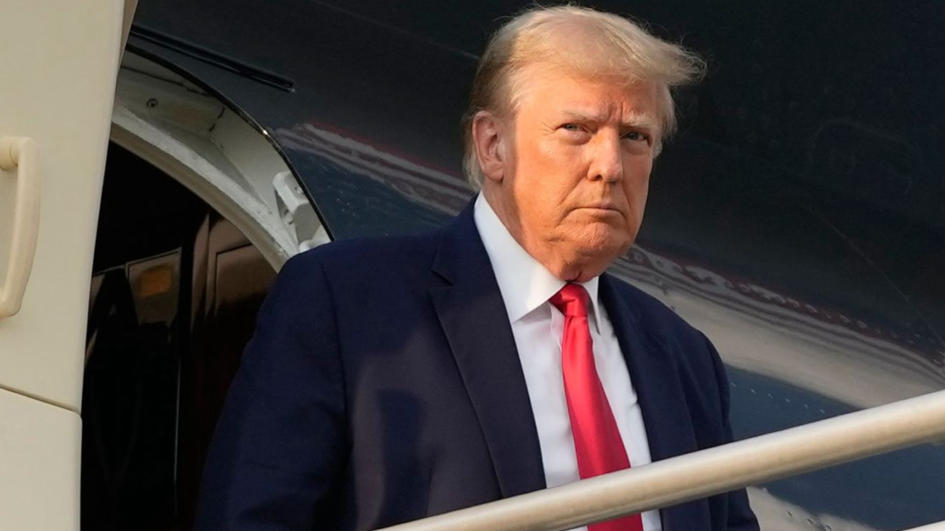

US President Donald Trump announced on Tuesday that he will send his envoy, Steve Witkoff, to Moscow next week for talks with Russian President Vladimir Putin. Trump is trying to finalise a peace agreement to end the Russia-Ukraine war.
Trump wrote on Truth Social that only “a few remaining points of disagreement” were still unresolved. However, European leaders expressed doubt, as Russian missiles continued to hit Ukrainian cities.
He also said he hopes to meet both Putin and Ukrainian President Volodymyr Zelenskyy “soon”, but only when the peace deal is either complete or nearly done. While speaking on Air Force One, Trump mentioned that his son-in-law Jared Kushner may join Witkoff in Moscow.
Revised plan leans toward Ukraine
The first US proposal strongly favoured Russia, but Washington has now offered a version that better supports Ukraine’s interests. An official familiar with the draft told AFP that the new version is “significantly better”, though US officials admitted that “delicate” issues still remain. French President Emmanuel Macron said there was “clearly no Russian willingness” to accept a ceasefire or even discuss the revised proposal.
Intense negotiations have taken place since the weekend. Talks began in Geneva, where Ukrainian and US teams reviewed the original 28-point plan, which diplomats have now reduced to 19 points. US media reported more meetings in Abu Dhabi between US and Russian negotiators. At the same time, leaders from 30 pro-Ukraine countries held a video conference on Tuesday.
US negotiator Dan Driscoll sounded upbeat after speaking with Russian officials. His spokesperson said, “The talks are going well, and we remain optimistic.” The White House also said “tremendous progress” has been made, though a few details still need to be fixed.
War continues as diplomacy speeds up
Even with active negotiations, the fighting has not slowed. On Tuesday night, a major Russian attack on Zaporizhzhia damaged at least seven high-rise buildings and sent 12 people to the hospital, according to the regional military administration. The night before in Kyiv, explosions began at around 1 am as drones and missiles struck the capital, killing seven people and sparking fires in residential buildings. Thick smoke lit by defensive fire rose across the city as people rushed into metro stations for safety.
Trump has repeatedly claimed he could end the war within 24 hours. Last week, he said he wanted Ukraine to approve his plan by Thursday, the US Thanksgiving holiday. The first version of his proposal alarmed Kyiv and its Western partners because it included limits on future NATO membership and required Ukraine to surrender more territory to Russia.
The new version appears more acceptable to Kyiv. One of the major improvements, according to an official familiar with the document, is an increase in the size of Ukraine’s future armed forces—from 600,000 to 800,000 personnel. Ukrainian negotiator Rustem Umerov said there is “common understanding on the core” of the deal between Ukraine and the US, but he stressed that unresolved issues must be settled through direct talks “at the earliest suitable date.”
Concerns continue on all sides
British Prime Minister Keir Starmer warned that “there’s still a long way to go and a tough road ahead.” Russia still controls about one-fifth of Ukraine, much of it destroyed. Tens of thousands of soldiers and civilians have lost their lives, and millions have fled the east.
On the front lines, Ukrainian army Sergeant Ivan Zadontsev said negotiations are “healthy” and admitted that troops are exhausted. “We need a break,” he said. But he also argued that the proposals from Washington and the European Union “do not serve Ukraine’s national interests.”