
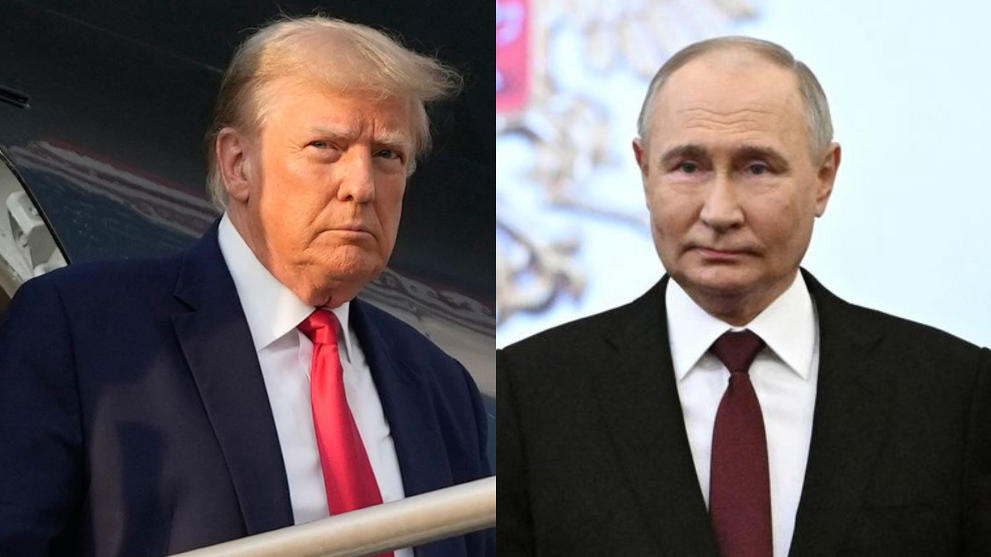

The Kremlin reacted positively to President Donald Trump’s decision to stop naming Russia as a direct threat on Sunday. Officials in Moscow said his newly released national security strategy closely matches Russia’s own thinking, especially the idea that Europe is losing its global influence.
Kremlin spokesperson Dmitry Peskov spoke to state TV journalist Pavel Zarubin and said several changes in the document “align with our understanding.” His comments showed early approval from Moscow.
Focus on “Flexible Realism” and Monroe Doctrine
The new strategy, signed by Trump, is built around the idea of “flexible realism.” It also calls for bringing back the 19th-century Monroe Doctrine. This doctrine defined the Western Hemisphere as an American sphere of influence.
In addition, the document warns that Europe faces the danger of “civilizational erasure.” It also makes clear that ending the war in Ukraine is a top U.S. priority. At the same time, it states that Washington wants to rebuild strategic stability with Moscow.
NATO Expansion Seen as a Key Issue
Peskov welcomed another part of the document. It promises to end “the perception, and preventing the reality, of NATO as a perpetually expanding alliance.” He described this as a positive development.
This language is important for Moscow. Russia has long opposed NATO expanding closer to its borders. Therefore, the Kremlin sees this position as a step in its favour.
Warning About the American “Deep State”
However, Peskov also advised caution. He said the American “deep state” may still hold a very different view from Trump.
Trump has often used the term “deep state” to describe powerful officials inside the U.S. system whom he believes work against leaders who challenge the existing order, including himself.
On the other hand, Trump’s critics strongly reject this claim. They say the so-called “deep state” is simply a conspiracy theory. According to them, Trump uses it to justify efforts to increase his own control over the government.
Russia’s Past Labelled as Aggressor
For years, U.S. strategies have described Russia as an aggressor. This goes back to Moscow’s 2014 annexation of Crimea and its full-scale invasion of Ukraine in 2022. American policy papers have said Russia tried to change the post-Cold War order using force.
But now, Trump’s new strategy does not use the same language. That change stands out.
Speaking to the state-run TASS news agency, Peskov said it was a positive move to talk about cooperation on strategic stability instead of calling Russia a direct threat.
Trump’s History With Russia
Trump has often made friendly and admiring comments about Russian President Vladimir Putin. Because of this, his critics have accused him of being soft on Moscow. This happened even though both of his administrations placed sanctions on Russia.
This mixed record continues to raise questions about his real position on the Kremlin.
European Concerns Grow
Meanwhile, top officials in major European countries have shared their worries. They fear the U.S. under Trump could shift away from Europe. Many European nations depend on American military support, especially through NATO.
As these changes take shape, European leaders now watch closely to see if Trump’s new strategy will weaken long-standing alliances.