
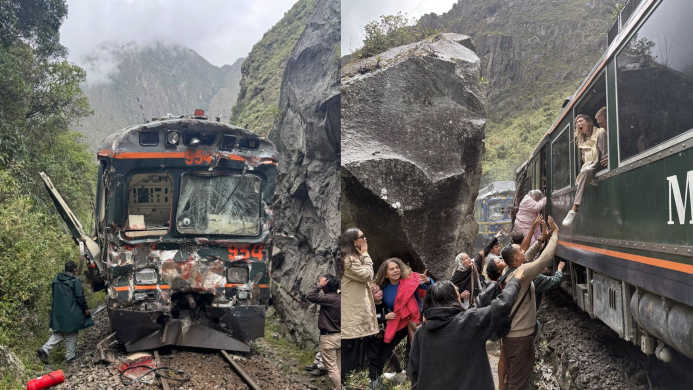

Two trains carrying tourists to and from Peru’s famous Machu Picchu site collided on Tuesday. The crash killed at least one person and injured about 30 passengers.
Police confirmed that the victim was a railway worker. Jhonathan Castillo Gonzalez, a captain with the Cuzco police department, said rail services between Machu Picchu and the nearby city of Cuzco were suspended after the accident.
Collision on Busy Tourist Route
The company that operates the railway said the crash happened in the early afternoon. A train coming from Machu Picchu struck another train heading toward the site. The collision took place near Qoriwayrachina, which is also an archaeological area.
The rail line runs through a remote Andean region. The area has no direct road access, which made rescue efforts more challenging.
Emergency Teams Rush to Scene
Authorities sent around a dozen ambulances to the site. Medical teams also rushed in to help the injured passengers. Emergency workers treated victims at the scene before transferring them for further care.
Officials did not immediately share details about what caused the collision. Investigators are expected to examine the incident.
Damage Seen on Trains
Local media aired videos from the crash site. The footage showed train cars with shattered windows and dented metal sides. The damaged coaches sat on a narrow rail track surrounded by dense forest and a large rock face.
Machu Picchu Draws Millions of Visitors
Machu Picchu has held UNESCO World Heritage status since 1983. The ancient site attracts about 4,500 visitors every day on average, many of them from outside Peru, according to the tourism ministry.
Each year, around 1.5 million people visit Machu Picchu. Most tourists travel by train to the nearby town of Aguas Calientes before heading to the ruins.
Historic Site and Tourism Challenges
The Incas built Machu Picchu in the 15th century. The site is famous for its precisely cut stone blocks and once served as a sanctuary for Inca emperors.
Visitor numbers have risen by about 25% over the past decade. However, tourism has faced disruptions due to political unrest and disagreements over how the site is managed. At times, protesters have blocked the railway leading to the ancient city.
Trekking Offers Alternative Access
Travelers can also reach Machu Picchu on foot. Many visitors begin a multi-day trek from the small town of Ollantaytambo. The journey usually takes about four days and follows historic mountain trails.