
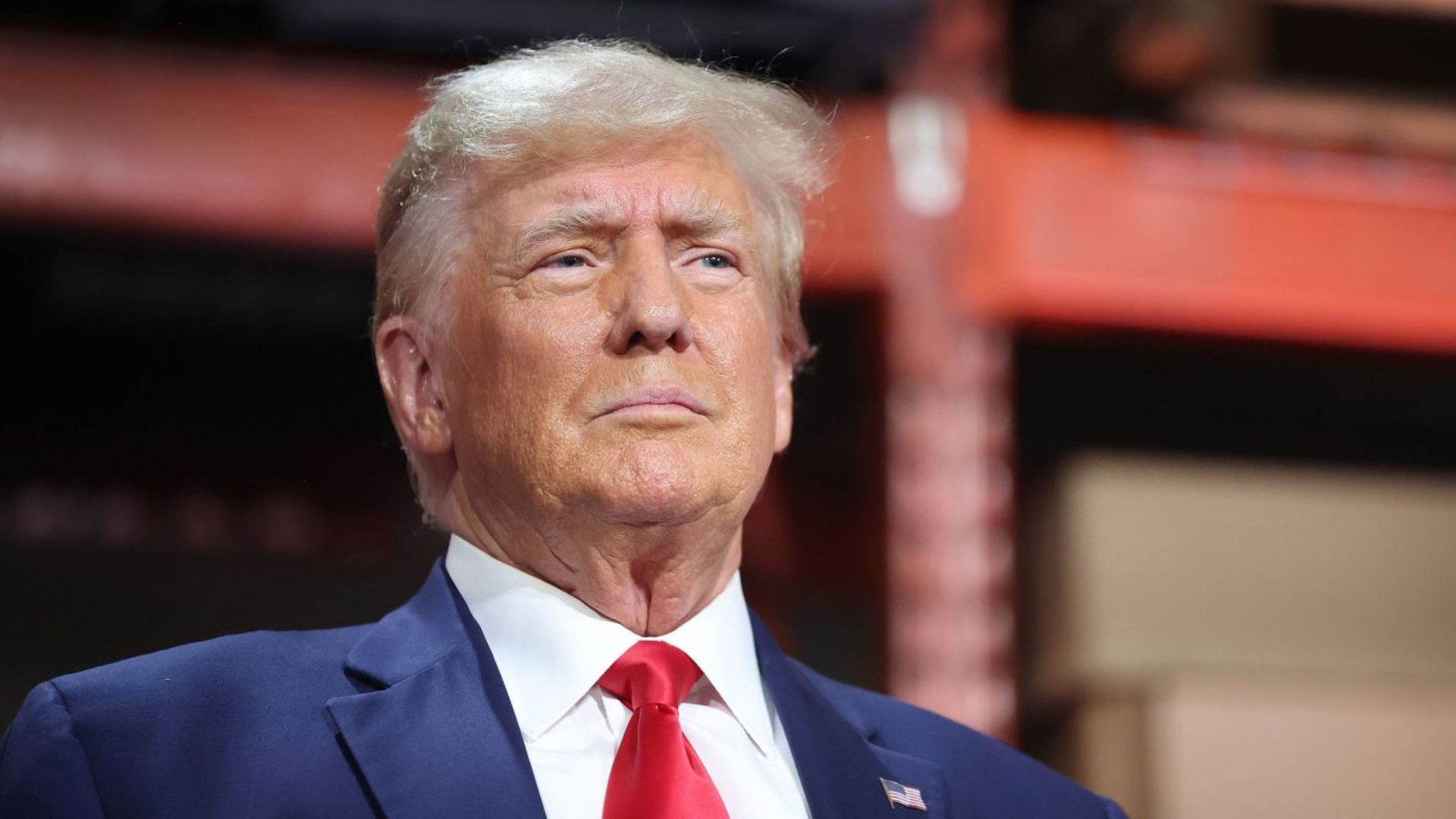

US President Donald Trump on Friday strongly criticised Canada for rejecting his proposed “Golden Dome” missile defence system over Greenland. He warned that Canada could face serious consequences by choosing stronger economic ties with China instead of supporting US-backed security initiatives.
Trump claimed the defence system would also protect Canada, but said Ottawa had instead voted to deepen its relationship with Beijing.
On Truth Social, Trump wrote, "Canada is against The Golden Dome being built over Greenland, even though The Golden Dome would protect Canada. Instead, they voted in favour of doing business with China, who will 'eat them up' within the first year!"
Growing Strains Between Washington and Ottawa
Trump’s comments come at a time of rising tensions between the United States and Canada. The dispute follows recent remarks made by Canadian Prime Minister Mark Carney at the World Economic Forum in Davos.
During his address at the 56th Annual WEF Summit, Trump also criticised Carney directly. He accused Canada of failing to appreciate the benefits it receives from the United States, particularly in terms of security support.
"Canada gets a lot of freebies from us, by the way. They should also be grateful, but they're not. I saw your Prime Minister yesterday; he wasn't so grateful. They should be grateful to us," Trump said.
Trump Defends US Role in Canada’s Security
Trump further stressed that the proposed “Golden Dome” missile defence system would extend protection to Canada as well. He underlined the United States’ role in safeguarding its northern neighbour.
"Canada lives because of the United States. Remember that, Mark, the next time you make your statements," Trump said.
His remarks were clearly aimed at Carney, who had spoken at the WEF about growing global uncertainty and warned that the rules-based international order is weakening.
Carney Pushes Back at WEF
In his Davos speech, Carney highlighted what he described as “an era of great power rivalry.” He also opposed the use of tariffs as political pressure, in what appeared to be a subtle criticism of Washington’s economic tactics, including its approach toward Greenland.
Canada Signs Major Trade Deal With China
On January 17, Prime Minister Carney announced a new trade agreement with China. He said the deal would expand opportunities for Canadian workers and businesses.
In a post on X, Carney said, "We've secured a new trade agreement with China unlocking more than $7 billion in export markets for Canadian workers and businesses."
The Canadian Prime Minister’s Office later said the agreement was part of a broader effort to strengthen Canada’s economy amid global uncertainty.
"In a more divided and uncertain world, Canada is building a stronger, more independent, and more resilient economy. To that end, Canada's new government is working with urgency and determination to diversify trade partnerships and catalyse massive new levels of investment. As the world's second-largest economy, China presents enormous opportunities for Canada in this mission."
Tariff Cuts and Trade Concessions
As part of the deal, Canada agreed to reduce its 100 per cent tariff on Chinese electric vehicles. In return, China will lower tariffs on key Canadian agricultural products.
According to CBS News, Canada will initially cap Chinese electric vehicle imports at 49,000 units per year. This limit is expected to rise to around 70,000 vehicles over the next five years.
China, meanwhile, will reduce its tariff on Canadian canola seeds from 84 per cent to about 15 per cent.
Carney Calls China a “More Predictable” Partner
Carney suggested that China has become easier to work with than the United States in recent months.
"Our relationship has progressed in recent months with China. It is more predictable and you see results coming from that," Carney said, as quoted by CBS News.
Canada Hit by US Trade Levies
Canada is currently facing steep US tariffs, including a 35 per cent levy on its goods. It is also affected by a broader 50 per cent tariff on imported metals and a 25 per cent duty on non-US automobiles.
These trade pressures have added to tensions between the two long-time allies.
US-China Tariff Standoff Eases Slightly
Meanwhile, trade tensions between the US and China have also seen some easing. Both countries had earlier threatened tariffs as high as 100 per cent on each other’s goods.
However, following a meeting between President Donald Trump and Chinese President Xi Jinping, the two sides agreed to exempt a portion of Chinese products from tariffs until November 10, 2026.