
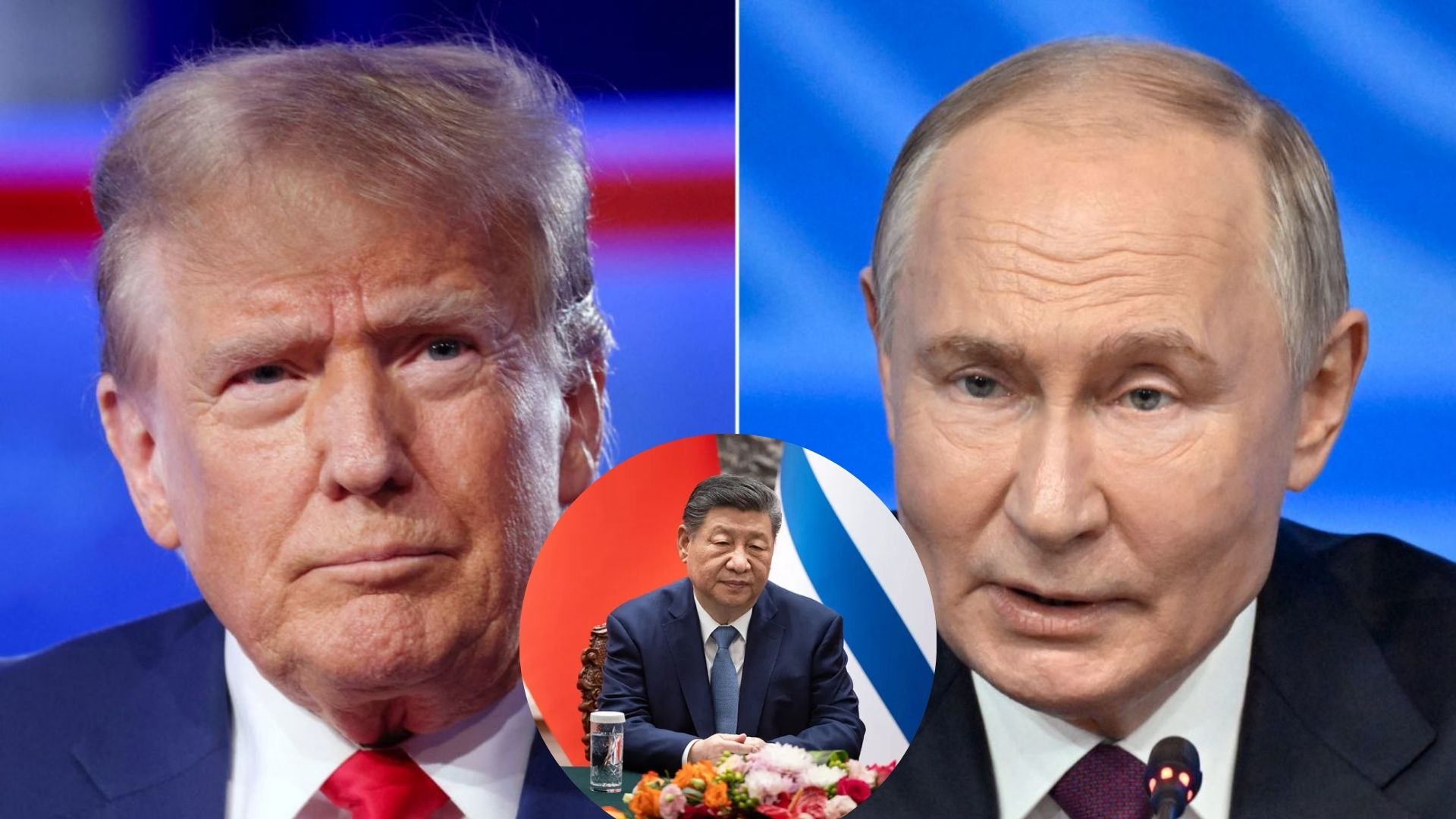

The United States has once again asked for a three-way nuclear arms dialogue with Russia and China. Washington also accused China of secretly testing nuclear weapons and quickly expanding its arsenal at a time when global arms control systems are weakening.
This move comes just days after the New START treaty expired. This was the last major agreement that limited the number of nuclear warheads held by the US and Russia. Officials in Washington warned that the end of this treaty could trigger a new phase of nuclear competition among powerful nations.
China Refuses to Join Talks
However, China repeated that it will not join nuclear disarmament negotiations under current conditions. Beijing has long argued that its nuclear stockpile is much smaller than those of the US and Russia. Therefore, it believes the main responsibility for reducing weapons lies with the two largest nuclear powers.
At the same time, Russia took a different view. Moscow said any future arms control agreement should not remain limited to just the US and Russia. Instead, it should also include other nuclear-armed countries such as Britain and France. This stance reflects Russia’s belief that the global strategic balance has changed.
US Says Bilateral Agreements Are No Longer Enough
US Secretary of State Marco Rubio said the time of two-country nuclear deals is over. In an online policy essay, he argued that arms control must now match a multipolar nuclear world. He stressed that China’s growing nuclear strength makes its involvement necessary.
“Strategic stability cannot rest on just two countries,” Rubio wrote, pointing to China as having a particular responsibility due to the scale and pace of its weapons development.
End of New START Raises Global Concerns
The New START treaty had limited the number of deployed nuclear warheads for both the US and Russia to 1,550 each. Its expiry marks the first time in decades that there is no treaty controlling the world’s two largest nuclear arsenals.
Experts say this situation could speed up weapons modernisation and deployment. It could also reduce transparency and verification between nations.
US President Donald Trump rejected a proposal from Russian President Vladimir Putin to extend the treaty’s limits for one more year. Instead, Trump called for a broader and updated agreement that would include more countries and reflect present military realities.
US Accuses China of Secret Nuclear Tests
Thomas DiNanno, US under secretary of state for arms control, presented Washington’s plan at the United Nations Conference on Disarmament in Geneva. He said the expired New START treaty had “fundamental flaws”.
He accused China of using the limits placed on the US and Russia to quietly expand its own nuclear power. He claimed China is “on track to have over 1,000 nuclear warheads by 2030”.
“As we sit here today, China’s entire nuclear arsenal has no limits, no transparency, no declarations, and no controls,” he said.
DiNanno also alleged that China conducted secret “nuclear explosive tests, including preparing for tests with designated yields in the hundreds of tonnes”.
He said one such test took place on June 22, 2020. He further accused China of trying “to conceal testing by obfuscating the nuclear explosions because it recognised these tests violate test ban commitments”.
Trump had hinted at similar concerns last year, but he had not shared detailed information at that time.
He also said the US wanted to resume nuclear testing for the first time in decades “on an equal basis” with Russia and China, though no action has followed so far.
China Hits Back at US Claims
China strongly rejected the accusations. Its ambassador Shen Jian criticised Washington for “making irresponsible remarks, for instance the threatening of making nuclear weapons tests”.
He also repeated China’s official position at the conference. “China would not participate in nuclear disarmament negotiations at this stage,” he said.
“States possessing the largest nuclear arsenals should continue to fulfil their special and primary responsibilities for nuclear disarmament,” he added.
Russia Calls for Broader Talks
The US and Russia together hold more than 80 percent of the world’s nuclear weapons. However, China’s stockpile is growing faster than any other country. According to the Stockholm International Peace Research Institute, China has been adding about 100 new warheads each year since 2023.
Russia said it no longer considers itself bound by New START limits. Its ambassador Gennady Gatilov said any new nuclear discussions should include other nuclear powers such as France and Britain.
Britain appeared to reject that idea. Its ambassador David Riley said, “the United Kingdom maintains a minimum credible nuclear deterrent”. He added that talks should focus mainly on “those states with the largest nuclear arsenals – China, Russia and the US”.
Meanwhile, French ambassador Anne Lazar-Sury said Paris believes “credible measures capable of reducing the risk of nuclear weapons use” should be “the objective of all nuclear-armed states.”