

Iran’s Supreme Leader Ali Khamenei was killed on February 28, 2026, during a major military strike carried out by Israel and the United States. The coordinated operation targeted senior Iranian leaders and strategic facilities across the country. The attack sharply escalated tensions in West Asia.
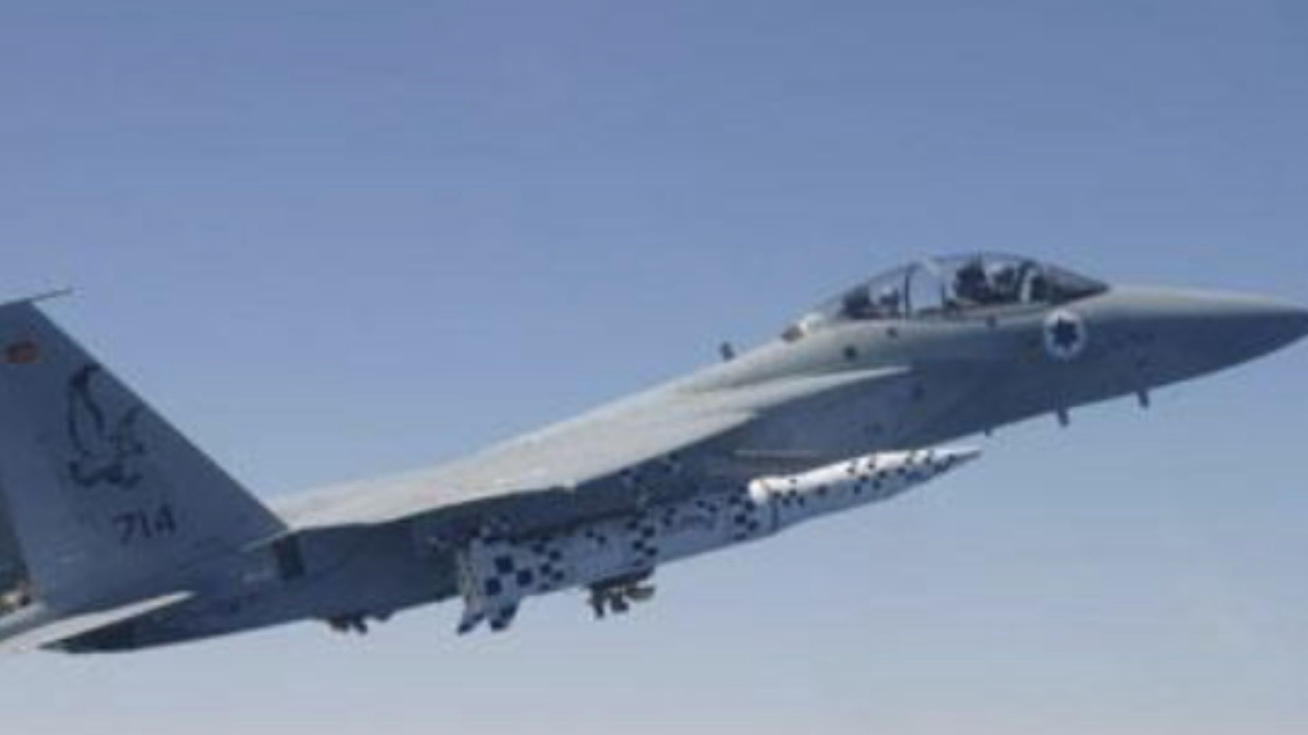
Several media reports said Israel used an advanced jet-launched ballistic weapon called the Blue Sparrow missile. The missile travels through the upper atmosphere before striking its target. Because of this trajectory, experts often describe it as a “missile from space.”
Reports said the missile climbed close to the edge of Earth’s atmosphere. It then descended at extremely high speed and struck the compound where Iran’s political and military leaders had gathered.
What Is the Blue Sparrow Missile?
The Blue Sparrow is an advanced air-launched ballistic missile developed by Israel. According to reports cited by The Telegraph, the missile can travel about 1,240 miles (around 2,000 kilometres).
The missile flies close to the edge of Earth’s atmosphere. It then drops sharply toward its target. Because of this unusual path, experts often call it a “missile from space.”
Technical descriptions say the missile is about 6.5 metres long and weighs around 1.9 tonnes. Fighter aircraft usually launch the weapon. It follows a ballistic trajectory and releases a re-entry vehicle that strikes the target at very high speed.
Debris believed to be from the missile was reportedly found in western Iraq. Reports described the fragments as long grey cylindrical pieces. They likely fell along the missile’s flight path toward Iran.
Defence experts cited by Forbes said Israel modified the Sparrow missile family so aircraft can launch ballistic-style weapons from long distances. This allows fighter jets to strike heavily protected targets without entering enemy air-defence range.
Origins of the Sparrow Missile Family
The Blue Sparrow belongs to a missile group that also includes the Black Sparrow and Silver Sparrow. Israel originally developed these systems to simulate Soviet Scud missiles during air-defence tests.
An earlier AFP report from 2008 said Israel’s Armament Development Authority developed the Blue Sparrow. Engineers mainly used it to test the Arrow missile defence system, which intercepts ballistic missiles.
Over time, analysts believe the technology evolved beyond testing. Experts say it can now function as a high-speed precision strike weapon.
The missile briefly exits the atmosphere and then re-enters at extremely high speed. This leaves defenders with very little reaction time. As a result, interception becomes much harder.
Experts say this capability makes the Blue Sparrow effective against high-value and time-sensitive targets, including leadership compounds and strategic military facilities.
Missile Strike on Tehran Compound
Reports suggest the strike on Tehran was a carefully planned operation.
Israeli fighter jets launched missiles that travelled toward the edge of space. The weapons then dived back toward Earth and struck a government compound in Tehran where senior Iranian leaders were meeting.
The strike killed Iran’s most powerful political figure along with several senior officials.
Reports cited by NDTV said Israeli F-15 Eagle fighter jets and other aircraft took off around 7:30 am Iran time. Nearly two hours later, the aircraft launched about 30 missiles, including Blue Sparrow systems, at the compound linked to Khamenei.
The attack occurred while several top Iranian political and military leaders had gathered for a meeting.
Role of Intelligence in the Operation
Reports from The New York Times said intelligence played a crucial role in the operation.
US intelligence agencies had reportedly tracked Khamenei’s movements for several months. Officials learned that senior Iranian leaders would meet at a government compound in Tehran and that Khamenei would attend.
The CIA reportedly shared what officials described as “high fidelity" intelligence about Khamenei’s location with Israel.
Planners initially scheduled the operation for nighttime. However, they changed the timing after intelligence confirmed the meeting of senior officials.
The attack began around 6 am in Israel when fighter jets took off from their bases. About two hours and five minutes later, at roughly 9:40 am in Tehran, long-range missiles struck the compound.
At the time of the strike, several Iranian national security officials were inside one building. Khamenei was in another nearby structure.
Deception Tactics and Surveillance
Reports said the strike followed a long intelligence and deception campaign.
According to The New York Post, Israeli officials created the impression that the military was standing down before the weekend.
An official from the Israel Defense Forces told reporters that the military released photos suggesting senior commanders were heading home for Shabbat dinner. The move created the impression that no major operation was underway.
However, officials secretly returned to military headquarters to prepare for the strike.
The report said Israel’s intelligence agency Mossad monitored activity around Khamenei’s compound on Pasteur Street in central Tehran. Intelligence teams tracked the schedules of bodyguards and security personnel.
Surveillance cameras in the area helped determine when several senior Iranian leaders gathered at the compound.
During the operation, Israeli forces disrupted around a dozen mobile phone towers near the compound. The move prevented Iranian security teams from receiving warnings.
Reports said Israeli and US command centres remained connected in real time during the strike. This allowed commanders to adjust the plan depending on Iran’s response.
Senior Iranian Leaders Reportedly Killed
Israeli officials cited in reports said the strike killed more than 40 senior Iranian leaders.
Among those reportedly killed was Mohammad Pakpour, commander of the Islamic Revolutionary Guard Corps.
The operation is one of the most dramatic military actions in the region in recent years. It has sharply increased geopolitical tensions across the Middle East.