
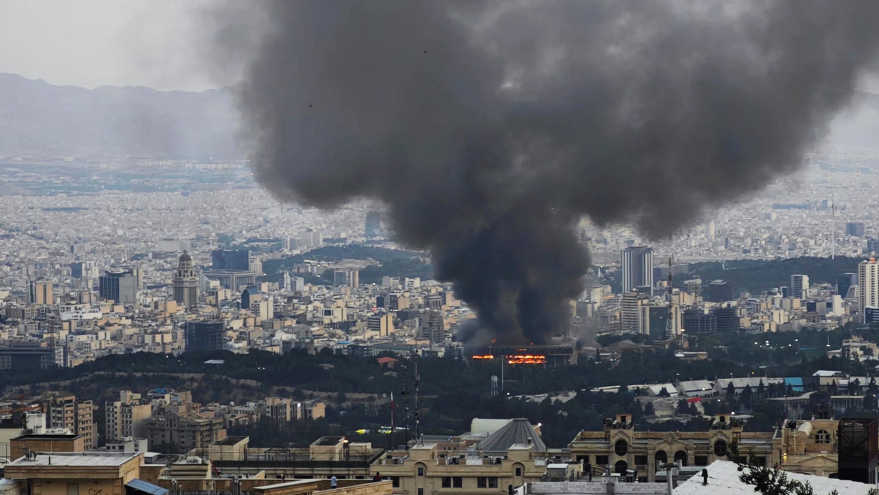

The United States (US) is preparing to send thousands of additional troops and three more warships to the Middle East. This move comes as the conflict with Iran continues to intensify.
At the same time, US President Donald Trump criticised NATO allies. He called them “cowards" for not wanting to “help open" the Strait of Hormuz.
Trump Signals Possible End to War
Earlier on Friday, Trump suggested that the war could soon slow down. “We are getting very close to meeting our objectives as we consider winding down our great Military efforts in the Middle East," he said.
He also spoke about the Strait of Hormuz and shifted responsibility to other countries.
“The Hormuz Strait will have to be guarded and policed, as necessary, by other Nations who use it—The United States does not!" he said.
Contradiction in Strategy Becomes Clear
Trump’s position shows a clear contradiction. On one side, he says the US may step back soon. On the other side, the US is increasing military deployments.
This creates a strategy that looks like a balancing act. The US wants to end the war but also keep pressure on Iran.
Uncertainty Over War’s End
According to Axios, Trump has repeatedly said the war could end “soon" because there is “practically nothing left to target". He also believes other countries should take charge of securing the Strait of Hormuz.
However, the reality remains different. The strait is still disrupted. Oil markets remain unstable. The conflict has no clear end point. Even Trump’s advisers see a dilemma. Leaving early may reduce US influence, but staying longer could lead to deeper conflict.
Ground Situation Shows Escalation
Despite talk of reducing operations, US actions suggest the opposite. Reports say the US is sending more Marines and warships. Military operations and airstrikes are continuing. Funding for the war is also increasing.
Trump has rejected a ceasefire. He has also warned of further action if required. This shows that the US is strengthening its military posture, not reducing it.
Strait of Hormuz Remains Central Issue
The biggest contradiction lies in the Strait of Hormuz. Trump says the US does not need to control the strait. However, reopening it remains the biggest challenge of the war.
Iran’s actions have sharply reduced tanker movement. Oil prices have crossed $100 per barrel. The situation has created a major global supply shock.
Despite this, Trump suggested the strait might “open itself" without major intervention.
Gap Between Goals and Reality
The US has clear goals. These include weakening Iran’s military, stopping its nuclear programme, and securing global shipping routes. However, these goals are difficult to achieve quickly.
Military strikes do not guarantee safe shipping. Damaging infrastructure does not ensure stability. Tactical success does not always lead to long-term control.
Even after major strikes, including attacks on key locations like Kharg Island, disruption in the Strait of Hormuz continues.
Global Pressure Influences Policy
Trump also faces pressure from global developments. Rising oil prices and economic stress on allies are major concerns. Reports say NATO countries have shown limited interest in deeper involvement. Trump has criticised them while also asking them to take more responsibility.
This creates another contradiction. The US wants to step back but still wants to guide outcomes.
Core Policy Tension Remains
Trump’s Iran policy reflects two competing goals. He wants to end the war quickly. This helps reduce costs and allows him to claim success. At the same time, he wants to maintain strong pressure on Iran. He aims to keep military leverage and control escalation.
These two goals do not easily align. The US is trying to reduce involvement while still increasing pressure. The unresolved issue of the Strait of Hormuz remains at the centre of this tension.