
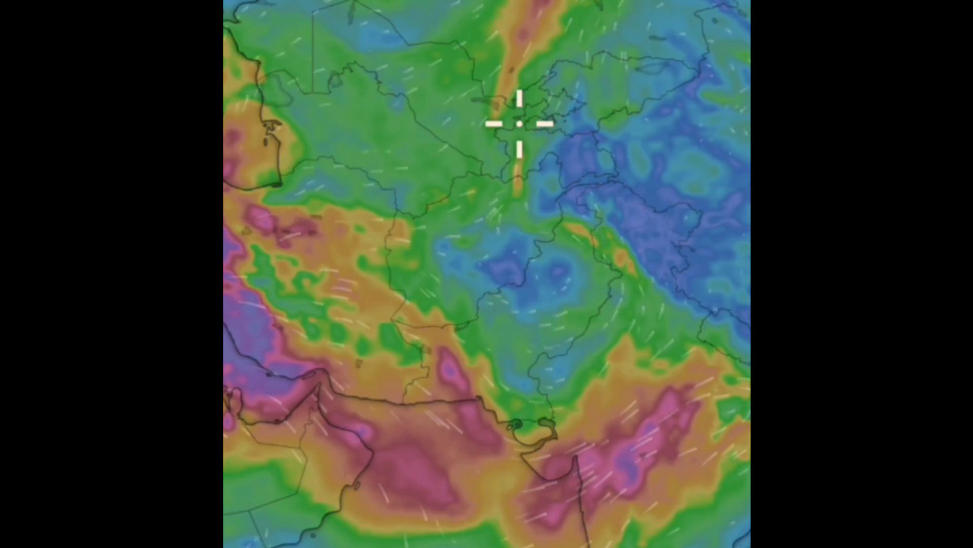

Weather experts have issued a warning about an intense Western Disturbance that is expected to affect large parts of India. The system is likely to bring heavy rain, hailstorms, and a noticeable drop in temperatures, especially as it moves through northwest regions.
According to a bulletin released on April 1 by the India Meteorological Department, the disturbance will reach peak intensity on April 3 and 4. During this period, some areas—particularly the Kashmir Valley—may experience isolated heavy rainfall on April 3.
Rain, Thunderstorms Likely Across Multiple Regions
The IMD has forecast a wet spell accompanied by thunderstorms and lightning across central India until April 6. There is also a possibility of isolated hailstorms on April 3.
Daytime temperatures across northwest India are expected to remain near or below normal until April 6, extending the unusually cool conditions already seen in recent weeks.
Unusual Weather Pattern Continues
Several parts of the country have already experienced cooler-than-normal weather due to frequent western disturbances. In fact, the second half of March also saw a similar system that brought rainfall and reduced temperatures across northwest India, including parts of Delhi NCR.
Experts Call It a ‘Powerful’ System
Meteorologists have described the upcoming disturbance as particularly strong. A key feature of this system is its “U-shaped” jet stream pattern, which is expected to intensify weather activity.
Rain and hailstorms have already affected parts of Haryana and Punjab, raising concerns among farmers, especially wheat growers whose crops are ready for harvest.
Severe Weather Expected in Key Regions
Climate scientist Dr Pradeep warned that the disturbance could trigger extreme weather across multiple states.
He said the main impact zones would include:
- Jammu and Kashmir and Ladakh, where heavy rain and snowfall are expected
- Punjab and Rajasthan, likely to see widespread thunderstorms and strong winds
- Gujarat, especially northern and interior regions, which may face significant impact
He also noted that scattered thunderstorms could occur across plains and central/eastern areas, including Haryana, Delhi NCR, Uttar Pradesh, Himachal Pradesh, and Madhya Pradesh.
⚠️ SEVERE WEATHER ALERT: Strong Western Disturbance (April 3–5) ⛈️❄️
— 🔴All India Weather (@allindiaweather) April 1, 2026
A powerful Severe Western Disturbance is set to track across Northwest India, passing critically close to the Gujarat and Rajasthan border. This system will trigger a significant spell of extreme weather across… pic.twitter.com/n5nLfYYVR0
Impact to Extend to Central and Southern India
As the system moves forward, rain and thunderstorms are also expected in parts of central and southern India. These include Maharashtra (especially Vidarbha and Marathwada), Chhattisgarh, Telangana, as well as parts of Odisha and West Bengal.
Dr Pradeep also said temperatures are expected to drop sharply after the rainfall. However, he added that summer conditions are likely to return during the second half of April.
Jet Stream Pattern Behind Intense Weather
Weather observer Navdeep Dahiya highlighted that jet streams are forming a “U-shaped” pattern, which supports the development of strong western disturbances starting April 3.
Mahesh Palawat from Skymet Weather explained that when jet streams become more wavy, the impact of western disturbances increases even in lower latitudes. He also linked this pattern to rapid warming in the Arctic region.
Widespread Weather Activity Expected
Dahiya said that northern and western parts of India are likely to experience rain, hailstorms, and storms, while central and southern regions may see intense evening thunderstorms. He described the situation as “too much weather action for the third driest month of the year.”
He also noted that the summer season is expected to fully set in only after April 15.
Rise in Western Disturbances This Year
Recent reports show that March recorded eight western disturbances, higher than the usual five to six. Experts expect at least three more systems by mid-April.
This increase is notable because January and February had fewer disturbances than normal, leading to reduced snowfall in the Himalayan region. However, activity has increased sharply since mid-March.
What Is a Western Disturbance?
A western disturbance is a moisture-carrying weather system that originates over the Mediterranean region and travels eastward. It moves along jet streams, which are fast-moving air currents located at high altitudes, around 30,000 feet above the Earth.