
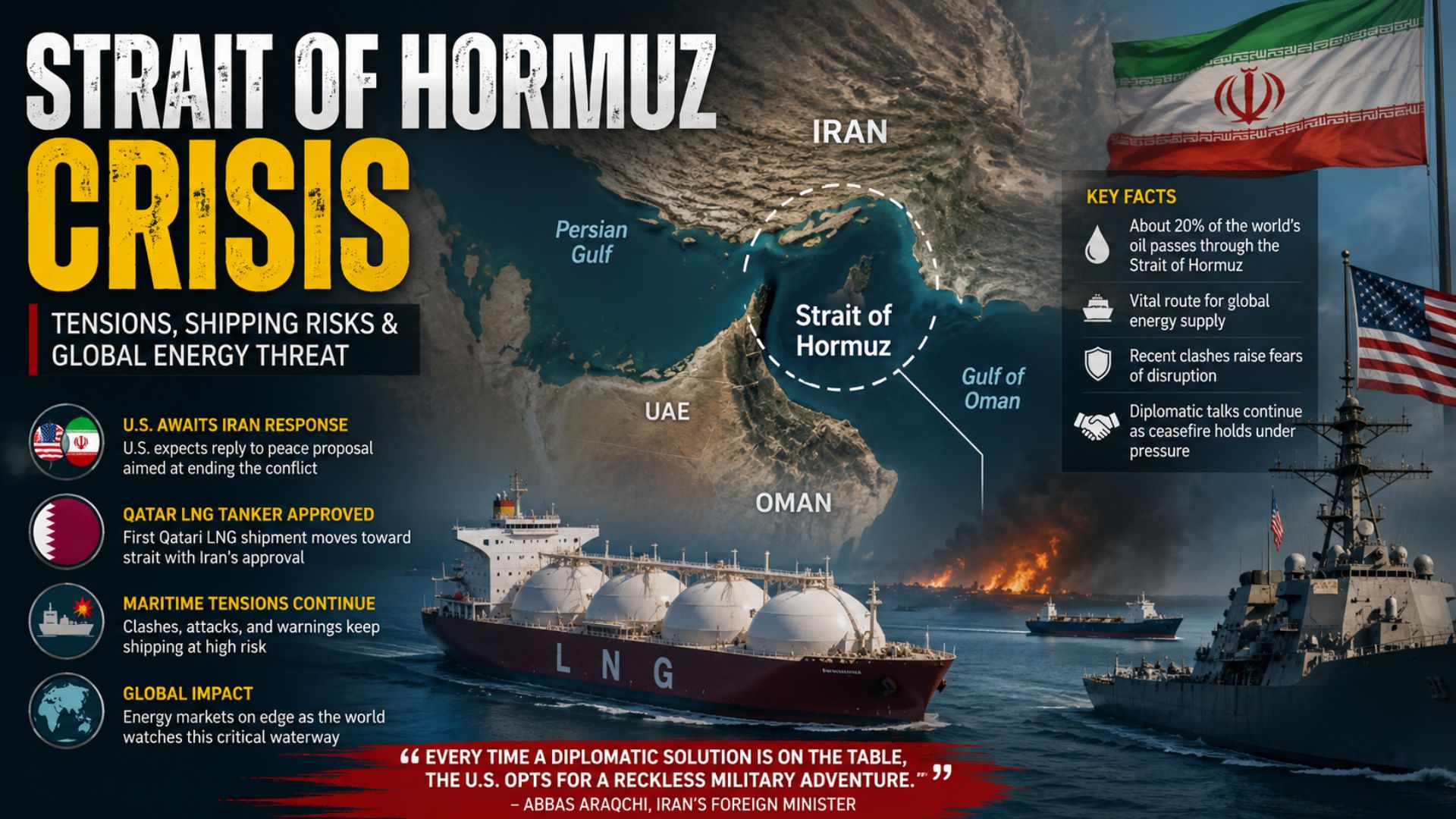

The ongoing war involving Iran has severely disrupted global oil supplies and pushed inventories down at a record pace. At the same time, the near-closure of the Strait of Hormuz for almost two months has removed more than a billion barrels of crude oil from global markets, raising serious concerns among governments, traders, and energy companies.
As oil reserves continue shrinking, analysts warn that the world now has a much weaker cushion to absorb fresh supply shocks. Consequently, experts fear the crisis could trigger fuel shortages, sharp price increases, and long-term economic damage even after the conflict ends.
Global Oil Inventories Fall at Historic Pace
According to data from Morgan Stanley, global oil inventories dropped by nearly 4.8 million barrels per day between March 1 and April 25. This marks the fastest quarterly decline ever recorded by the International Energy Agency.
Crude oil contributed almost 60% of the decline, while refined fuel products accounted for the remaining losses.
Meanwhile, energy experts explained that oil systems require minimum reserve levels to function smoothly. Therefore, markets could face operational stress long before inventories actually reach zero.
“Inventories are acting as the shock absorber of the global oil system,” said Natasha Kaneva, head of global commodities research at JPMorgan Chase & Co.. She added, “not every barrel can be drawn.”
JPMorgan also warned that OECD oil inventories could reach “operational stress levels” as early as next month if the Strait of Hormuz remains shut. Furthermore, the bank projected that reserves could fall to “operational minimum” levels by September.
At the same time, Goldman Sachs Group reported that inventory depletion has slowed slightly because weaker Chinese demand has left more supply available globally. However, the bank stressed that visible global oil reserves are already close to their lowest levels since 2018.
Asian Countries Face Rising Fuel Shortage Risks
Asian countries that rely heavily on imported fuel now face the greatest immediate threat from the oil crisis. Traders identified Indonesia, Vietnam, Pakistan, and Philippines as the most vulnerable nations, warning that fuel shortages could begin within weeks.
Although China currently remains relatively stable because of larger reserves, inventories across the rest of the Asia-Pacific region have fallen sharply since the war began. According to Antoine Halff, co-founder of Kayrros, oil stocks outside China have already declined by nearly 70 million barrels.
Meanwhile, Japan and India are also facing mounting pressure. Japanese reserves have dropped by nearly 50%, while Indian inventories have fallen around 10%, reaching seasonal lows not seen in at least a decade.
In addition, supplies of naphtha and liquefied petroleum gas, both essential for petrochemical industries, have tightened significantly. Pakistan’s petroleum minister stated in late April that the country still held around 20 days of refined fuel reserves. Similarly, India’s oil ministry said refinery crude inventories remained adequate, although industry insiders reportedly admitted that stocks are falling rapidly.
Frederic Lasserre, head of research at Gunvor Group, warned that gasoline shortages would likely hit Asia first, especially Pakistan, Indonesia, and the Philippines. He further cautioned that if the Strait of Hormuz stays closed into June, several Asian economies could face serious economic disruption because of diesel shortages. Europe, however, may have slightly more time before severe supply problems emerge.
US Oil Reserves Drop Below Historical Averages
The United States, which has increasingly acted as a backup oil supplier for global markets, has also seen reserves decline sharply because of strong export demand. US crude inventories, including the Strategic Petroleum Reserve, have now fallen for four consecutive weeks. At the same time, distillate fuel stocks dropped to their lowest level since 2005, while gasoline inventories touched seasonal lows last seen in 2014. Although American producers continue increasing output, industry executives believe inventories will likely keep falling in the short term.
Europe Faces Growing Jet Fuel Supply Crisis
In Europe, jet fuel has emerged as one of the most severely affected products. Stocks at the Amsterdam-Rotterdam-Antwerp trading hub have fallen by nearly one-third since the war started, reaching their lowest level in six years. “Since February, we have seen a steady drop in jet fuel stocks,” said Lars van Wageningen from Insights Global. He added that rising demand from Asia and Australia is putting additional pressure on European supplies. Experts now warn that European fuel reserves could reach critical levels within five months as summer travel demand rises. The United Kingdom, Germany, and France are considered especially vulnerable because of high fuel consumption and limited domestic production.
Rising Oil Prices Increase Global Economic Pressure
The conflict has already driven crude oil and fuel prices sharply higher, adding inflationary pressure and increasing fears of a broader global economic slowdown. Although higher prices and supply disruptions have already reduced global oil demand, analysts believe demand may need to decline even further if inventories continue shrinking. “A lot of the inventory and spare capacity has been depleted already,” said Chevron Chief Financial Officer Eimear Bonner. “We are going to start to see some import-dependent countries potentially start to face critical shortages as we get into the June-July time-frame.”
Governments Release Emergency Oil Reserves
Governments worldwide have already pledged to release nearly 400 million barrels from emergency reserves coordinated by the International Energy Agency. So far, the United States has released nearly 80 million barrels from its planned 172 million-barrel deployment. However, officials are trying to balance market stability with preserving emergency reserves.
If authorities fully deploy the reserve, America’s Strategic Petroleum Reserve could fall to its lowest level since 1982. Meanwhile, Germany has started reissuing crude oil and jet fuel from earlier reserve releases and signaled that it may take further action if shortages worsen. However, analysts warned that policymakers now face a difficult choice. While releasing more reserves could temporarily ease prices, it would also weaken the world’s emergency safety buffer even further.
Analysts Predict Long-Term Pressure on Oil Markets
Analysts expect oil inventories to continue declining in the coming months before countries eventually begin rebuilding reserves after the crisis stabilises. “We expect this destocking environment to continue over the next number of months and ultimately drive a restocking phenomenon longer-term,” said Willie Chiang, chief executive officer of Plains All American Pipeline. He added that countries may later rebuild strategic reserves above pre-war levels, which could create another wave of demand pressure across global oil markets.