
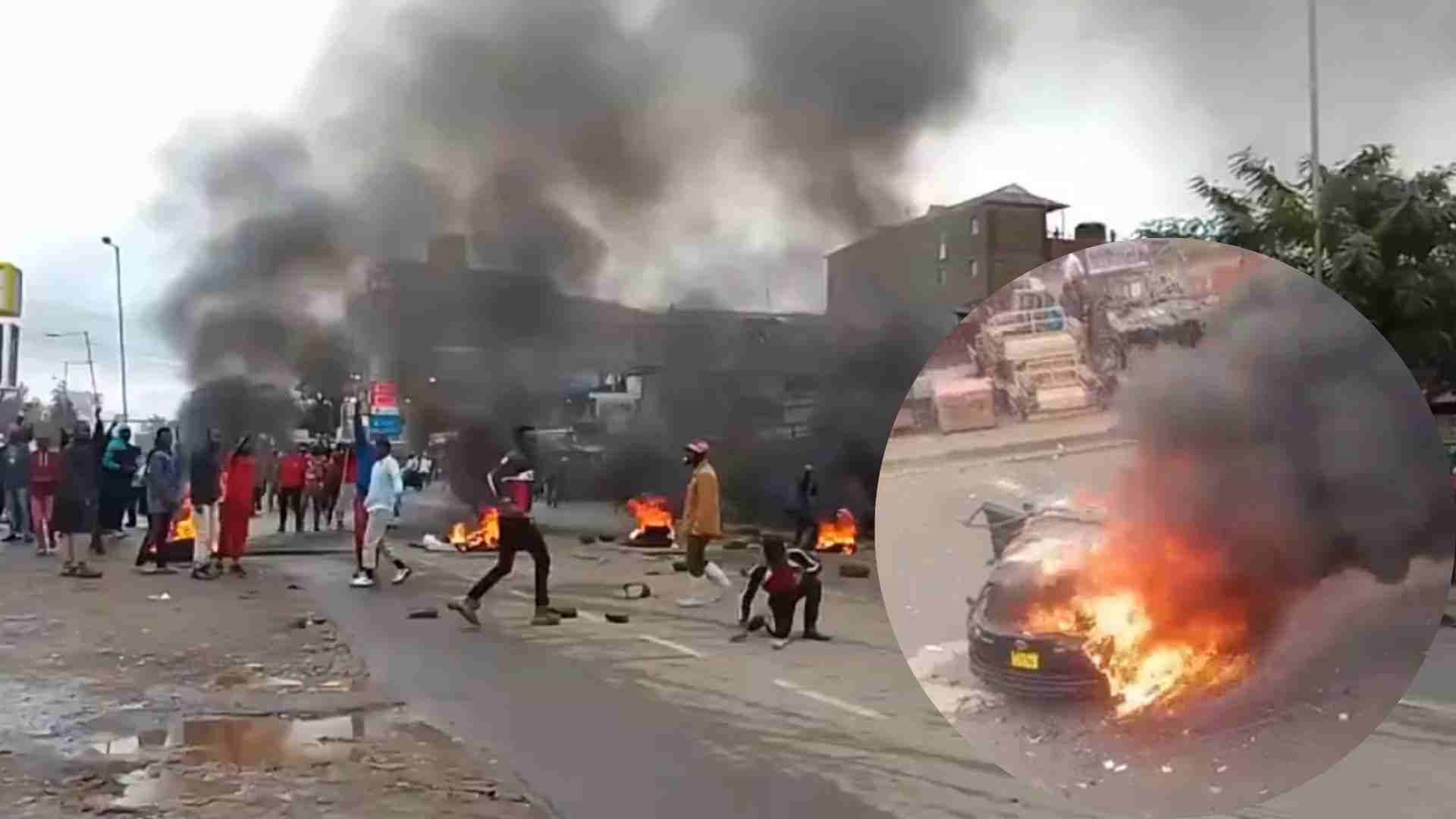

Violence spread across Kenya on Monday after nationwide protests against rising fuel prices turned deadly. At least four people died, more than 30 suffered injuries and police arrested hundreds during clashes in several cities.
The protests happened alongside a nationwide public transport strike that disrupted daily life in major cities, including Nairobi and Mombasa.
Police Arrest Hundreds
Interior Minister Kipchumba Murkomen said police arrested at least 348 people during the demonstrations. “We lost four Kenyans in today’s violence, which also saw more than 30 people injured,” Murkomen said during a televised press conference.
In Nairobi, protesters blocked roads with burning tyres and threw stones at police. Security forces responded with tear gas. Many roads leading to the city centre remained empty because of the unrest.
Transport Strike Disrupts Daily Life
Transport unions launched a nationwide strike and demanded that the government reverse recent fuel price increases. The strike stopped bus services in several towns and cities. Many commuters walked long distances to work and school.
Private bus operators, who carry thousands of passengers every day, also joined the strike. The shutdown brought parts of the country to a halt.
Fuel Hikes Trigger Public Anger
Public anger has increased after Kenya raised fuel prices repeatedly over the past two months. Last week, fuel prices rose by up to 23.5%. The previous month saw another increase of 24.2%.
The higher fuel costs pushed up transport fares, food prices and the cost of essential goods. Many families now face greater financial pressure.
Government Blames Global Oil Crisis
Kenya’s Ministry of Energy and Petroleum defended the price hikes. Officials blamed instability in global oil markets linked to the conflict involving Iran. Kenya depends heavily on fuel imports from Gulf countries. Disruptions around the Strait of Hormuz have affected oil supplies and shipping costs.
The Strait of Hormuz handles nearly 20% of the world’s oil shipments. Murkomen said most areas of the country remained calm. However, he accused “criminal elements” of using the protests to damage public and private property. He also claimed that the demonstrations had “been hijacked by political actors for political ends”.
Opposition and Rights Groups React
Opposition leader Rigathi Gachagua accused President William Ruto and his allies of profiting from rising prices while ordinary citizens struggled. Human rights organisation Vocal Africa condemned the deaths during the protests.
It “strongly condemns the use of lethal force by law enforcement that has tragically claimed the lives of four citizens during fuel protests”, the group said on social media.
Protests Continue to Rise in Kenya
Kenya has witnessed repeated protests in recent years over economic hardship, corruption, police violence and government policies. Last year, several people died during clashes involving police, vigilante groups and protesters demonstrating against high taxes and police brutality.
In June 2024, rights groups said police killed at least 60 protesters during demonstrations against tax increases.