
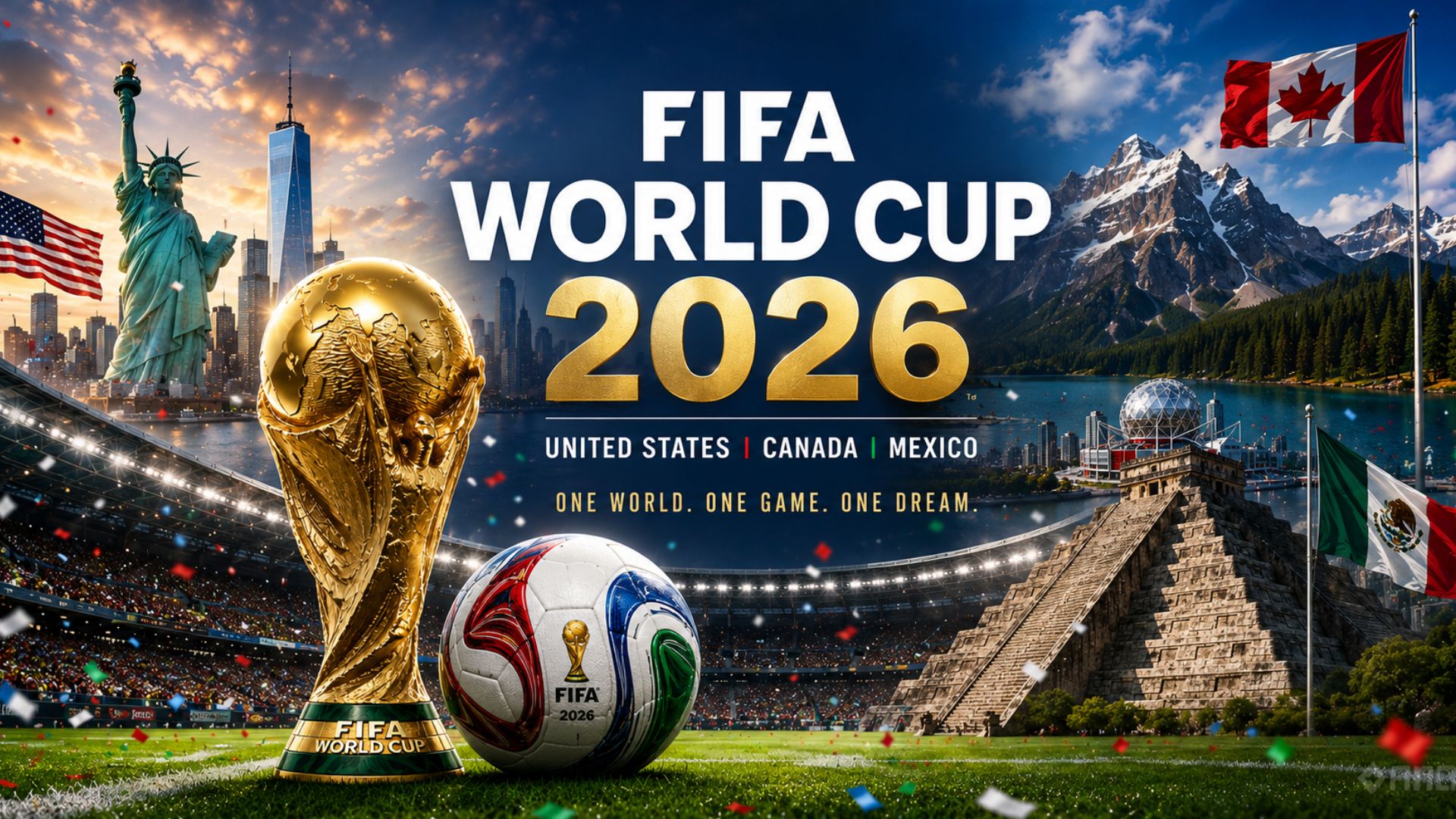

The biggest FIFA World Cup ever staged is set to begin on Thursday (IST), bringing together more teams, more matches and more host nations than any previous edition. The tournament will open at the historic Estadio Azteca in Mexico City and promises to capture worldwide attention both on and off the pitch.
This year's competition features 48 national teams, three host countries, 104 matches and 39 days of football. While fans eagerly await the action, political controversies, diplomatic tensions and logistical challenges have already made headlines before the first kick of the ball.
Historic Tournament Breaks New Ground
The opening match will see Mexico take on South Africa on June 11 in a repeat of the 2010 World Cup opener. The match will take place at the Estadio Azteca, which will become the first stadium in history to host World Cup matches across three separate tournaments.
The competition will conclude on July 19 at MetLife Stadium in New Jersey. The winning team will receive a record prize of $50 million. However, as with every World Cup, the tournament's significance extends far beyond financial rewards.
Politics Once Again Cast a Shadow Over Football
World Cups have often reflected global political realities, and the 2026 edition is proving no different. From Italy's use of the 1934 World Cup under Benito Mussolini to the tensions between Argentina and England following the Falklands conflict, football's biggest event has frequently intersected with politics.
This year, ongoing tensions between the United States and Iran have created challenges for tournament organisers.
Iran's football federation explored the possibility of playing its matches in Mexico due to concerns over travel restrictions, security issues and visa access.
Mexican President Claudia Sheinbaum welcomed the idea. However, FIFA President Gianni Infantino rejected any proposal to move Iran's matches after visiting the team's training camp in March.
Infantino stressed that football should "bring people together."
Visa and Travel Issues Create Further Controversy
Concerns involving Iran resurfaced this week after the country's football federation accused organisers of limiting ticket allocations for Iranian supporters.
Reports also suggested that several Iranian officials and staff members failed to obtain visas. As a result, Iran established its training base in Tijuana, Mexico.
The difficulties have affected other nations as well.
Somalian referee Omar Artan reportedly missed the opportunity to become the first Somali official at a World Cup after authorities denied him entry despite holding tournament credentials.
Meanwhile, Iraqi striker Aymen Hussein faced several hours of questioning before officials allowed him to enter the country.
Other delegations have also reported increased security checks and travel scrutiny.
The incidents have triggered criticism of FIFA and tournament organisers. However, neither FIFA nor the Trump administration has publicly addressed many of the concerns.
Three Nations, Three Opening Ceremonies
For the first time in World Cup history, three countries will host the tournament: United States, Canada and Mexico.
Each host nation will stage its own opening ceremony.
Mexico City's celebration on June 11 will feature performances by Shakira and Burna Boy performing the official World Cup anthem, "Dai Dai".
Other performers include Maná, J Balvin, Belinda and Tyla.
Toronto's ceremony on June 12 will feature Michael Bublé, Alanis Morissette and Alessia Cara.
Los Angeles will host another celebration featuring Katy Perry, Future, LISA and Rema.
For the final, Chris Martin has curated a halftime show featuring Shakira, Madonna and BTS.
Expanded Format Creates New Opportunities
The 2026 tournament introduces the biggest format change in World Cup history. For the first time, 48 teams will compete, replacing the 32-team structure used since 1998.
The teams will be divided into 12 groups. The top two teams from each group will automatically advance to the knockout stage. They will be joined by the eight best third-placed teams. The expanded format gives more nations a chance to compete and increases the possibility of surprise results.
Can Argentina Retain the Trophy?
Defending champions Argentina national football team enter the tournament as one of the favourites. However, statistical models are not fully convinced they will repeat their success.
According to Opta's projections, Argentina has just over a 10 percent chance of retaining the title it won in Qatar.
Spain national football team leads the predictions with a 17 percent chance of winning, while France national football team follows at 14 percent.
Yet history shows that World Cups often produce unexpected stories.
Underdogs Ready to Make History
Several emerging teams arrive with strong momentum. Ecuador national football team enters the tournament unbeaten in 19 matches after finishing second in South American qualifying.
Japan national football team continues to impress with its tactical discipline and consistency. Meanwhile, Norway national football team returns to the World Cup for the first time in 28 years, led by star striker Erling Haaland.
Four nations — Curaçao, Cape Verde, Jordan and Uzbekistan — will make their World Cup debuts. Their journeys could become some of the most memorable stories of the tournament.
Messi and Ronaldo Could Take Centre Stage One Last Time
One of the biggest narratives surrounds football legends Lionel Messi and Cristiano Ronaldo. Many believe this could be the final World Cup appearance for both superstars.
Messi, now 38, arrives as a reigning world champion and remains close to several World Cup records. Ronaldo, 41, continues to lead Portugal despite ongoing discussions about his future.
The tournament draw has created the possibility of one final Messi-versus-Ronaldo showdown in a quarter-final in Kansas City on July 11. Such a match would captivate football fans across the globe.
Football Takes Centre Stage
Beyond Messi and Ronaldo, stars such as Kylian Mbappé and Lamine Yamal will look to leave their mark on the competition.
As the tournament begins, organisers hope football can unite people despite growing divisions around the world.
When the whistle blows at the Azteca, politics, predictions and controversies will temporarily step aside. For the next 39 days, the world's attention will focus on the game itself and the stories that unfold on football's biggest stage.