
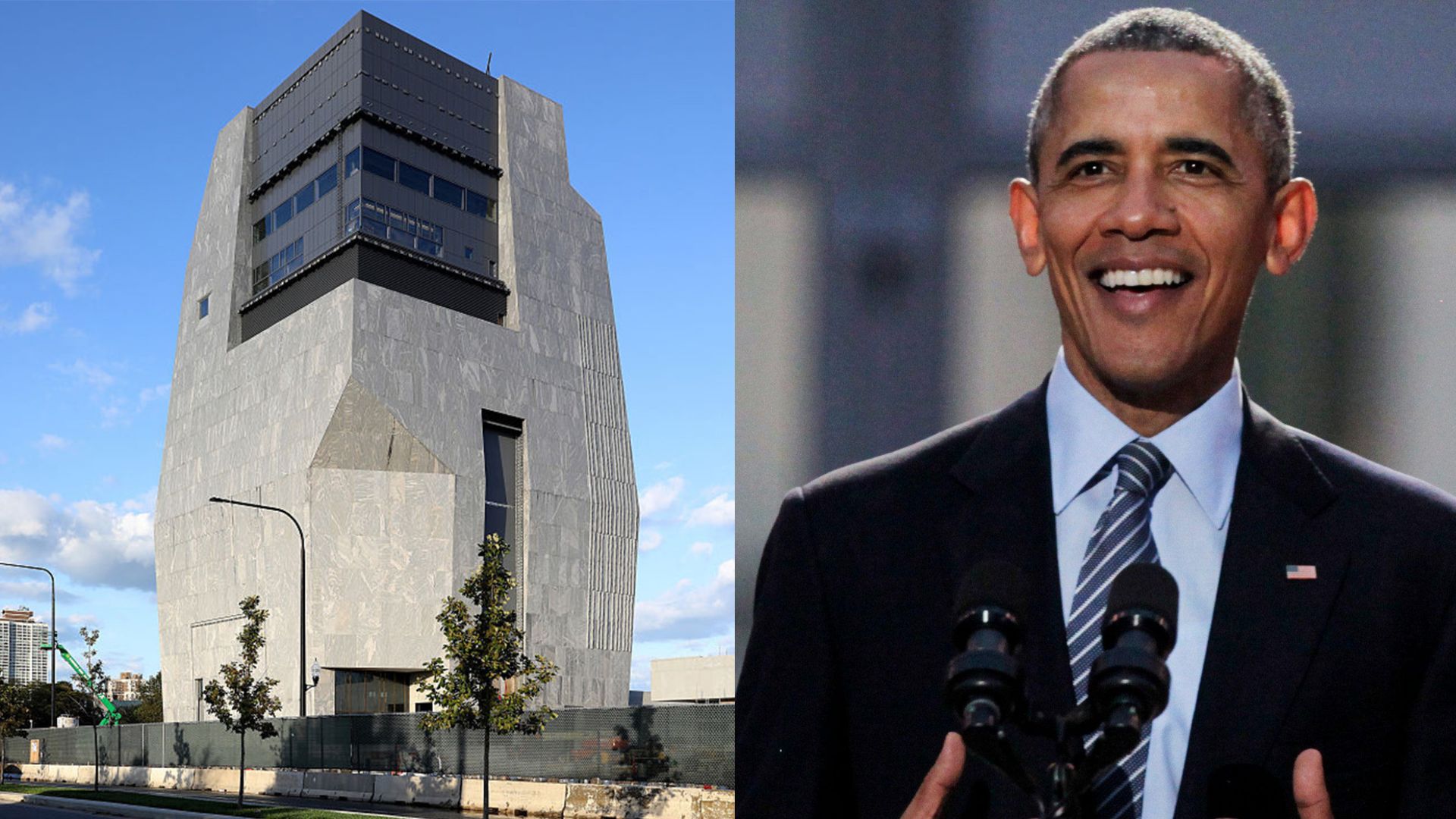

As people across the United States mark Juneteenth, the newly built Obama Presidential Center in Chicago is opening to the public for the first time. The opening of the center dedicated to former President Barack Obama coincides with a national holiday that commemorates the end of slavery in America and highlights the continuing pursuit of equality.
Located on Chicago’s South Side, the center has been designed to inspire visitors to create positive change in their communities while reflecting on the country's history and future.
Juneteenth Marks the End of Slavery in the United States
Juneteenth is celebrated every year on June 19 and honors a key moment in American history. The holiday marks June 19, 1865, when Union troops arrived in Texas after the Civil War and announced that enslaved people in the state were free. The declaration came two and a half years after the Emancipation Proclamation had formally freed enslaved people in the Confederate states.
According to historian and author W. Caleb McDaniel, the day represents much more than a historical milestone. “Juneteenth represents not just a commemoration of the end of slavery but it’s also part of the ongoing struggle for absolute equality and that ideal in American life,” he said.
Barack Obama Presidential Center Opens With Multi-Day Celebrations
The grand opening of the Obama Presidential Center includes several days of public events and activities. A dedication ceremony was held on Thursday before the center officially welcomed visitors.
The opening comes at a time when the United States continues to debate issues of race, voting rights, and political representation. Many see the launch of the center as a symbolic moment that connects the legacy of America’s first Black president with the broader struggle for civil rights and equality.
What Visitors Can See at the Obama Presidential Center
The nearly 20-acre campus offers a wide range of attractions and educational spaces. Visitors can explore a museum featuring a life-sized replica of the Oval Office and exhibits covering Obama’s political campaigns, presidency, and life in the White House. The center combines technology and interactive displays to create an immersive experience.
The campus also includes a garden designed by former First Lady Michelle Obama, complete with lettuce and strawberry plants. Other features include a professional basketball court, picnic areas with grills, and a new branch of the Chicago Public Library.
Officials expect the center to attract up to one million visitors each year. Museum Director Louise Bernard said the center encourages visitors to think about how they can make a difference in their own communities. She explained that the goal is to inspire people by “inviting people to bring change home, however change may be defined, both small or large.”
The Historical Significance of Juneteenth
This year marks the fifth anniversary since former President Joe Biden signed legislation making Juneteenth a federal holiday. However, celebrations of the day have existed for generations, particularly within Black communities. The observance began in Texas before gradually spreading throughout the country.
The name Juneteenth combines the words "June" and "nineteenth" and commemorates the arrival of U.S. Major General Gordon Granger in Galveston, Texas, with General Order No. 3, which declared freedom for enslaved people.
Earlier, during the Civil War, President Abraham Lincoln had issued the Emancipation Proclamation. However, freedom often remained unenforced in Confederate-controlled areas until Union forces secured military victories.
“It really required the force of arms and the success of U.S. armies to enforce the Emancipation Proclamation,” McDaniel said. About six months after Granger arrived in Texas, the 13th Amendment formally abolished slavery across the United States.
Juneteenth Celebrations Take Place Across America
Communities nationwide are marking Juneteenth with festivals, parades, cultural events, and educational programs. In Galveston, where Juneteenth originated, celebrations include music, fireworks, a parade, and a church service.
Nearby Houston is hosting concerts and a domino tournament at Emancipation Park, which was established in 1872 by formerly enslaved men. Other major events include a parade in Atlanta, a community bike ride in Los Angeles, and a festival on Martha's Vineyard.
Opal Lee’s Legacy Continues During Juneteenth Events
Many cities are also organizing commemorative walks honoring Opal Lee, often called the “grandmother of Juneteenth.” Lee spent years campaigning to make Juneteenth a federal holiday. Participants in these walks will travel 2.5 miles, representing the two-and-a-half years it took for the Emancipation Proclamation to be fully enforced in Texas. Lee celebrates her 100th birthday this year, adding further significance to the events.
Juneteenth Remains a Day of Reflection and Community
Historians say Juneteenth evolved into much more than a celebration of emancipation. It became a symbol of community strength, resilience, and empowerment among African Americans. McDaniel noted that by the 1880s, Juneteenth was widely observed throughout Texas and had become a major community tradition.