
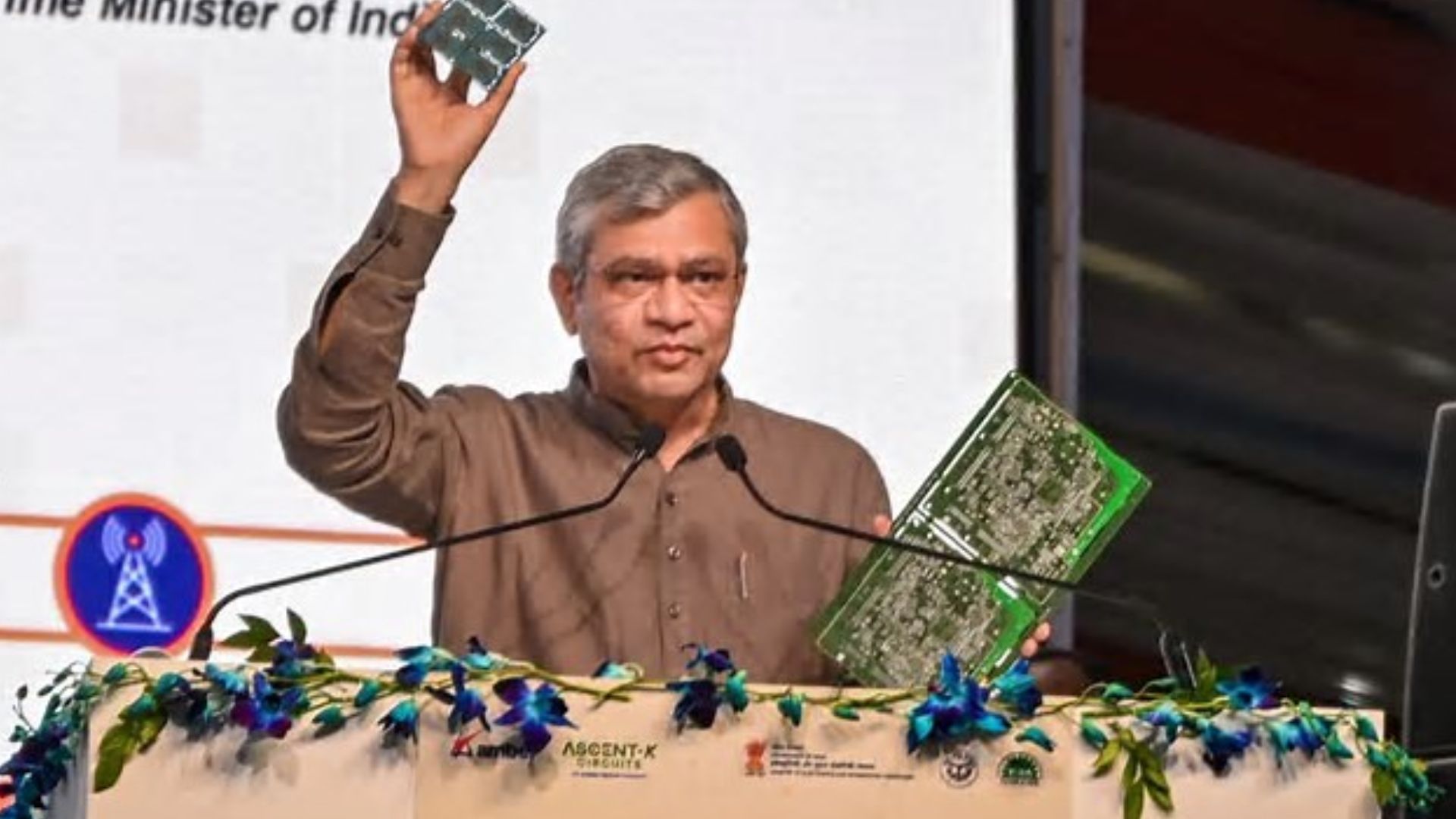

The Union Cabinet on Wednesday approved a major expansion of India's semiconductor mission by sanctioning fresh funding of Rs 1.28 lakh crore (Rs 1,27,500 crore) under the Semicon 2.0 programme. The Cabinet also cleared a Rs 62,500 crore Mobile Phone Manufacturing Scheme (MPMS) to strengthen domestic manufacturing and boost India's electronics sector. Union Information and Electronics & IT Minister Ashwini Vaishnaw announced the decisions after a Cabinet meeting chaired by Prime Minister Narendra Modi.
Semicon 2.0 to Strengthen India's Semiconductor Ecosystem
Vaishnaw said the government launched Semicon 2.0 to expand India's semiconductor design and manufacturing capabilities. The programme aims to make India a stronger player in the global semiconductor industry through a comprehensive six-pillar strategy.
The six focus areas include chip design, machines and materials, setting up new semiconductor fabrication plants (fabs), strengthening the Assembly, Testing, Marking and Packaging (ATMP) and Outsourced Semiconductor Assembly and Test (OSAT) ecosystem, research and development (R&D), and talent development. The minister said the initiative builds on the progress made under the first phase of India's semiconductor mission.
PM Modi Says Semicon 2.0 Will Boost Technological Self-Reliance
Prime Minister Narendra Modi welcomed the Cabinet's decision and said the new programme would accelerate India's semiconductor journey. "Semicon 2.0 will attract greater investment, create high-value opportunities for our youth, strengthen supply chains and advance technological self-reliance in critical sectors," he said.
Three Semiconductor Plants Have Started Commercial Production
Vaishnaw highlighted the progress made under Semicon 1.0 and said India has already started commercial chip production at three semiconductor facilities. "This industry is a strategic industry. Many countries of the world have already declared it a strategic industry… Of the 12 approved semiconductor plants under Semicon 1.0, commercial production at three plants has already started," said Vaishnaw. He added that semiconductors have become a strategic sector globally, making domestic chip production increasingly important for India.
Rs 62,500 Crore Mobile Phone Manufacturing Scheme Announced
The Cabinet also approved the Mobile Phone Manufacturing Scheme (MPMS) with a financial outlay of Rs 62,500 crore over the next five years. The government said the scheme aims to increase mobile phone production, deepen domestic value addition, strengthen supply chains, and improve the global competitiveness of Made-in-India smartphones.
Government Offers Incentives for Mobile Phone Production and R&D
Under the new scheme, manufacturers will receive incentives on eligible sales ranging from 2.25 per cent to 5 per cent. Companies that source key components and sub-assemblies within India will receive an additional incentive of up to 1.5 per cent. The government will also provide an extra 3 per cent incentive on eligible sales for investments in product design and research and development to encourage the growth of Indian mobile phone brands.
Six-Step Roadmap to Build India's Semiconductor Industry
The Cabinet said Semicon 2.0 follows a six-step roadmap that aims to establish India as a major global semiconductor hub by strengthening manufacturing, innovation, and workforce development.
Chip Design Ecosystem to Get Major Push
The first step focuses on expanding India's chip design ecosystem. The government said 105 startups are already developing semiconductor chips in the country. The programme will support the development of intellectual property (IP), advanced chip designs, and complete semiconductor systems to strengthen India's design capabilities.
Support for Semiconductor Machines and Materials
The second step will encourage companies involved in manufacturing semiconductor equipment, machines, chemicals, gases, and other materials required for chip production. "This will lay the foundation for the sustainable growth of the semiconductor industry. This will also help in developing the precision manufacturing industry in our country," the Cabinet said in a statement.
More Semiconductor Fabs to Be Established in India
The third step focuses on setting up additional semiconductor manufacturing facilities across the country. The government plans to encourage investments in silicon fabs, compound semiconductor fabs, discrete component fabs, and display fabrication units to increase India's production capacity.
India to Strengthen ATMP and OSAT Packaging Ecosystem
The fourth step aims to further expand India's Assembly, Testing, Marking and Packaging (ATMP) and Outsourced Semiconductor Assembly and Test (OSAT) ecosystem. The Cabinet said India is increasingly emerging as an alternative destination for advanced packaging facilities.
"With the success of ATMP units, the world is now looking at India as an alternative location for setting up ATMP/OSAT units. These will be actively encouraged, with a focus on bringing some of the most advanced ATMP technologies to India," the Cabinet said.
Research and Development in Advanced Semiconductor Technology
The fifth pillar focuses on promoting research and development in advanced semiconductor technologies. The government plans to collaborate with leading research institutions in India and abroad to develop advanced chip technologies and next-generation semiconductor solutions.
Semicon 2.0 to Train More Skilled Chip Designers
The sixth pillar focuses on developing a skilled workforce for India's semiconductor industry. The Cabinet said nearly 68,000 students have already been trained in chip design, while around 315 universities currently provide advanced chip design education using the latest Electronic Design Automation (EDA) tools.
Under Semicon 2.0, the government plans to strengthen this ecosystem further by offering deeper training to students during their college education, helping create a larger pool of skilled professionals for India's growing semiconductor industry.