
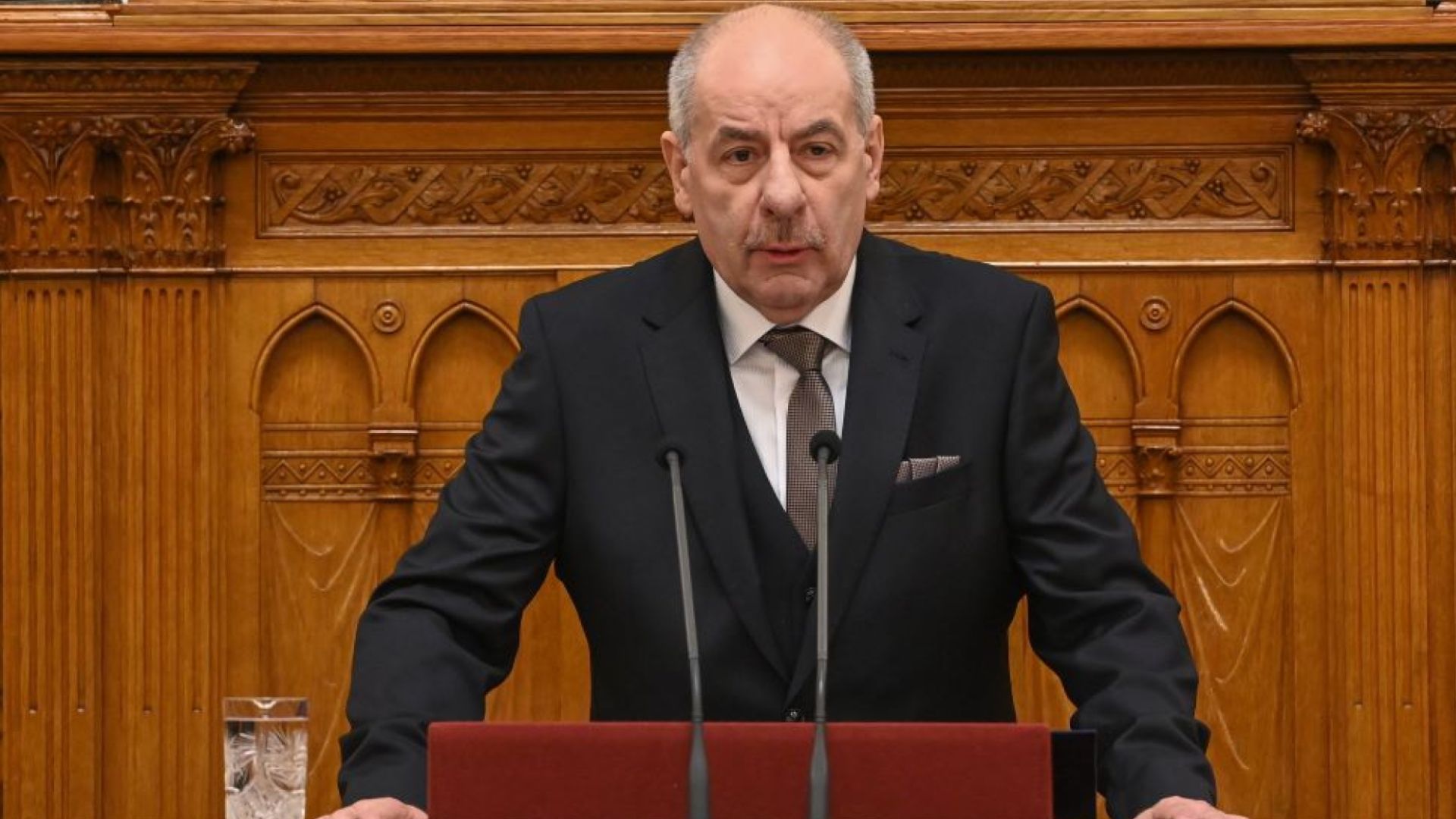

Hungary’s President Tamás Sulyok has agreed to step down after signing a constitutional amendment that immediately ended his term in office. The amendment was passed by Prime Minister Péter Magyar’s ruling Tisza party, which said the move was necessary because of society’s “serious loss of confidence” in the president. Sulyok, who was elected in 2024 under the government of former Prime Minister Viktor Orbán, said he had no option but to approve the legislation because he was bound to follow the Constitution.
Constitutional Amendment Brings Immediate End to Sulyok’s Term
The constitutional amendment ended Sulyok’s presidency with immediate effect. Although he signed the legislation, he made it clear that he acted out of legal duty rather than personal agreement. The move marks one of the biggest constitutional changes since Péter Magyar’s Tisza party came to power after defeating Viktor Orbán in a landslide election victory in April.
Former Constitutional Judge Warns About Rule of Law
The amendment has drawn criticism from legal experts. A former judge of Hungary’s Constitutional Court said the reform had weakened the country’s democratic system and the rule of law. He said on Saturday, “The seventeenth amendment to the constitution has marked a watershed in Hungary’s constitutional democracy." “By removing public office holders in a manner that openly violates the rule of law … it sets a negative precedent that inflicts a deep wound on the constitutional values of democracy, the separation of powers and the rule of law," the former Hungarian judge averred.
Péter Magyar Pushes Ahead With Constitutional Reforms
The amendment is part of Prime Minister Péter Magyar’s wider effort to dismantle the political structure built by Viktor Orbán during his 16 years in power. After securing a two-thirds majority in Parliament, the Tisza party gained enough support to amend the Constitution and introduce major institutional reforms without significant opposition.
Viktor Orbán Criticises New Constitutional Changes
Former Prime Minister Viktor Orbán strongly opposed the amendment. In a Facebook post, he warned that the reform threatened Hungary’s democratic institutions. “Tyranny is no longer a threat but reality. If this could be done to the president, tomorrow, no one will be safe," he said. Since losing power, Orbán’s Fidesz party has witnessed several high-profile resignations and declining public support.
Hungarian Parliament to Elect New President
Following Sulyok’s resignation, Hungary’s Parliament will elect a new president. The new head of state will serve until a new Constitution takes effect or for a maximum of five years. Prime Minister Magyar announced that Parliament Speaker Ágnes Forsthoffer will become interim president from Monday.
Péter Magyar Says Reform Will Restore Democracy
Magyar defended the constitutional amendment and said it would restore democratic values and public trust. “With these decisions, we are restoring something that the Orbán regime spent many years trying to take away from the Hungarian people,” the Hungarian premier said in a Facebook post. “The certainty that power can be constrained, that public assets can be recovered and that the state can once again serve its citizens, frees Hungarian citizens," he added.
Hungary Introduces Lawmaker Term Limits and Judge Retirement Age
The amendment also introduces a 12-year term limit for lawmakers. It sets the retirement age for Constitutional Court judges at 70 years. According to Reuters, the new rule would require Constitutional Court President Péter Polt, a close ally of Viktor Orbán, to retire.
Magyar Had Earlier Demanded Sulyok’s Resignation
Before Parliament passed the amendment, Prime Minister Magyar repeatedly urged Sulyok to resign. He accused the president of failing to represent national unity on key issues and of serving Viktor Orbán’s political interests instead of acting independently.