
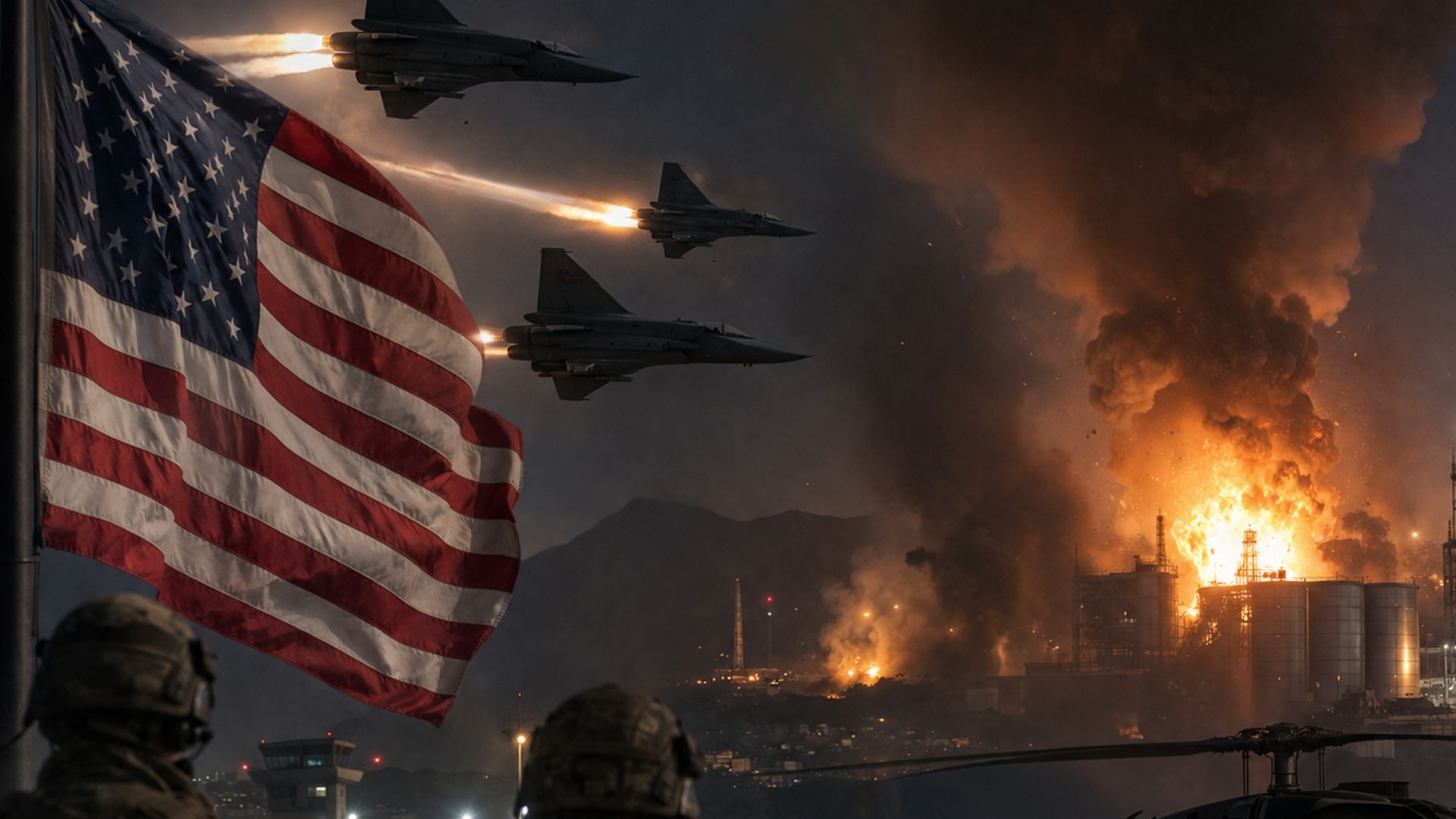

The United States launched a fresh wave of airstrikes on Iran on Saturday after Iranian missile and drone attacks killed two American service members in Jordan. The operation marked the eighth straight night of US strikes on Iran. The conflict between Washington and Tehran continues to intensify across West Asia. The latest violence has spread to Jordan, Bahrain and Kuwait, raising fears of a wider regional war.
US Troops Killed in Jordan During Iranian Attack
US Central Command (CENTCOM) confirmed that two American service members died while defending against Iranian ballistic missiles and drones in Jordan. The military also said another US service member remains missing. According to CENTCOM, the troops were killed while they “defended against Iranian ballistic missile and drone attacks.” The latest deaths raise the confirmed US military death toll to 16 since the conflict began on February 28.
US Carries Out Eighth Straight Night of Strikes
Hours after the attack in Jordan, the United States launched another round of airstrikes on Iran. CENTCOM said the operation targeted Iran's military infrastructure. The strikes aimed to weaken Iran's ability to threaten commercial shipping in the Strait of Hormuz.
In a post on X, CENTCOM said the strikes “are designed to further degrade Iran’s ability to threaten commercial shipping in the Strait of Hormuz and swiftly punish Islamic Revolutionary Guard Corps forces who launched attacks against American service members in Jordan last night.” Iranian news agencies Fars and Tasnim reported that US forces struck Sirik, a port city on the Strait of Hormuz in southern Iran.
Donald Trump Defends US Military Operation
US President Donald Trump defended the military campaign during a phone interview with The New York Post. He said the American troops gave their lives to stop Iran from acquiring nuclear weapons. Trump also warned that the conflict could spread if Iran was not stopped. He described the deaths of the service members as “a shame.” “They did it because they don’t want to see Iran have a nuclear weapon,” Trump said of the troops. “… And it just shows you how bad [the Iranians] are.”
Iran Warns of Stronger Military Action
Iran's Supreme Leader Mojtaba Khamenei accused the United States of breaking its commitments and prolonging the conflict. In a statement carried by state television, he said the attacks had “once again demonstrated to everyone the worthlessness of the American president’s signature.” “Now that the American enemy seeks to incite war and bear its most serious consequences, it should know that the dear Iranian nation and the axis of resistance have unforgettable lessons to offer it,” he added. Senior military adviser Major General Mohsen Rezaei also warned of a stronger response if US strikes continue. “Iran will no longer limit itself to retaliatory, like-for-like responses,” he said, according to Iranian state media.
Iran Targets Infrastructure Across the Gulf
Iran launched fresh attacks across the Gulf after days of US airstrikes. Tehran said earlier US strikes had hit an airport, a railway station and several bridges inside Iran. Kuwaiti authorities said Iranian attacks damaged an oil facility and a power and water plant. Bahrain's military said its air defence systems intercepted another wave of Iranian attacks. Iranian state television also claimed Iranian forces targeted an airbase in Bahrain used by the US military.
Jordan Intercepts Iranian Missiles
Iranian state television said Iranian forces targeted fuel storage tanks at the Al-Azraq military base in Jordan. The Revolutionary Guards had earlier claimed they attacked US aircraft stationed at the base with missiles and drones. Jordan's military said it intercepted 10 Iranian missiles on Saturday. It had also shot down at least three missiles the previous day.
Strait of Hormuz Remains the Main Flashpoint
The Strait of Hormuz remains at the centre of the conflict. A large share of the world's oil exports passes through the strategic waterway. Iran closed the strait after the conflict began. The United States has also reimposed a blockade on Iranian ports. Control of the Strait has become one of the biggest issues in the conflict.
Iran Reports Rising Casualties
Iran's Health Ministry said on Friday that 50 people have died since the latest fighting began. The ministry also said more than 500 people have suffered injuries.
Kuwait Residents Stock Up on Supplies
People in Kuwait expressed growing concern after attacks damaged critical infrastructure. Many residents rushed to buy drinking water and essential goods. “The demand for water and canned goods has increased since this morning amid fears that services or supply chains will be affected,” said 61-year-old Hassan Rayan. Another resident, Ali Mahmoud, 46, said, “the streets and beaches were almost empty, even though it is a holiday.”
Conflict Raises Fears of Wider Regional War
The latest exchange of strikes has increased fears of a wider war across the Gulf. Both the United States and Iran continue military operations and issue fresh warnings. Regional governments remain on high alert as concerns grow over energy infrastructure, commercial shipping and civilian safety.