
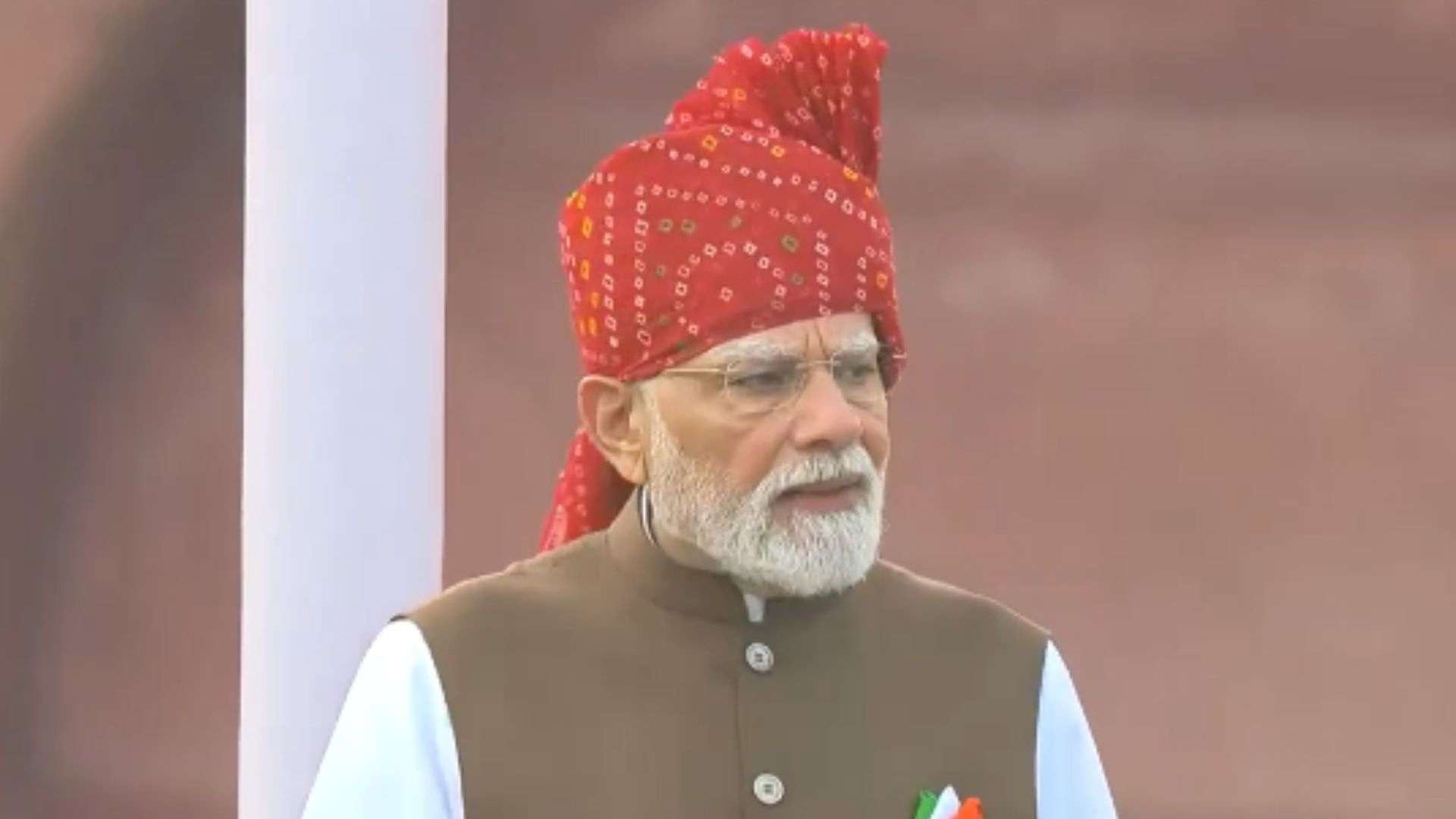

Prime Minister Narendra Modi, addressing the nation from the Red Fort on the 80th Independence Day, highlighted India’s ability to remain self-reliant despite major global challenges.
He pointed to the West Asia crisis as a key example. Modi said India managed to protect its energy supplies despite fears of shortages after the Iran war began.
No Shortage of Petrol, Diesel or LPG
The prime minister recalled the concerns that emerged when fighting broke out in the region. There were fears that disruptions could affect India’s supplies of petrol, diesel and LPG. However, Modi said the government took timely measures to prevent shortages.
"When the West Asia crisis happened, some people tried to scare us that we would not get petrol, diesel or LPG. Due to our measures, there is no shortage of gas, fuel, or urea in the country today," the prime minister said in his Saturday address.
He said India successfully dealt with the pressure created by the crisis and maintained supplies of essential commodities.
Self-Reliance Helped India
Modi said India’s ability to depend on its own systems helped it overcome challenges during the crisis. "We proved naysayers wrong by ensuring sufficient energy supplies during the West Asia crisis. Some people weaponised systems at their disposal during times of crisis, but our self-reliance helped us," he said.
He presented this experience as evidence that India needs to strengthen domestic capabilities in critical sectors.
India Diversifies Trading Partners
The prime minister also spoke about India’s expanding network of international trade partners. He said the country has worked to diversify its trade relationships instead of relying heavily on a limited number of markets.
Modi also highlighted the Free Trade Agreements signed by India with countries around the world. "The world has started recognising our abilities; we have concluded FTAs with 40 countries," he said.
Global Recognition of India
According to Modi, India’s growing trade partnerships show that the world is increasingly recognising the country’s economic potential. He said stronger trade links can help India expand its presence in global markets while also creating opportunities for domestic businesses.
The prime minister linked this approach to India’s broader goal of becoming more self-reliant while remaining connected to the global economy.
Limits in Thinking Can Hold Back a Country
Modi then shifted his focus to India’s natural resources and the need to change outdated approaches. He argued that a lack of resources is not always the reason a country fails to progress. Sometimes, he said, restrictive thinking can become a bigger obstacle.
"many times, a country does not stop because of a lack of resources... it stops because of the limitations of its thinking. When our thinking becomes confined by limitations, we fail to recognise our own potential."
India’s Offshore Exploration Push
The prime minister used offshore oil and gas exploration to explain his point. He said India’s dependence on crude oil is also connected to earlier restrictions on exploring offshore areas.
"Today, India has to depend on crude oil, and this is also a result of the limitations in our thinking. You will be surprised to know that, because of such an approach, we had declared nearly 99 per cent of our offshore areas as 'no-go areas.' We had effectively decided not to undertake exploration beneath the sea."
Modi said such restrictions prevented India from fully examining the potential of its offshore resources.
From No-Go to Go-Ahead Areas
The government has now changed this approach, according to Modi. "This was a poverty of thinking. We decided that this could not continue. We have now opened up 99 per cent of areas that were once designated as no-go zones and converted them into 'go-ahead' areas. We are now actively pursuing exploration beneath the sea and making efforts to discover new reserves," he added.
The move is aimed at increasing exploration beneath the sea and identifying new domestic energy reserves.
Push for Greater Energy Security
Modi’s remarks linked offshore exploration with India’s wider energy security strategy. Greater domestic exploration could help the country identify additional resources and reduce its dependence on imported crude oil over time.
His Independence Day address therefore focused on a broader message: India must strengthen domestic capabilities, diversify its global partnerships and make better use of its own resources to remain resilient during international crises.