
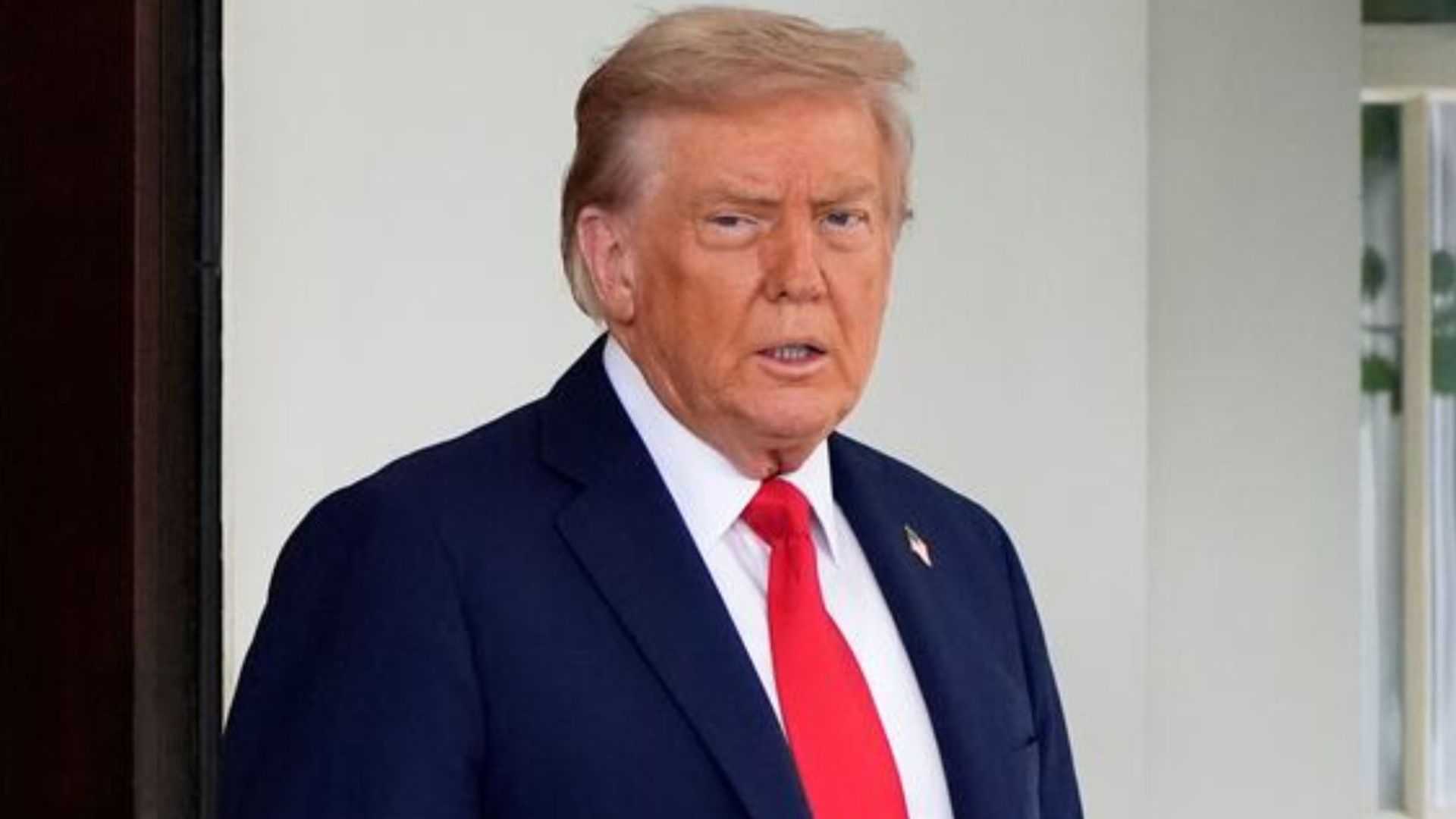

US President Donald Trump has said he could declare the Strait of Hormuz an American territory after the ongoing conflict with Iran ends. Trump made the remarks on Friday while addressing a rally in New York. His comments came as tensions between Washington and Tehran continue to rise over the strategically important waterway.
"After we finish defeating Iran, which is being very badly defeated, pretty soon I'll be declaring the Hormuz Strait a territory of the United States," the president said, prompting a loud cheer from the crowd.
Strait of Hormuz Has Strategic Importance
The Strait of Hormuz is one of the world’s most important maritime routes. It connects the Persian Gulf with the Gulf of Oman and the Arabian Sea.
At its narrowest point, the waterway passes through Iranian and Omani territorial waters. However, it has traditionally operated as an international shipping route.
The strait has become a major flashpoint since the beginning of the US and Israel’s war with Iran. Tehran has sought greater control over movement through the waterway during the conflict.
Iran Seeks Greater Control Over Shipping
Iran has previously demanded that some ships obtain permission and travel closer to its coastline before crossing the strait. Such restrictions have contributed to a sharp decline in shipping traffic through the waterway. Iran has also considered introducing tolls for vessels using the route.
The Trump administration has generally opposed the possibility of Iran imposing such charges. At the same time, Trump himself has suggested that the United States could impose tolls.
Hormuz is Central to Global Shipping
The Strait of Hormuz is crucial for international trade because large volumes of energy supplies move through the waterway. Any disruption could therefore have consequences beyond the region. Shipping companies, energy markets and countries dependent on oil and gas imports could all face increased uncertainty if access to the strait is restricted.
Trump’s latest comments add another layer to the dispute as Washington and Tehran remain locked in a broader confrontation.
Trump Defends USS Abraham Lincoln Deployment
Trump also addressed concerns over the lengthy deployment of the USS Abraham Lincoln in West Asia. The US aircraft carrier has reportedly been deployed in the region for nearly nine months. It has also played an important role in the ongoing conflict involving Iran.
A reporter asked Trump whether the carrier had been deployed for too long. Trump rejected the suggestion and indicated that he believed the deployment had not lasted long enough. "Not nearly long enough," the president said at Joint Base Andrews before heading to New York.
Trump Dismisses Concerns From Military Families
Another reporter raised concerns about the conditions faced by US service members aboard the carrier. The reporter said family members of military personnel were worried about the situation on the ship. Trump rejected those concerns.
"No, they're not," the president said. His response came as the aircraft carrier continues its extended mission in the region amid the escalating conflict.
Another Carrier Set to Replace Lincoln
Trump also said the USS Abraham Lincoln is in the process of being replaced. He indicated that the carrier would soon leave its current position and another US aircraft carrier would take over its mission. "That ship is moving right now, or very shortly, and it's being replaced with another very similar ship," he said.
The planned replacement would allow the United States to maintain a significant naval presence in the region while giving the USS Abraham Lincoln an opportunity to leave after its prolonged deployment.
Tensions Continue to Rise
Trump’s comments on the Strait of Hormuz and the USS Abraham Lincoln come as tensions between the United States and Iran remain high. The strategic waterway has become a key point of confrontation, while the continued deployment of American military assets reflects Washington’s focus on maintaining its presence in West Asia.
Trump’s proposal to declare the Strait of Hormuz a US territory would represent a major change in the status of one of the world’s most important international waterways.