

Sri Lanka pulled off a magical draw against India after following on in the second Test of the two match series. After winning the toss, India declared their first innings at a massive 503/9. Devdutt Padikkal and Dhruv Jurel scored superb centuries, while Rishabh Pant and Shubman Gill added half-centuries. Asitha Fernando (4/106) was the most successful bowler for Sri Lanka, while Prabath Jayasuriya and Keshara Nuwantha picked up two wickets each.
In reply, India's bowlers bowled Sri Lanka out for 290 in the first innings. Sonal Dinusha scored a composed century, while Pasindu Sooriyabandara made 80. However, Prasidh Krishna (3/52) and Manav Suthar (3/85) helped India enforce the follow-on.
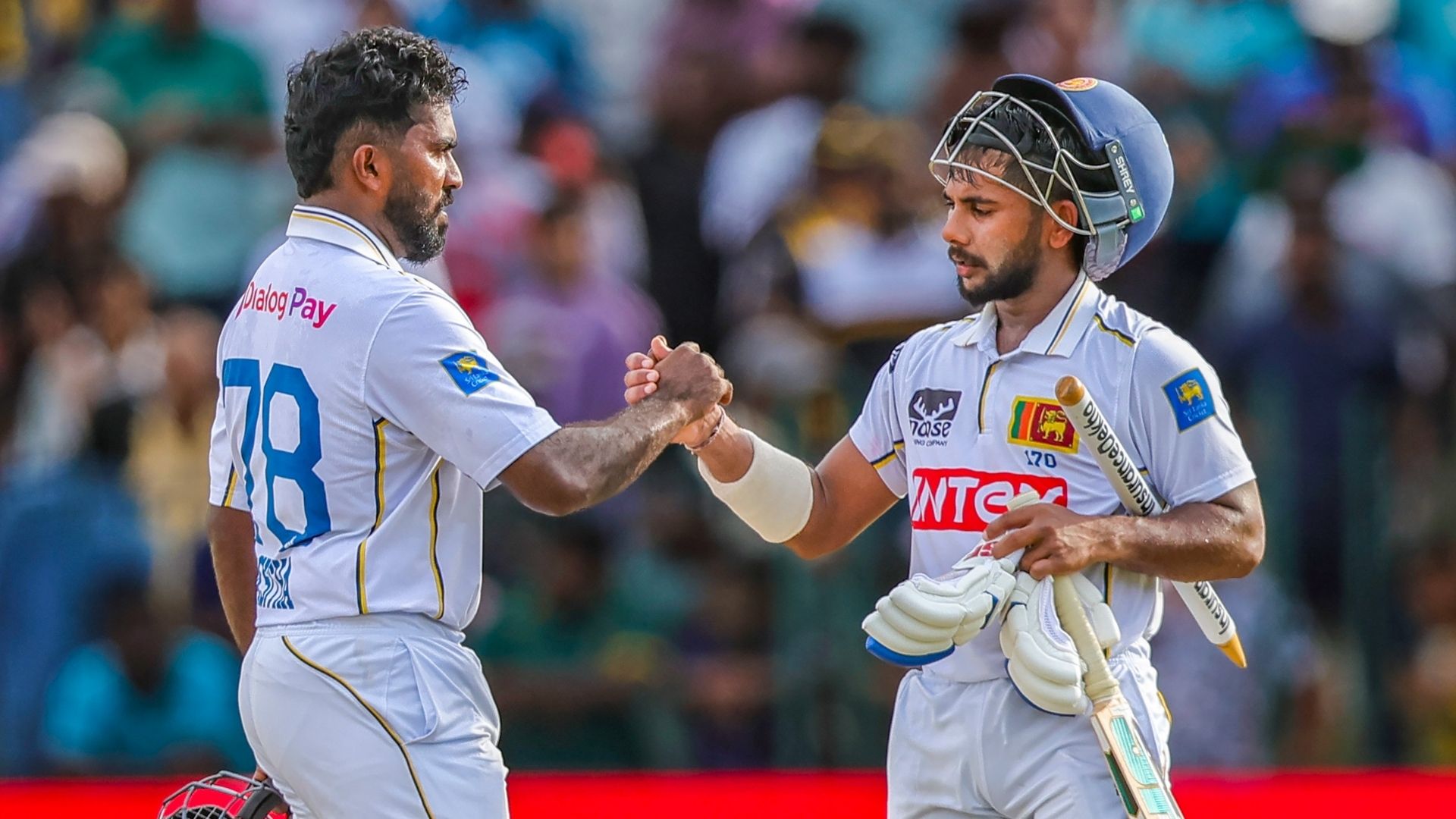
In the second innings, Pasindu Sooriyabandara scored 92 runs and took the match away from India's reach. Then Sonal Dinusha played a superb unbeaten century and stayed at the crease until the end. Keshara Nuwantha supported him well on the fifth day.
At the end of Day 5, Sri Lanka finished on 429/9 and successfully drew the match. Ravindra Jadeja (3/94) and Manav Suthar (3/121) were the most successful bowlers for India. Although India won the Test series 1-0, the draw made India's path to the World Test Championship (WTC) final more difficult.
Sonal Dinusha Completes Another Superb Century
Dinusha showed remarkable patience throughout the match. He faced a combined 426 balls across both innings. His unbeaten 133 in the second innings showed his ability to control the game under pressure. Although this was only his fifth Test, he looked comfortable and confident at the crease.
He handled India’s spinners particularly well. Dinusha used sweeps and different variations of the shot regularly. He picked his scoring options carefully and avoided unnecessary risks. He also avoided driving on a slow SSC pitch. The conditions made attacking drives dangerous, so Dinusha stayed within his preferred range of shots. His approach proved highly effective. He remained at the crease while India struggled to create consistent wicket-taking opportunities.
Keshara Nuwantha and Dinusha Build Key Partnership
Dinusha found an important partner in Keshara Nuwantha during the first session. The pair played through the entire morning session without losing a wicket. They added 112 runs from 246 balls for the seventh wicket. Their partnership gave Sri Lanka valuable breathing space. However, the team was still not completely safe when India finally broke through.
Manav Suthar produced the breakthrough immediately after lunch. He generated sharp turn and awkward bounce before Nuwantha edged a delivery to gully. Sri Lanka had only a 117-run lead at that stage. With almost two sessions still remaining, India still had an opportunity to force a result.
Lahiru Kumara Shows Patience Under Pressure
Sri Lanka’s lower order continued the fight after Nuwantha’s dismissal. Prabath Jayasuriya spent 71 balls at the crease with Dinusha. He eventually edged a drive from Ravindra Jadeja to gully. Lahiru Kumara then joined Dinusha.
Kumara had struggled in the first innings when he attempted a poorly timed slog. His earlier partnership with Dinusha had taken Sri Lanka close to avoiding the follow-on, but his dismissal had prevented them from reaching safety sooner.
This time, Kumara adopted a completely different approach. He spent around two hours at the crease. He scored only 12 runs from 90 balls, but his contribution proved extremely important. Kumara and Dinusha added 47 runs from 170 balls. Their resistance consumed valuable time and pushed Sri Lanka closer to securing the draw.
Jadeja eventually dismissed Kumara. He found enough turn from the rough to have him caught at short leg. By then, Sri Lanka had moved into a much safer position.
Dinusha and Asitha Fernando Seal the Draw
After Kumara's dismissal, Dinusha continued his resistance with Asitha Fernando. The pair faced another 56 balls without losing a wicket. India increasingly relied on part-time bowlers as the chances of forcing a victory disappeared. The Indian attack had already bowled an enormous number of overs during the match.
Sri Lanka eventually declared, triggering the final hour of the Test. By then, their lead had reached 216 runs. The teams shook hands at the earliest possible opportunity, confirming a hard-earned draw.
Indian Spinners Face Exhausting Workload
India relied heavily on its spin attack during Sri Lanka’s second innings. Manav Suthar, Ravindra Jadeja and Saransh Jain each bowled more than 35 overs in the second innings. Each also crossed the 55-over mark for the match.
The spinners occasionally produced sharp turn and steep bounce. However, those deliveries often turned too much to threaten the batters. Most other deliveries behaved predictably. When the ball did deviate, it often moved slowly enough for the batters to adjust.
There were also a few deliveries that bounced awkwardly. However, the pitch produced almost no dangerous low bounce. These conditions made it difficult for India to maintain sustained pressure.
India’s Fast Bowlers Struggle With Fatigue
The SSC pitch had helped India’s fast bowlers earlier in the Test. Variable bounce had made short-pitched bowling an effective option. However, that assistance gradually disappeared as the match progressed.
Fatigue also affected India’s attack. The team used its fast bowlers only in short spells, particularly after the second new ball lost its shine. Mohammed Siraj’s pace was another concern. His speeds dropped below 130kph and remained around that level for much of the series.
Despite that, Siraj came closest to dismissing Dinusha during the final stages. He bowled a short delivery after lunch that Dinusha fended away from his body. The ball went wide of short leg, but it was not a straightforward chance. The moment reflected Dinusha’s control throughout his long stay at the crease.
Dinusha Finishes Series With 419 Runs
Dinusha ended the series as one of Sri Lanka’s standout performers. He scored 419 runs at an average of 139.66 across the series. His three centuries in four innings highlighted his consistency and ability to perform under pressure.
His unbeaten 133 proved especially valuable. It helped Sri Lanka withstand India’s relentless bowling attack and secure a draw in a Test that demanded exceptional patience from the hosts.