
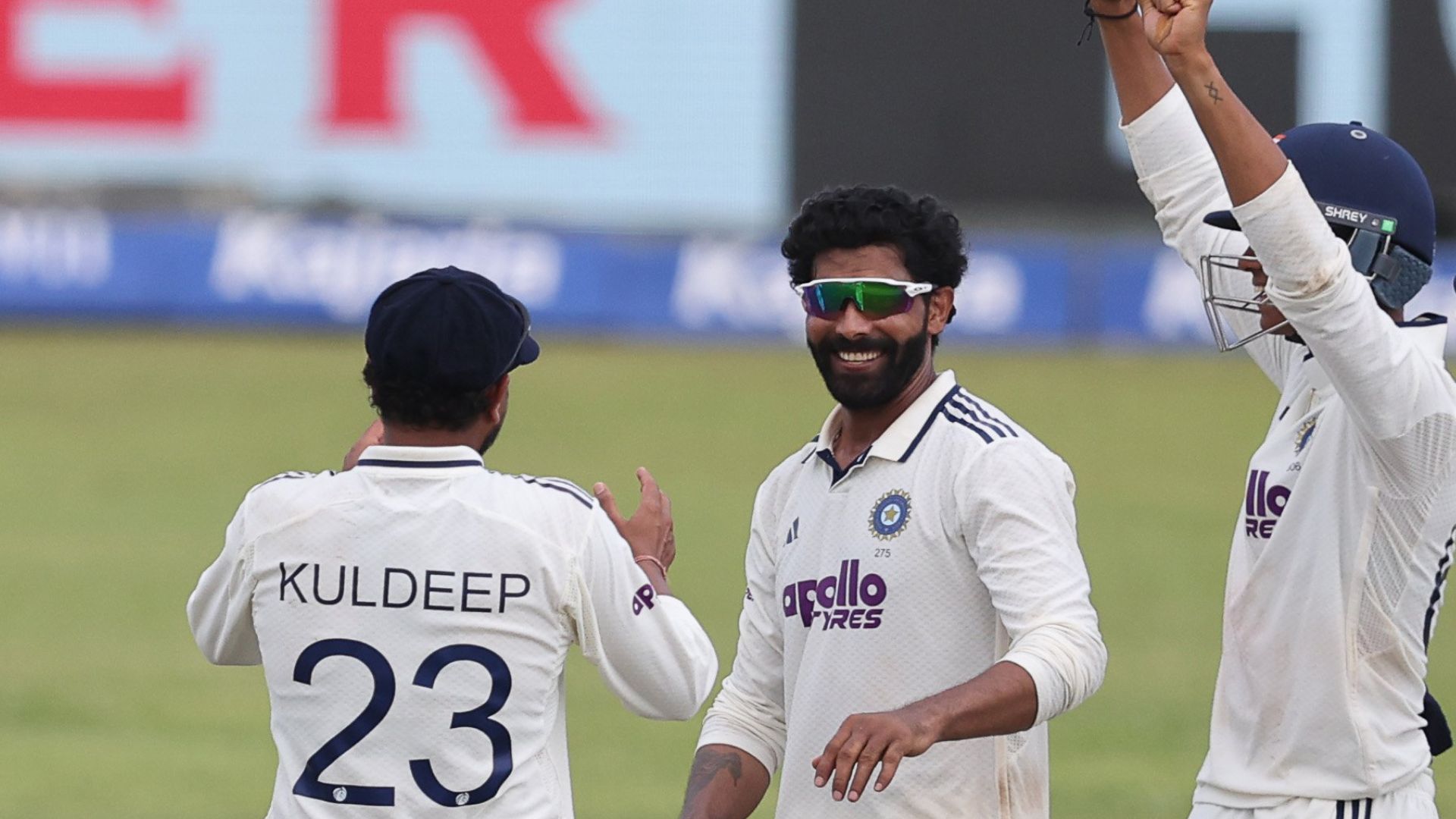

India have given their World Test Championship (WTC) campaign a major boost after beating Sri Lanka by 165 runs in the first Test at Galle. The victory was especially important because India entered the two-Test series under pressure after a difficult start to the 2025-27 WTC cycle.
The result improved India's points percentage from 48.14 to 53.33%. However, India remained fifth in the standings after the Galle victory. They have collected 64 points from 10 Tests, with five wins, four defeats and one draw.
The victory has therefore kept India's qualification hopes alive, but it has not solved their WTC problem. With only eight Tests remaining, India will need a highly successful run in the rest of the cycle.
India dominate Sri Lanka in Galle
India won the toss and chose to bat first at the Galle International Stadium. The visitors produced a strong first-innings total of 462.
Devdutt Padikkal played the biggest innings of the match. He scored a brilliant 167 from 230 balls and provided India with a strong foundation. KL Rahul also contributed with 82, while Dhruv Jurel scored a useful half-century.
Sri Lanka struggled in response but avoided an even bigger collapse after Sonal Dinusha and Niroshan Dickwella produced a crucial partnership. Dinusha scored 100, while Dickwella made 80. Sri Lanka eventually reached 284, giving India a first-innings lead of 178 runs.
India then attacked again in the second innings. Rishabh Pant provided quick runs with 66, while Padikkal added 44. India declared at 193, setting Sri Lanka a target of 372.
Sri Lanka could not complete the chase. The hosts were dismissed for 206, giving India a convincing 165-run victory and a 1-0 lead in the series.
Manav Suthar emerges as a match-winner
One of the biggest positives for India was the performance of left-arm spinner Manav Suthar. he young spinner played a key role in breaking Sri Lanka's resistance. He finished with 10 wickets in the match, including four wickets for 76 in the first innings. Ravindra Jadeja also made an important contribution with three wickets.
Suthar's performance was particularly significant because India entered the series without Jasprit Bumrah. Before the tour, captain Shubman Gill had acknowledged the importance of collecting maximum points in Sri Lanka after India's difficult results earlier in the cycle.
How many Tests does India have left?
India have eight Tests remaining in the current WTC cycle.
The schedule is demanding:
- 1 Test vs Sri Lanka — Colombo
- 2 Tests vs New Zealand — New Zealand
- 5 Tests vs Australia — India
India therefore have one remaining Test in the current Sri Lanka series, followed by a two-Test tour of New Zealand. Their final assignment will be the five-Test home series against Australia in January 2027.
The Australia series could become the biggest factor in India's qualification campaign.
Six or seven more wins could put India in contention
The Galle victory has made the mathematical situation clearer. India now have 64 points from 10 Tests. With eight matches remaining, they have 96 points still available. To reach 60%, India need another 66 points.
One possible route is six wins and one draw, which would take India to 64.81%. Six wins and two defeats would leave them at 62.96%, meaning their qualification would depend heavily on other results.
A stronger run of seven wins and one defeat would take India to 68.52%. Eight wins from eight would push their percentage to 74.07%.
Therefore, India need to treat almost every remaining Test as a must-win game.
Second Test against Sri Lanka becomes crucial
The second Test in Colombo offers India another important opportunity.
A series clean sweep would give India 24 points from the Sri Lanka assignment and further improve their position before the difficult New Zealand tour. A draw or defeat, however, would reduce the benefit of the Galle victory.
India also have to be careful about the New Zealand series. Conditions in New Zealand are traditionally challenging for visiting teams, and India have struggled there in recent years.
After that comes the five-Test series against Australia at home. India will have home conditions on their side, but Australia currently sit among the leading WTC contenders. The series could therefore have a major impact on both teams' qualification campaigns.
Why the Galle win matters
India's victory in Galle was more than just a series advantage. It stopped the team's WTC campaign from slipping further.
Before the Sri Lanka tour, India had already suffered four defeats in the cycle. Their losses against New Zealand and South Africa at home had put them under considerable pressure. Gill's team therefore needed a strong response in Sri Lanka.
The 165-run victory provided exactly that.
India showed batting depth through Padikkal, Rahul, Jurel and Pant. They also found a new match-winner in Suthar. Most importantly, they collected the full 12 WTC points.
However, the bigger challenge is still ahead.
India’s road to the WTC final
India's qualification hopes are alive but fragile.
The Galle victory moved their points percentage above 53%, but that is unlikely to be enough by itself to guarantee a place in the final. India will probably need to finish the remaining eight Tests with at least six or seven victories and avoid a series of defeats.
A 7-1 or 8-0 finish would put India in a very strong position. A 6-2 record would keep them in the race but leave them dependent on results involving Australia, New Zealand, South Africa and Bangladesh.
For India, the message is straightforward: the Galle win has reopened the door, but they still have to walk through it.
The second Test against Sri Lanka is the next opportunity. After that, the New Zealand tour and the five-Test Australia series will decide whether India's WTC campaign ends in disappointment or takes them to another final.
India have already reached the WTC final twice. Their challenge now is to produce the consistency required to make it there for a third time — and finally win the title.