
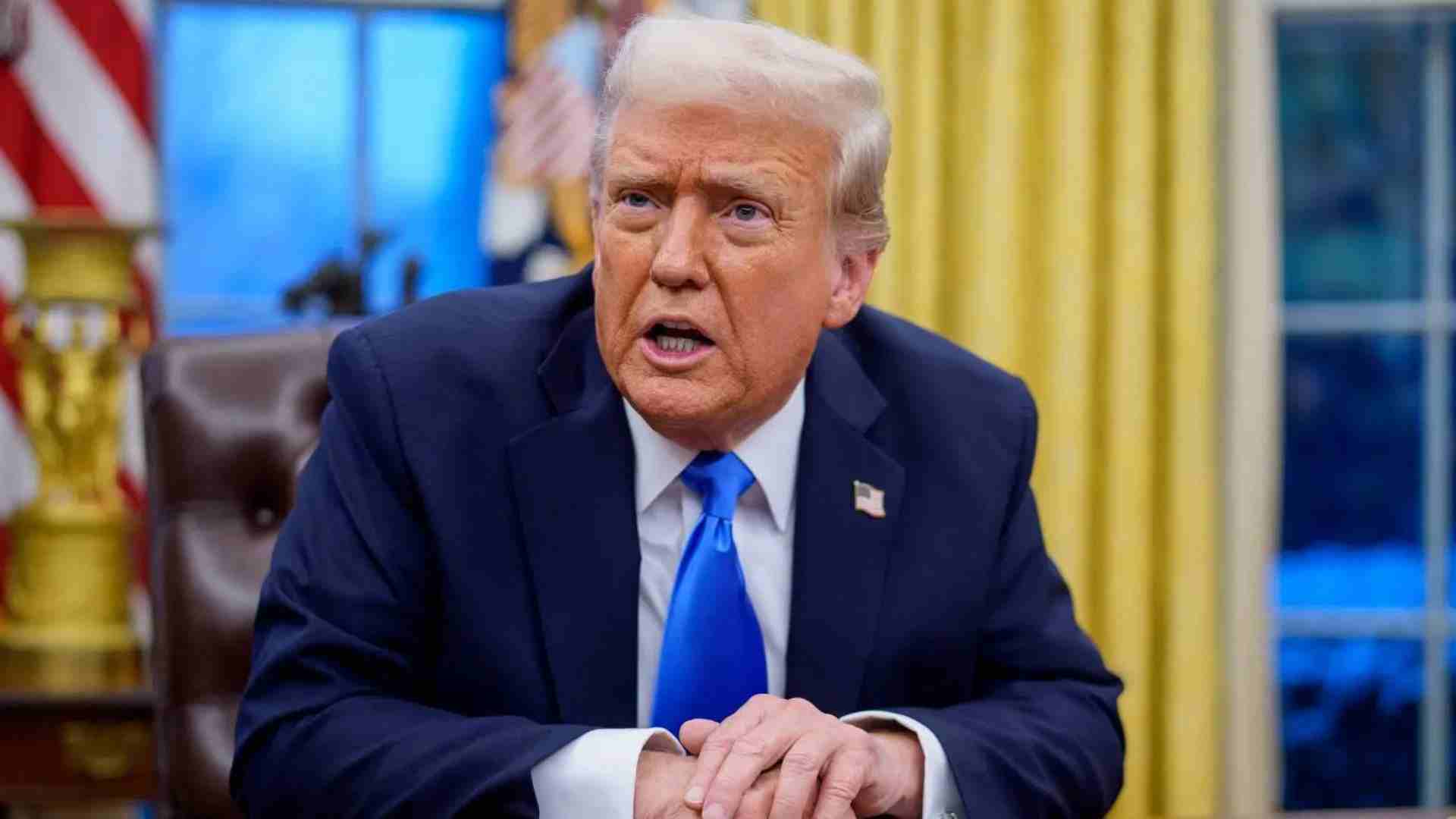

US President Donald Trump has announced what he described as the “biggest oil deal in world history” with Venezuela. The agreement would give the United States majority control of more than 65 billion barrels of Venezuela’s proven oil reserves through a partnership involving the US government, Venezuelan authorities and private businesses.
Trump said the deal would increase American access to crude oil, expand supplies and eventually help reduce gasoline prices in the United States. He also claimed that the agreement would “MORE THAN DOUBLE” America's oil reserves.
“At my direction, secretary of state Marco Rubio, and secretary of war Pete Hegseth, working closely with Highly Respected Interim President of Venezuela, Delcy Rodriguez, and, through a partnership with private business, have secured majority US control of more than 65 BILLION BARRELS of proven Oil Reserves in Venezuela, at no cost to the American Taxpayer,” Trump wrote on Truth Social.
Venezuela Welcomes the Oil Agreement
Venezuela's interim President Delcy Rodriguez welcomed the agreement and said it could provide major financial benefits to the country's government. The deal is expected to bring large-scale investment into Venezuela's oil sector. The funds would mainly be used to rebuild and modernise infrastructure that has suffered from years of underinvestment.
The plan involves the development of 17 major oil fields containing around 65 billion barrels of proven reserves. The projects are expected to attract more than $100 billion in investment. They could also generate more than $209 billion in tax revenue for Venezuela.
Rodriguez said the country's large oil reserves could help it become a stronger energy producer. She also said the projects could create jobs, increase workers' incomes and improve living standards. “Venezuela is thus ushering in a new era of recovery, growth, production, security, and prosperity for our people,” she said.
US to Control More Than Half of Oil Output
A White House official said the agreement would give the US an effective 55% share of the oil produced by a new private joint venture. The new company could become one of the world's biggest private oil firms based on its reserves. The venture would operate the Venezuelan oil fields through cooperation between the US government and a private operator.
According to the US administration, Venezuela has granted the private company 100-year concessions to operate the oil fields. The US government would hold more than half the value of the new oil company through ownership and guaranteed purchases of crude at cost.
“The United States Government has secured more than half the value of this new oil giant, split between equity ownership and guaranteed at-cost off-take,” the official said. The oil would also be used to replenish the US Strategic Petroleum Reserve and support the energy requirements of the American military.
Why the Deal Matters to the US
The agreement comes at a time of major disruption in global energy markets. The ongoing US war with Iran has severely affected oil shipments through the Strait of Hormuz, a vital route for global energy supplies.
Before the conflict, around 20% of the world's energy supplies moved through the waterway. Fighting and restrictions on shipping have sharply reduced traffic. As a result, governments and energy companies have been looking for alternative sources of crude oil.
Venezuela has become particularly important because it possesses the world's largest proven crude oil reserves. Greater access to Venezuelan crude could therefore provide Washington with another major source of oil at a time when global supplies face growing uncertainty.
Venezuela Seeks to Rebuild Its Oil Industry
Venezuela's oil industry has struggled for years because of inadequate investment, ageing infrastructure and falling production. The new agreement could provide the money needed to repair oil fields, upgrade facilities and increase production.
For Venezuela, the potential benefits go beyond oil exports. The government expects the investment to create employment, generate tax revenue and support wider economic recovery. For the United States, meanwhile, the agreement could strengthen energy security and provide greater influence over a major global oil reserve.
How Maduro Was Removed
The agreement follows a dramatic political transformation in Venezuela. On January 3, US forces entered Venezuela and captured then-President Nicolas Maduro. He was later taken to the United States to face federal charges over alleged involvement in a narco-terrorism and cocaine-trafficking conspiracy.
Maduro's removal created a power vacuum in Caracas. His former vice president, Delcy Rodriguez, was sworn in as interim president on January 5. Trump initially adopted a tough approach towards Rodriguez. He warned that she could face serious consequences if she failed to cooperate with Washington.
The relationship has since changed considerably, with the latest oil agreement marking a major expansion of US involvement in Venezuela's energy sector.
Huge Deal With Long-Term Implications
The agreement could reshape the relationship between Washington and Caracas while giving both sides significant economic incentives. The US would gain access to one of the world's largest oil reserves and potentially strengthen its energy security. Venezuela, meanwhile, could receive billions of dollars in investment and tax revenue to revive its struggling economy.
However, restoring Venezuela's oil production will take time. Much of the country's energy infrastructure requires major investment and modernisation. Therefore, while the deal could eventually increase oil supplies and support lower fuel prices, its full impact is likely to emerge over the longer term.