
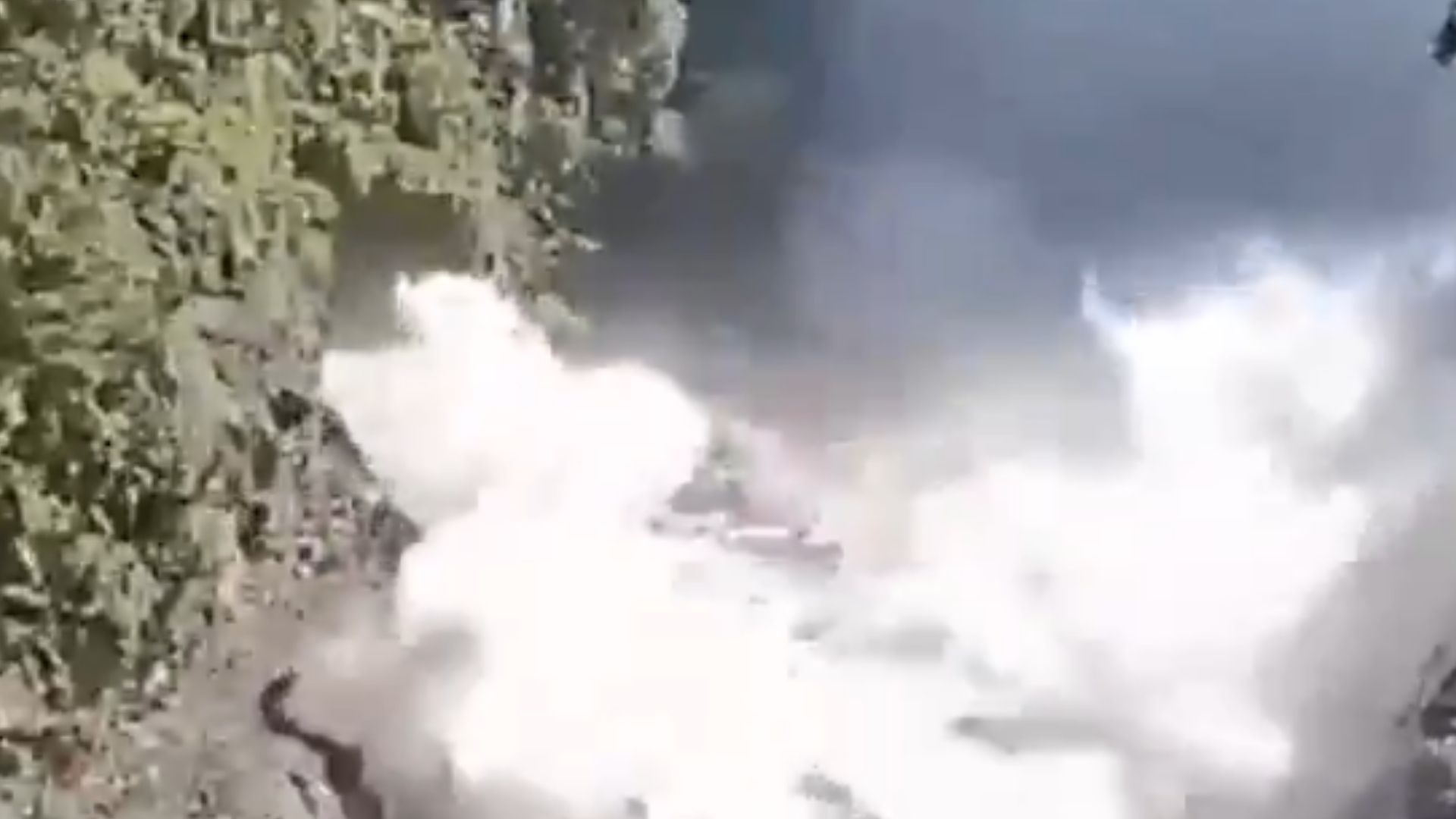

The scale of the devastation caused by a massive glacial collapse in the Himalayas is becoming clearer, with hundreds dead, thousands missing and entire communities cut off after a tsunami-like flood swept through parts of Nepal and neighbouring Tibet.
Among those rescued from the worst-hit Rasuwa district was Dibga Tamang. He was airlifted with three other survivors to an army camp in Nuwakot, Nepal. After losing his loved ones and everything around him, Tamang described the devastation in heartbreaking words.
“I have no one left waiting for me. Everything and everyone is gone. The end,” Dibga Tamang said.
The disaster began high in the Himalayas when a glacier and surrounding rock collapsed. The massive movement of ice, rock and mud triggered a powerful surge of water that rushed through river systems connecting Nepal and Tibet.
Scale of Disaster Still Emerging
Two days after the disaster, authorities and humanitarian agencies were still trying to understand the full extent of the destruction. UNICEF spokesperson Ricardo Pires warned that the worst may not yet be known.
“Sadly, we’re only seeing the beginning of this tragedy,” Unicef spokesperson Ricardo Pires told reporters on Friday.
The International Federation of Red Cross and Red Crescent Societies estimated that around 93,000 people have been affected by the disaster. David Fisher, who heads the organisation's Nepal delegation, described the psychological impact on affected communities as “enormous”.
Death Toll and Missing Persons Rise
By Friday night, Nepal had confirmed 579 deaths, while another five people had died in Tibet. Nepal's disaster management authority reported 1,924 people missing, almost twice the number recorded a day earlier. On the Chinese side of the border, 558 people were reported missing in Gyirong county in Tibet.
The disaster has also carried bodies downstream. Police told Reuters that 10 bodies had been recovered from rivers flowing south into Uttar Pradesh in India.
The number of missing people includes a large number of foreign nationals. At least 540 missing people across Nepal and Tibet are foreigners, with many believed to be Indian pilgrims travelling towards Mount Kailash and Lake Mansarovar.
India has said that 320 Indian nationals remain missing.
Glacier Collapse Triggered Massive Flood
Scientists and investigators examining seismic and satellite data believe the disaster started with the collapse of a Himalayan glacier along with part of the underlying bedrock.
The collapse reportedly produced a 5.2-magnitude tremor. It then sent a huge mass of ice, rocks and mud into the connected river systems.
These waterways are important routes between Kathmandu and Lhasa, making the destruction particularly significant for transportation and regional connectivity.
The sudden release of water and debris transformed the river systems into powerful channels capable of sweeping away infrastructure and settlements in their path.
Bridges, Roads and Hydropower Projects Destroyed
The disaster has caused extensive damage to critical infrastructure across the affected region.
United Nations officials estimate that more than 40 bridges have been destroyed or seriously damaged. More than 40 kilometres of roads have also been wiped out.
At least eight hydropower projects have suffered damage, adding to concerns about electricity generation and infrastructure in the region.
The destruction of roads and bridges has also made rescue and relief operations more difficult, particularly in remote Himalayan areas.
Unstable Lakes Create Fresh Danger
The initial flood has also created a new geological threat.
Huge quantities of debris have blocked river channels and created unstable lakes. These temporary water bodies could potentially burst and release another wave of water and debris downstream.
On Friday, rescue operations were temporarily stopped after one of two newly formed lakes began spilling into the Lhende and Trishuli rivers.
Authorities resumed rescue work after determining that the immediate danger had become manageable. However, experts continue to warn that the region remains highly unstable.
A Chinese government geohazards expert said more than 100 glacial lakes in the area could still be vulnerable, raising fears of additional flooding.
Rescue Efforts Continue Amid New Risks
Rescue teams are now working against time to locate survivors and recover those who remain missing. However, damaged infrastructure, blocked waterways and unstable terrain are making the operation extremely challenging.
The possibility of further glacial lake outbursts has added another layer of danger for emergency workers.
As Nepal and Tibet assess the damage, the disaster is emerging as a massive humanitarian crisis. With thousands still unaccounted for and infrastructure across the region badly damaged, authorities expect the true scale of the tragedy to become clearer only in the coming days.