
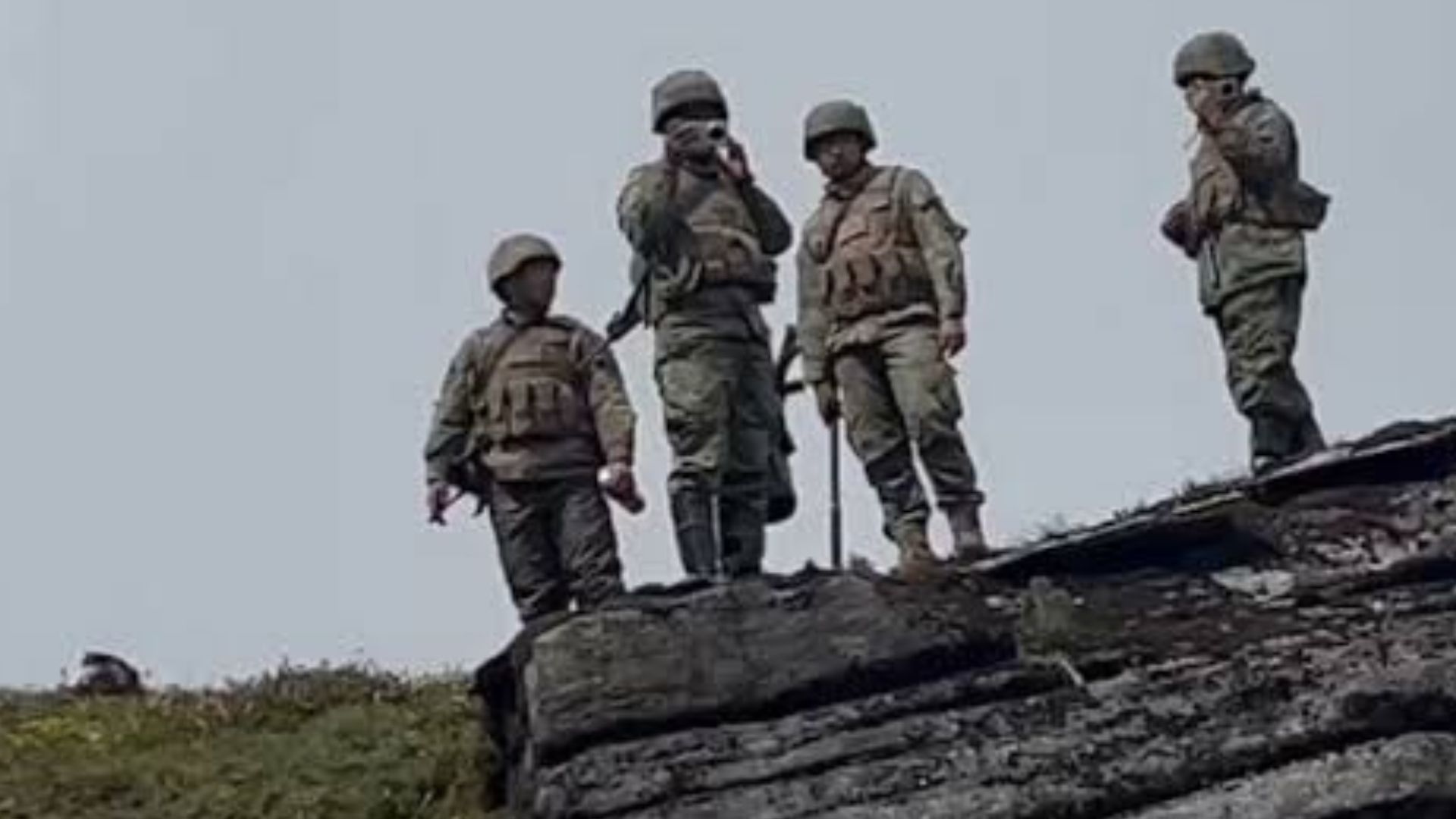

The Indo-Tibetan Border Police (ITBP) chief, Kapoor, has praised the force’s Shaurya Commando teams for their performance during recent confrontations with Chinese troops in Arunachal Pradesh. His remarks come amid reports of multiple face-offs along the border in recent months. Addressing ITBP personnel, known as Himveers, in Alwar on Thursday, Kapoor said the confrontations had taken place at several locations and were still continuing. “Recently, a situation arose in Arunachal Pradesh where a face-off occurred at several places, which is still ongoing. There, our Shaurya Commando teams have done a tremendous job," the ITBP chief said. Reports of clashes in Arunachal Pradesh have emerged since July, with local residents claiming that confrontations occurred at multiple locations. The reported face-offs allegedly continued even during Chinese President Xi Jinping’s visit to India for the BRICS summit in September.
Congress Criticises Government Over Border Confrontations
Congress MP Jairam Ramesh criticised the government after Kapoor’s remarks, accusing the Centre of maintaining silence over the reported confrontations with Chinese forces. “India has been paying the price for the PM’s infamous clean chit to China on June 19, 2020," Ramesh wrote on X. “While the self-styled Vishwaguru’s calibrated concessions to China continue, the DG, ITBP, has lauded—and rightly so—its performance in recent face-offs with the PLA in Arunachal Pradesh, on which there has been a deafening silence from the PM and his establishment," he added. Ramesh’s comments referred to Prime Minister Narendra Modi’s remarks on China in June 2020, which have continued to draw criticism from the opposition.
ITBP Chief Highlights Growing Importance of Drone Warfare
Kapoor also highlighted the increasing role of drones in modern warfare, noting that advances in drone technology had changed traditional military strategies. He said these developments were transforming the responsibilities and operational requirements of defence forces.
As part of its modernisation efforts, the ITBP plans to establish a drone unit in every platoon. The force also intends to expand domestic drone production and increase the training of personnel as drone pilots. Kapoor further indicated that a separate strike corps was expected to be established soon.
He highlighted China’s substantial investments in the People’s Liberation Army (PLA) and its media capabilities, noting that Beijing had made significant progress in conventional warfare. However, he suggested that drones could help reduce the military advantage of larger and more heavily equipped forces.
Kapoor cited the Russia-Ukraine war as an example of how modern conflicts are evolving. He said the damage Ukraine, despite being a smaller country, had inflicted on Russia over the past four years demonstrated the growing importance of emerging military technologies and changing battlefield strategies. He also pointed to Iran as another example of how the nature of warfare was changing.
ITBP Plans Rs 1,000 Crore Investment in Drone and Anti-Drone Systems
Kapoor said the ITBP expected its budgetary allocation to increase by 2030 as the force prepares to strengthen its operational capabilities and modernise its equipment. The force plans to earmark approximately Rs 1,000 crore specifically for drone and anti-drone systems. The proposed investment is intended to improve its ability to deploy drones for operational purposes and counter potential threats from hostile unmanned aerial vehicles.
The ITBP’s modernisation programme will also prioritise mobility and the acquisition of advanced equipment. Planned procurements include all-terrain vehicles, autonomous ground vehicles and quick reaction vehicles, which can help personnel operate more effectively in difficult terrain and respond rapidly to emergencies. In addition, the force is considering measures to modernise its ammunition as part of its broader efforts to improve operational readiness.
ITBP Develops Underground Shelters Along the LAC
The growing threat posed by drones has also prompted the ITBP to strengthen the protection of its personnel and infrastructure along the border. Kapoor said the force had begun developing underground shelters to improve the safety of personnel and protect important assets from potential attacks.
Several ITBP frontier units have already constructed underground shelters at their border outposts (BOPs) under a pilot project, he said. The initiative is part of the force’s broader preparations along the Line of Actual Control (LAC), where it is adapting its infrastructure, equipment and operational strategies to address emerging security challenges.
With plans to expand drone capabilities, invest in counter-drone technology, upgrade mobility equipment and develop protective infrastructure, the ITBP is seeking to strengthen its preparedness against evolving threats along the India-China border.