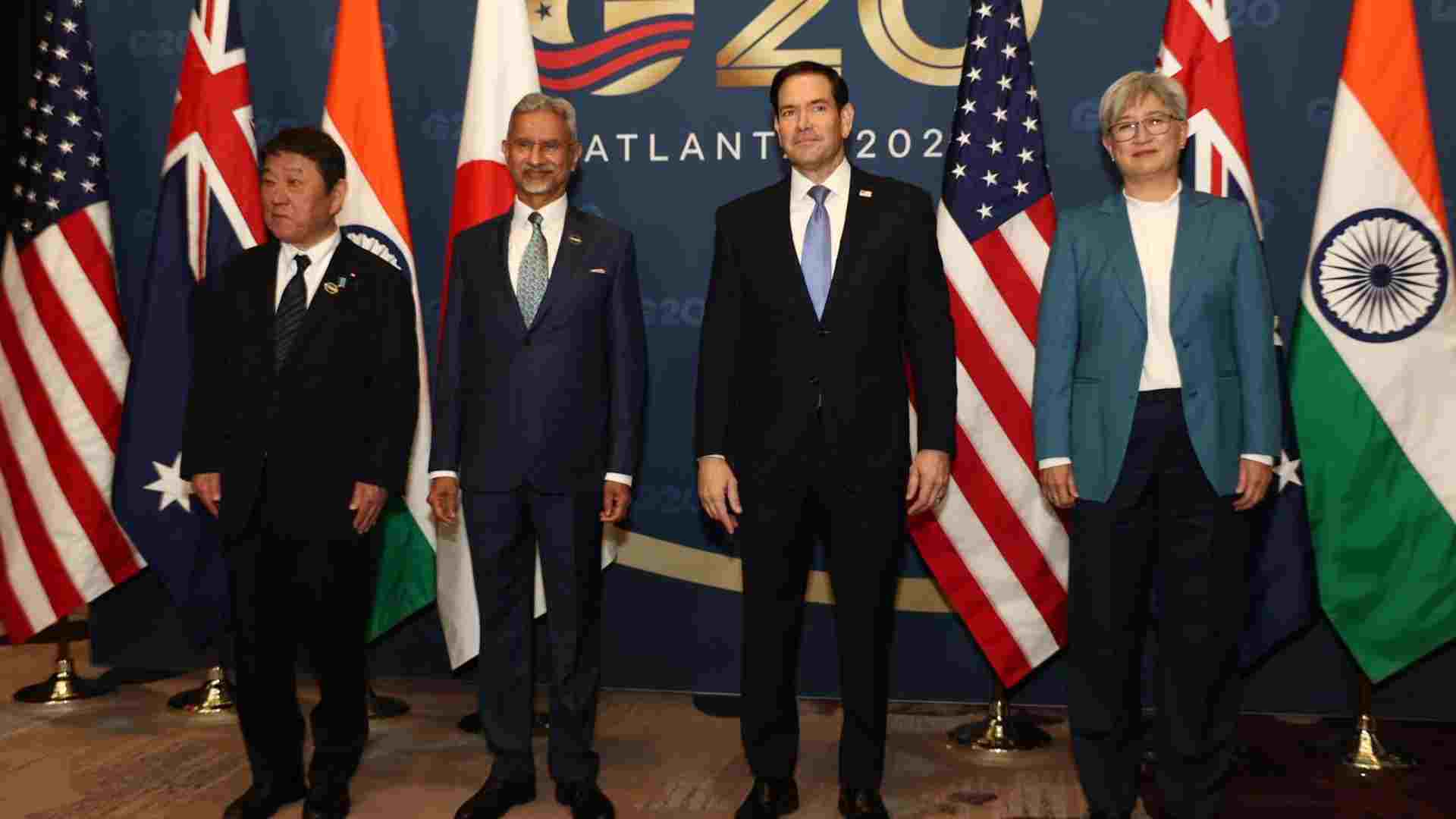
US Secretary of State Marco Rubio has expressed concern over the safety of commercial shipping and Indian sailors in West Asia amid the ongoing conflict with Iran. He highlighted the risks faced by international vessels and their crews while explaining President Donald Trump's approach to the war and diplomatic efforts to resolve the crisis.
Rubio made these remarks while addressing reporters after the G20 foreign ministers' meeting in Atlanta. During the press briefing, a reporter asked how long the Trump administration would allow negotiations backed by Qatar to continue before considering fresh military action against Iran.
Responding to the question, Rubio pointed to Iran's repeated attacks on commercial vessels and the potential threat to sailors from different countries, including India.
"Well, I mean, the message is simple. Iran is blowing up ships, including ships that have, for example, Indian sailors on them, including ships that have energy that’s destined for countries represented at that table. We live in a world in which a country is openly - a regime is openly - saying: We will blow up commercial ships," he said at the presser on Saturday.
Rubio stressed that attacks on commercial shipping had become a serious international security concern. He also noted that the consequences extended beyond the countries directly involved in the conflict, as several nations depended on maritime trade for their energy supplies.
"Think about that, okay? Think about the world we now live in. It sounds like something from a hundred years ago or 80 years ago. It’s happening, and every country there is challenged," he explained.
The US Secretary of State also clarified that Trump had not set any specific deadline for diplomatic negotiations with Tehran. He added that the administration had not yet decided whether to launch another round of military strikes against Iran.
Any Decision on Iran War Rests With Trump
When reporters asked for further details about the negotiations, Rubio said diplomatic communication between Washington and Tehran had continued throughout the conflict.
He explained that the two sides had maintained contact through both direct and indirect channels. However, he emphasised that the decision on how long the diplomatic process would continue rested entirely with the US President.
"As far as the talks are concerned, I don’t know if there’s a time frame. It’s up to the President to make decisions with regard to those sorts of things," he said.
Rubio described Trump as a leader who preferred resolving international disputes through peaceful negotiations whenever possible. However, he acknowledged that diplomacy could not resolve every conflict and that some situations might require other responses.
He reiterated that any potential agreement with Iran would need to address Washington's major security concerns. These include Iran's nuclear programme and what the US considers its destabilising activities across West Asia.
Rubio stressed that the Trump administration would not accept an agreement that failed to protect American security interests.
He said a diplomatic settlement could not be one that "endangers our national security or one that doesn’t meet our core concerns that we have that brought us into that in the first place."
Maritime Security Remains a Major Concern for India
Rubio's remarks also highlighted the wider impact of the Iran conflict on countries that depend on commercial shipping routes in West Asia.
His specific reference to Indian sailors reflects the risks faced by Indian crew members working aboard commercial vessels operating in the region. Any further escalation could threaten maritime transportation, disrupt energy shipments and create additional security challenges for countries dependent on these routes.
For India, the safety of its sailors and the uninterrupted movement of energy supplies remain important concerns as tensions continue across West Asia.
Meanwhile, Washington has kept diplomatic channels open with Tehran, although Trump has yet to announce a deadline for negotiations or make a final decision on further military action.
Rubio's comments indicate that the US administration is keeping both diplomatic and military options open while insisting that any agreement must address its core security demands.