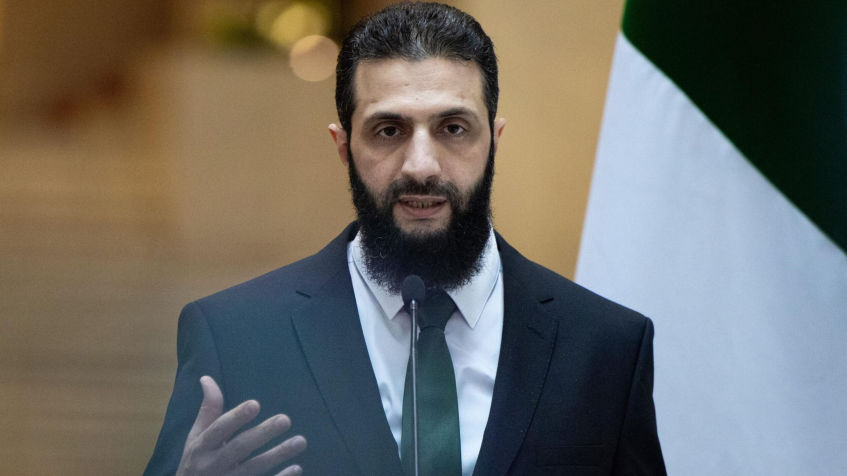
Weeks after rebel groups seized control of Syria, Ahmed al-Sharaa, the former leader of Hayat Tahrir al-Sham (HTS), was appointed president for a "transitional period." HTS, one of the key rebel factions, played a major role in the military operation that overthrew President Bashar al-Assad’s regime. Sharaa has been acting as the de facto leader since December.
Key Changes Announced
The confirmation of Sharaa’s role came after a meeting of rebel leaders on Wednesday. During this meeting, a military spokesperson also announced several significant changes. These included dissolving the Syrian parliament, forming a new legislative council, and canceling the 2012 constitution, according to The Guardian. Furthermore, the Syrian military and security agencies were dismantled and replaced by new security institutions and a national army. The spokesperson emphasized that all armed factions in Syria would be dissolved and incorporated into the new national army.
A Surprising Omission
Normally, the order to dissolve the armed factions would include HTS. However, the announcement did not mention HTS by name, which left many people surprised. Sharaa has previously stated that Syria’s priorities are “filling the power vacuum, preserving civil peace, and building state institutions.” This omission raised questions about the group’s role in the new government.
Transition Plans Remain Unclear
The transition government is expected to hand over power to a new government by March. However, the exact details of how this transition will unfold remain unclear. Last month, Sharaa told Al Arabiya that elections in the war-torn country could take up to four years. He also stated that rewriting the constitution could take up to three years. This suggests a lengthy and complex process ahead for Syria.
Post-Assad Dialogue Delayed
Earlier this month, Sharaa promised to hold a national dialogue conference to ensure inclusivity in the post-Assad era. However, he has repeatedly delayed the event. Most of his meetings have been with individuals, not political parties, further raising concerns about the inclusivity of the process.
Efforts to Unite Rebel Factions
In mid-January, the Syrian Ministry of Defence announced that consultations would be held with various rebel factions to explore ways of unifying them. According to The Guardian, Sharaa and his defence minister have been holding daily meetings with rebel leaders, offering them key positions within the interim government. Despite these efforts, challenges remain. Radical Islamist factions, such as those in the Turkish-backed Syrian National Army, are less disciplined than HTS and have differing ideologies. HTS itself was an offshoot of al-Qaeda and was one of the most powerful Syrian groups at the time of the regime's fall.
Foreign Attention and Diplomatic Moves
As Syria works through this transition, foreign nations are closely monitoring the country’s stability. In the meantime, the interim government has sought support from regional powers to bolster its fledgling state and army. They are actively seeking foreign funds and legitimacy.
To further cement international ties, the new regime has announced its first foreign trips will be to Saudi Arabia and Turkey. During these visits, the Syrian foreign minister will be accompanied by the defence minister and the intelligence director.