

For the first time, the United States has reported a human infection of the flesh-eating screwworm parasite. Authorities are now on high alert.
The infection appeared in Maryland in a traveller recently returned from Central America. The region has faced a spreading outbreak since late 2024. Officials worry about the potential impact on the US livestock industry, which had been declared screwworm-free decades ago.
What is a Screwworm?
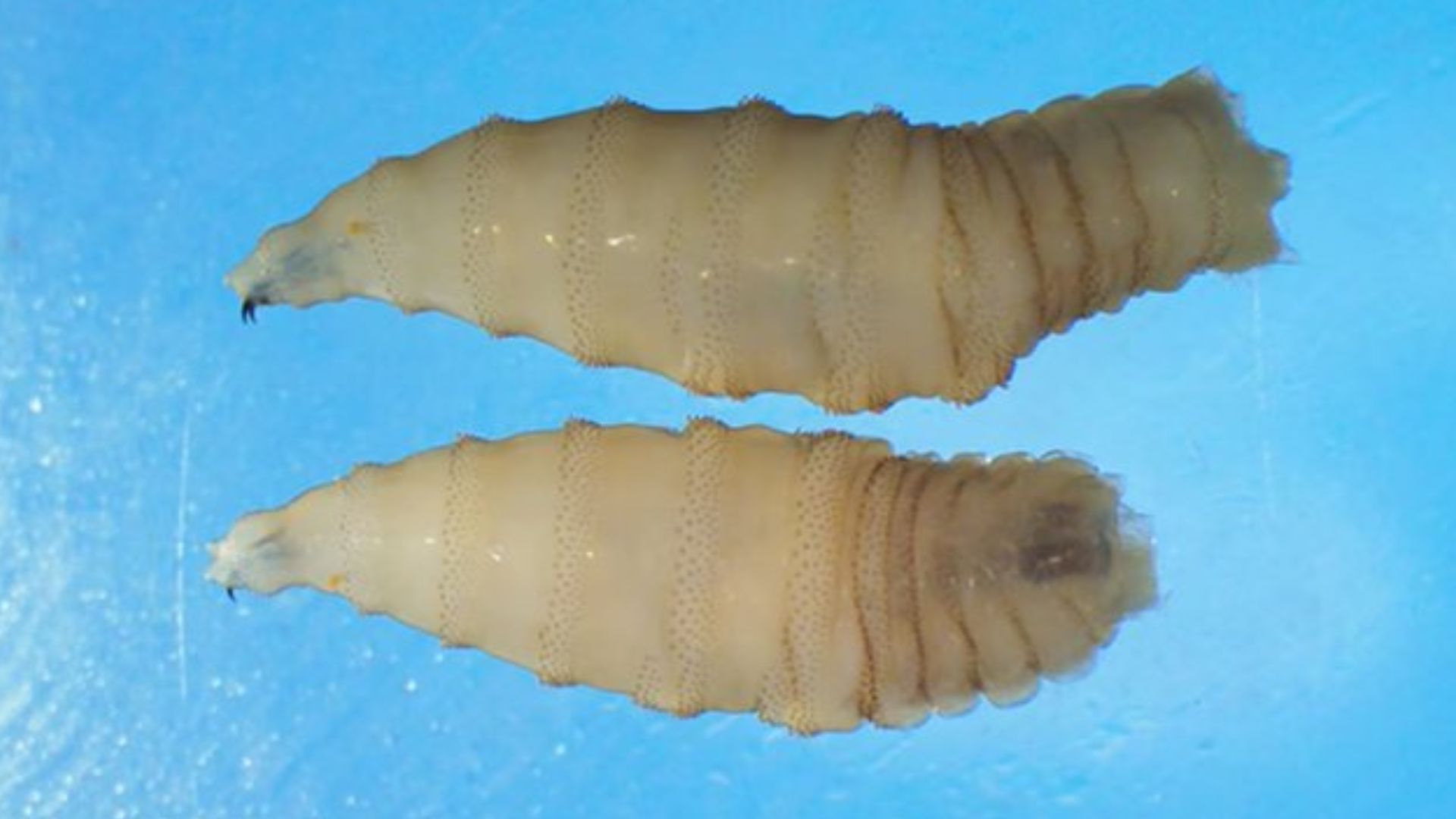
The New World screwworm (Cochliomyia hominivorax), or NWS, is a parasitic fly found in Central and South America, the Caribbean, and parts of Mexico. Unlike ordinary maggots that feed on dead tissue, screwworm larvae feed only on living flesh.
Female flies lay hundreds of eggs in open wounds on warm-blooded animals, including humans. Once hatched, the larvae burrow deeper into tissue using their sharp, screw-shaped mouths, giving the parasite its name.
Even small injuries, like tick bites, can attract these flies. They prefer vulnerable areas such as the nose, mouth, eyes, genitals, or the umbilical cord of newborn animals. Livestock are most at risk, but humans and birds can also be infected.
If untreated, the infestation, known as myiasis, can be fatal. One female fly can lay up to 3,000 eggs in her lifetime, causing large-scale damage.
Signs and Symptoms
The CDC warns that screwworm infestations are dangerous and extremely painful. Visible maggots may appear around or inside open wounds. In severe cases, larvae can infest the nose, mouth, or eyes.
Common symptoms include:
-
Skin lesions or sores that do not heal
-
Worsening wounds instead of improvement
-
Painful open sores
-
Bleeding from affected areas
-
Foul-smelling wounds
-
Sensation of larvae moving inside wounds or orifices
-
Visible maggots inside or around sores
Secondary bacterial infections can also develop, sometimes causing fever or chills.
Treatment requires physically removing larvae and cleaning the wound thoroughly. If detected early, patients usually recover without lasting damage.
History of Screwworm in the US
The US eliminated screwworm in the 1960s through a major eradication effort. The USDA released millions of sterile male flies, which mated with wild females, preventing egg hatching. This method effectively collapsed the wild population.
A minor outbreak in Florida in 2017 was quickly controlled. However, the threat resurfaced as a new outbreak began in Central America and southern Mexico in 2023, gradually moving northwards.
US authorities, however, maintain that the public risk is minimal. Andrew Nixon, a spokesperson for the US Department of Health and Human Services, told Reuters, “The risk to public health in the United States from this introduction is very low." No animal infections have been confirmed in the US this year.
US Response
The Maryland case comes shortly after USDA Secretary Brooke Rollins announced plans for a new sterile fly facility near the Mexico border, at Moore Air Force Base in Edinburg. The facility, which will take 2–3 years to become fully operational, will produce and sterilise male flies to collapse the wild screwworm population.
Currently, only one such facility exists in Panama, producing around 100 million sterile flies weekly. USDA estimates that controlling the outbreak will require five times that number.
Mexico is also taking action, building a $51 million sterile fly facility in its southern region to prevent the parasite from reaching the US.
Impact on the Livestock Industry
While human cases are rare, screwworm infestations devastate livestock. Texas A&M University estimates that a major outbreak in Texas could cost $1.8 billion, including livestock deaths, treatment, and extra labor.
The outbreak has already disrupted trade. Border closures, supply chain delays, and rising beef prices have followed reports of screwworm in southern Mexico.
Industry stakeholders are also frustrated with the CDC’s communication. Beth Thompson, South Dakota’s state veterinarian, told Reuters, “We found out via other routes and then had to go to CDC to tell us what was going on. They weren’t forthcoming at all.”
Internal memos suggest that CDC failed to notify Maryland officials and state veterinarians in time, as legally required. One Beef Alliance executive expressed concern in an internal email: “We remain hopeful that… the likelihood of a positive case being leaked is low, minimising market impact."