
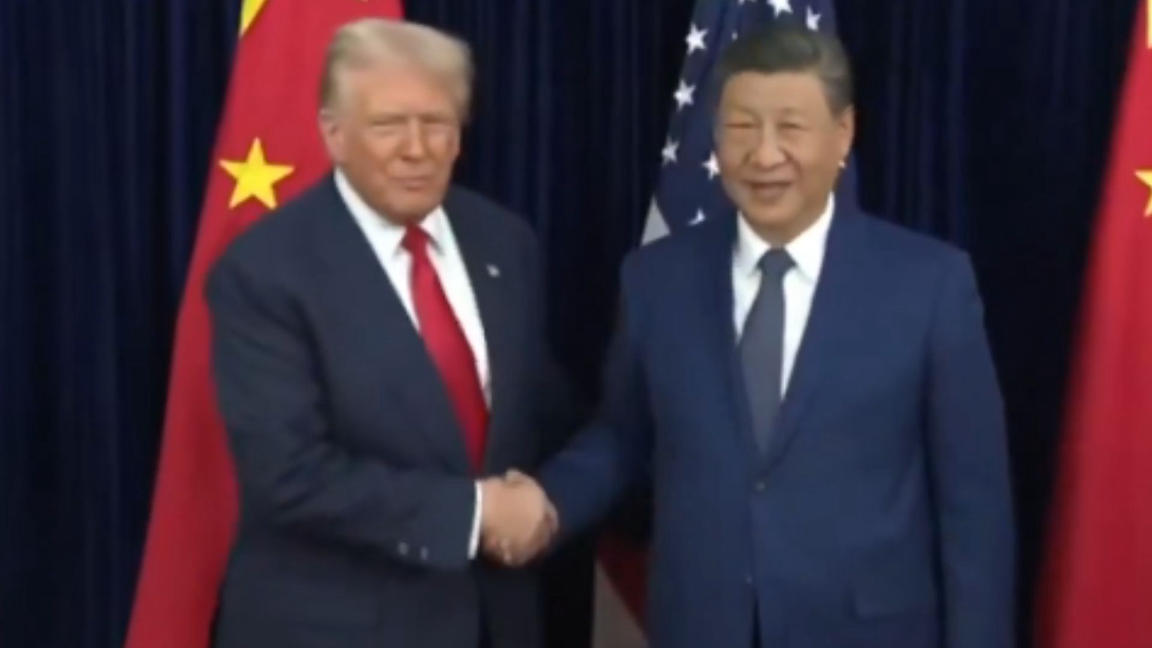

Chinese leader Xi Jinping gained several victories in his meeting with US President Donald Trump on Thursday in South Korea. The talks, which covered trade, technology, and Taiwan, showed Xi’s growing influence as Trump made several concessions.
Even before the summit began, Xi earned a symbolic win. On social media, Trump posted, “The G2 will be convening shortly!”
Trump’s “G-2” Remark Signals China’s Rise
The phrase “G-2” refers to the idea that the United States and China, as the world’s top powers, jointly manage global affairs. The concept has faced criticism because it sidelines other nations and divides the world into US and Chinese spheres of influence.
With this single post, Trump appeared to recognize China as an equal, ending the notion of American supremacy. It also suggested that he was willing to share global power with Xi.
While Trump has focused on domestic unrest and military actions in the Caribbean, analysts say he has effectively given Xi more room to act freely in the Indo-Pacific.
Xi Gains on Trade, Technology, and Taiwan
During the talks, Trump made major concessions on tariffs, technology exports, and Taiwan. In exchange, Xi offered only limited promises — including a one-year pause on export controls for rare earth elements, which are vital for electronics and defence industries.
Trump announced that he had cut tariffs on fentanyl-related goods from 20 percent to 10 percent, bringing the total tariffs on China down to 47 percent. He also scrapped his earlier plan to impose 100 percent tariffs starting November 1.
Another major shift came when Trump cleared China of wrongdoing in its purchases of Russian oil. Despite China being the largest buyer of Russian oil, Trump criticized India instead, accusing it of funding Russia’s war in Ukraine.
He imposed a 25 percent tariff on India’s oil imports from Russia, pushing the total to 50 percent, while saying nothing against China.
“You know he’s [Xi] been buying oil from Russia for a long time. It takes care of a big part of China and you know I can say India’s been very good on that front, but, uh, we didn’t really discuss the oil,” Trump told reporters.
Trump Softens Tech and Security Stances
Trump also postponed a rule that would have blacklisted subsidiaries of major Chinese companies. He reversed his earlier position on technology exports and discussed Nvidia’s advanced chips with Xi, suggesting he might allow sales to China — though he gave no details.
In a significant geopolitical shift, Trump admitted that he did not discuss Taiwan during the meeting.
China views Taiwan as a breakaway province and has vowed to reunify it, even using force if necessary. US intelligence believes Xi has instructed the Chinese military to prepare for a possible invasion by 2027.
Xi Offers Limited Concessions in Return
In exchange for Trump’s major compromises, Xi offered symbolic gestures.
He agreed to delay export controls on rare earths for a year and to suspend port docking fees between the two nations for the same period.
Trump also said Xi had promised to buy large quantities of US farm products, including soybeans and sorghum.
Treasury Secretary Scott Bessent later claimed China would purchase 25 million metric tons of soybeans annually for the next three years.
However, China’s official statement only said that both sides agreed to expand agricultural trade — with no figures or timelines mentioned.
Analysts Say China Outplayed the US
Experts believe Beijing used trade leverage to secure Trump’s concessions. China has often relied on rare earth restrictions and soybean embargoes to pressure Washington.
According to Wolfe Research strategist Tobin Marcus, China’s tactics successfully pushed Trump to lower tariffs. As per CNBC, Piper Sandler analysts led by Andy Laperriere said, “Xi was ready for Trump in his second term and has a powerful weapon in rare earths. China is getting the better of the US in these recent truce negotiations.”