
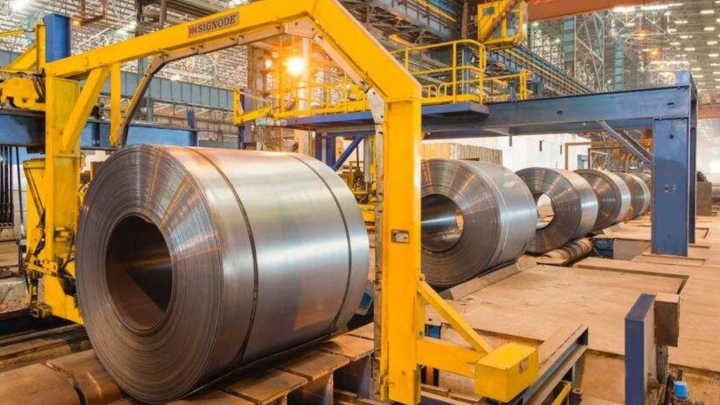

India has imposed a safeguard duty on selected steel imports for three years. The move signals a tougher approach against a surge in low-priced steel shipments that officials say hurt domestic manufacturers, especially imports coming from China.
A notification issued by the finance ministry and published in the official gazette on Tuesday confirmed the decision. The duty will range between 11 per cent and 12 per cent during the three-year period.
Duty Structure Over Three Years
The safeguard duty will start at 12 per cent in the first year. It will then ease to 11.5 per cent in the second year. In the third year, the levy will fall further to 11 per cent.
The measure will apply to steel imports from several countries, including China, Vietnam, and Nepal. However, imports from certain developing countries will remain exempt from the duty.
The government also clarified that speciality steel products, such as stainless steel, will not come under the safeguard duty.
Aim to Protect Domestic Steel Industry
The decision follows repeated concerns raised by the federal steel ministry. The ministry has warned that a flood of cheap and sub-standard steel imports could damage India’s domestic industry.
Earlier this year, the government had already taken temporary action. In April, it imposed a 12 per cent safeguard duty for 200 days to give immediate relief to local steel producers.
DGTR Finds Sharp Rise in Imports
The Directorate General of Trade Remedies, which examines trade defence cases, recommended the three-year duty. It concluded that steel imports had seen a “recent, sudden, sharp and significant increase.”
According to the finance ministry order, the DGTR said this surge was causing, and also threatening to cause, serious injury to domestic manufacturers.
Global Trade Tensions Add Pressure
India’s move comes at a time of rising global trade tensions in the steel sector, particularly involving Chinese exports.
Tariffs imposed by US President Donald Trump on steel imports have added to global trade friction. In response, several countries have taken protective steps. South Korea and Vietnam have already imposed anti-dumping duties on steel imports earlier this year, Reuters reported.
China Announces Tariff Cuts on Imports
In contrast, China announced that it will cut import tariffs on 935 items starting January 1, 2026. The decision was made by the Customs Tariff Commission of the State Council, according to an official announcement on Monday.
China will apply provisional tariff rates that are lower than the most-favoured-nation levels. The move aims to address criticism that China focuses too heavily on exports while importing less, which contributes to a large trade surplus.
Focus on Technology, Green Growth, and Welfare
The commission said the lower tariffs will help improve coordination between domestic and global markets. The goal is to better use resources and expand the supply of high-quality goods.
Tariff cuts will apply to key components and advanced materials to support high-level technological self-reliance. China will also reduce tariffs on certain resources to promote green development.
In addition, tariffs on some medical products, including artificial blood vessels, will be lowered to improve public welfare.
New Tariff Categories Planned for 2026
China also plans to optimise tariff headings and national subheading notes in 2026. New national subheadings will be added for products such as intelligent bionic robots and bio-aviation kerosene.
These changes aim to support technological progress and emerging sectors, including the circular economy.
China’s Trade Figures and Global Deals
Official data showed that China’s foreign trade reached 41.21 trillion yuan, or about USD 5.82 trillion, marking a 3.6 per cent year-on-year rise.
Exports accounted for around USD 3.46 trillion, while imports stood at USD 2.37 trillion, according to figures from the General Administration of Customs.
The commission also said China will continue offering preferential tariff rates under 24 free trade agreements with 34 trading partners in 2026. It will also maintain zero-tariff treatment on all tariff lines for 43 least-developed countries that have diplomatic relations with Beijing.