
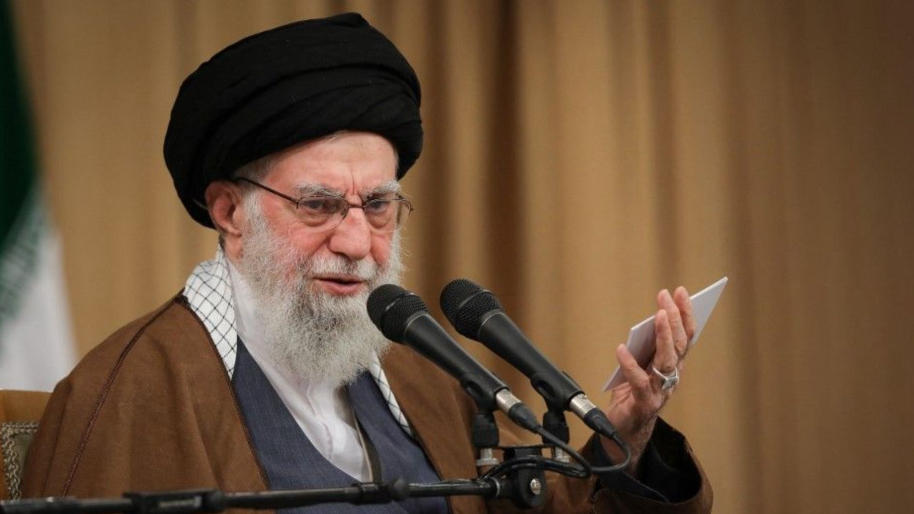

Iran’s Supreme Leader Ayatollah Ali Khamenei has, for the first time, publicly acknowledged the massive loss of life during the ongoing anti-government protests. Speaking on Thursday, he said thousands of people had been killed over the past two weeks.
He admitted that some of these deaths were carried out in an “inhuman” and “savage manner”. However, he placed the blame for the violence on the United States rather than on Iranian authorities.
Supreme Leader blames US and attacks Trump
During his speech, Khamenei accused the United States of fueling the protests and contributing to the high death toll. He strongly criticised US President Donald Trump, calling him a “criminal” for supporting demonstrations in Iran.
At the same time, Khamenei called for harsh action against protesters and urged authorities to crush what he described as “sedition”.
“By God’s grace, the Iranian nation must break the back of the seditionists just as it broke the back of the sedition,” Khamenei said on Thursday.
Iran claims foreign involvement in protests
Meanwhile, Iranian authorities released a compilation of video footage on Saturday. They said the clips showed armed individuals carrying guns and knives among ordinary protesters. Officials claimed this proved the presence of foreign-backed saboteurs attempting to destabilise the country.
The government has repeatedly argued that outside forces are behind the unrest, rather than domestic anger over economic and political conditions.
Clerics demand extreme punishment for protesters
As tensions continued, senior Iranian cleric Ahmad Khatami called for even tougher measures. He openly demanded the execution of protesters, saying that “armed hypocrites should be put to death”.
Khatami accused protesters of acting as “butlers” and “soldiers” of Israel and the United States. He warned that neither country should “expect peace” from Iran.
Trump presents a different narrative
Khamenei’s remarks stood in sharp contrast to statements made by Donald Trump earlier this week. Trump suggested that he had delayed a possible military strike on Iran after Iranian authorities agreed to stop executing protesters.
On Friday night, Trump even thanked Tehran for executing what he said were 800 protesters. However, it remained unclear where he obtained those figures, as no independent confirmation was available.
Rights groups report continuing crackdown
Despite official claims, human rights organisations said repression has continued across Iran. According to these groups, more than 3,090 people have been killed so far, while nearly 4,000 additional cases are still under review.
They also reported that over 22,100 people have been arrested during the protests. This has raised serious concerns about the treatment of detainees inside Iranian prisons.
Protests began over economic crisis
The unrest began around two and a half weeks ago, on December 28. It started when traders in Tehran protested a sudden fall in the value of the Iranian rial.
Soon, demonstrations spread across the country. Protesters expanded their demands beyond economic issues and began calling for an end to the current government. This has become the most serious and deadly unrest Iran has witnessed since the 1979 revolution.
Authorities push protesters off streets
Human Rights Watch said on Friday that authorities used extreme force to suppress the demonstrations, including the “mass killings of protesters”. This crackdown has largely forced people off the streets.
In his Friday sermon, Ahmad Khatami claimed protesters damaged 350 mosques, 126 prayer halls, and 20 other places of worship. He also said they damaged 400 hospitals, 106 ambulances, 71 fire trucks, and 50 other emergency vehicles.
Internet shutdown continues amid uncertainty
The future of the protest movement remains unclear. It is uncertain whether demonstrations will return in the coming days or fade under pressure.
For now, Iran remains largely cut off from the outside world. Authorities have continued an internet shutdown that has lasted for more than a week, limiting communication and access to information.