

US President Donald Trump announced on Monday that India and the United States have reached a trade agreement. He shared the information on his social media platform Truth Social. Trump said the deal would result in lower US tariffs on Indian goods. He also claimed that India would stop purchasing Russian oil under the agreement.
Modi Welcomes Tariff Relief
Prime Minister Narendra Modi responded positively to Trump’s announcement. He thanked the US President for reducing duties on Made in India products. Modi highlighted the importance of cooperation between the two countries and said stronger ties would create new opportunities for both sides.
Doval’s Washington Visit Set the Stage
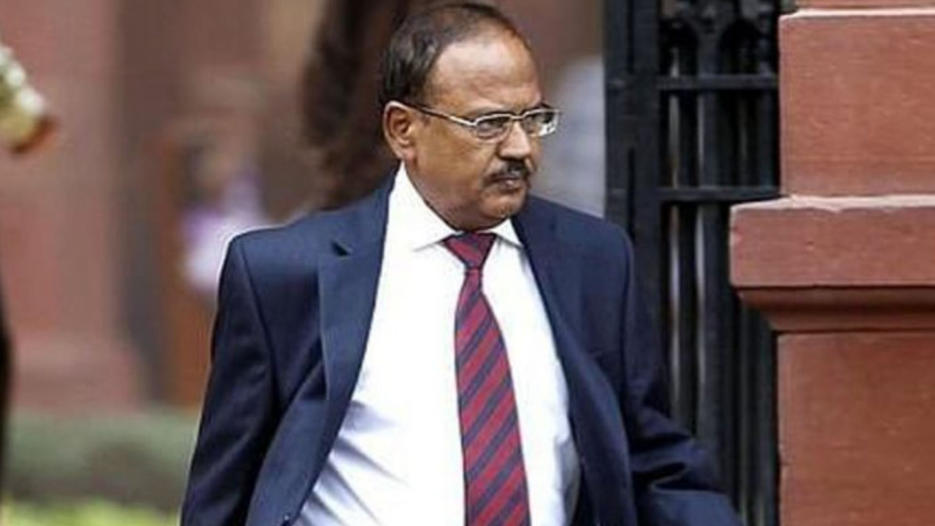
Months before the trade deal was announced, National Security Advisor Ajit Doval travelled to Washington. During his visit, he met US Secretary of State Marco Rubio. According to a Bloomberg report, Doval told Rubio that India wanted to put past tensions behind and restart trade negotiations.
India Pushes Back Against Pressure
The report said Doval clearly told the US side that India would not be bullied by President Trump or his senior advisers. Officials in New Delhi familiar with the meeting said India wanted talks based on mutual respect, not public pressure.
Willingness to Wait, Call to Ease Criticism
Bloomberg also reported that Doval said India was prepared to wait out Trump’s term if necessary. However, he asked the US administration to dial down its public criticism of India so that relations could improve and negotiations could move forward.
Timing of the High-Level Meeting
The meeting reportedly took place in early September. It happened shortly after Prime Minister Modi held talks with Russian President Vladimir Putin and Chinese President Xi Jinping, making the diplomatic context especially sensitive.
Trade Deal Announced Months Later
Now, months after the reported Doval–Rubio meeting, Trump has announced a trade deal that includes lower tariffs and wider market access. India has officially confirmed the tariff reduction part of the agreement.
What PM Modi Did Not Confirm
Although PM Modi welcomed the tariff relief, his public statement did not explicitly confirm a full trade deal. He also did not mention any commitment related to ending Russian oil purchases or cutting Indian tariffs on US goods to zero.
Modi’s Message on Partnership
In a post on X, Prime Minister Modi said, “When two large economies and the world’s largest democracies work together, it benefits our people and unlocks immense opportunities for mutually beneficial cooperation.”
He further added, “President Trump’s leadership is vital for global peace, stability, and prosperity. India fully supports his efforts for peace. I look forward to working closely with him to take our partnership to unprecedented heights.”
Government Reaction in India
Union Minister Ashwini Vaishnaw described the agreement as a “win-win deal”. He said it would benefit citizens and industries in both India and the United States.
Trump’s Claims on Energy and Market Access
Beyond tariffs and Russian oil, Trump said India had agreed to buy more energy from the United States. He also suggested India could purchase energy from Venezuela. Trump claimed India would reduce both tariffs and non-tariff barriers on US goods to zero.
Trump Praises Modi and Details Tariff Cut
In another Truth Social post, Trump wrote that “It is an honour” to speak with Modi. He called him one of his “greatest friends” and a “powerful and respected leader.” Trump said both leaders “are two people that get things done.”
Trump also said, “Out of friendship and respect for Prime Minister Modi and, as per his request, effective immediately, we agreed to a Trade Deal between the United States and India, whereby the United States will charge a reduced Reciprocal Tariff, lowering it from 25% to 18%. They will likewise move forward to reduce their Tariffs and Non Tariff Barriers against the United States, to ZERO.”
Claim of Major US Purchases
Trump further claimed that India committed to “BUY AMERICAN” at a much higher level. He said this would include purchases of more than $500 billion worth of US goods and energy.