
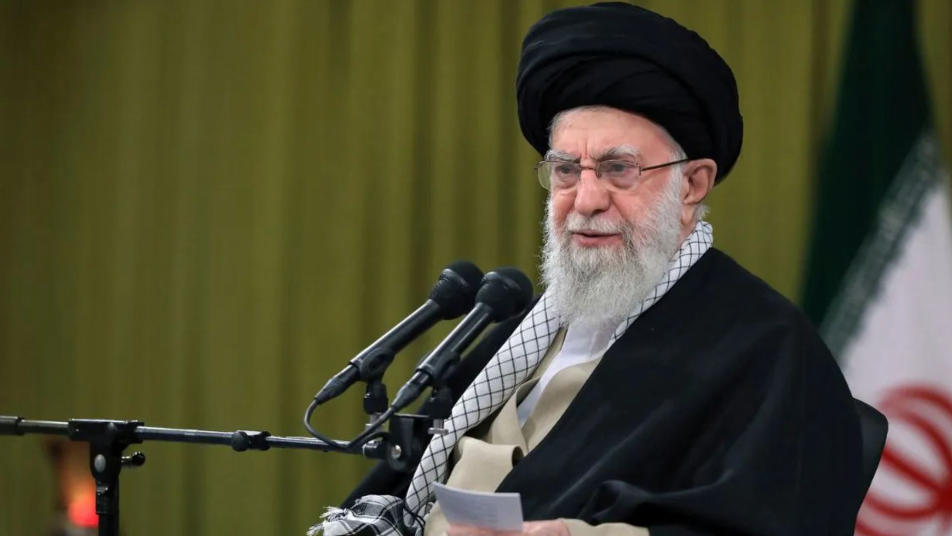

Ayatollah Ali Khamenei was one of the most powerful and longest-serving leaders in modern Middle Eastern history. He led Iran for more than three decades and shaped the country’s political, religious, and security policies. His influence extended beyond Iran and affected regional geopolitics, especially in West Asia.
Early Life and Religious Education
Ali Hosseini Khamenei was born on April 19, 1939, in Mashhad, Iran. He grew up in a religious family. His father was a cleric, and this environment influenced his early education.
He studied Islamic theology in Mashhad and later continued his religious training in the holy city of Qom. There, he learned under senior Shia scholars. During his youth, he became involved in political activism against the rule of Shah Mohammad Reza Pahlavi.
Security forces arrested him several times before the 1979 Islamic Revolution. These experiences strengthened his opposition to the monarchy.
Role in the 1979 Islamic Revolution
Khamenei supported Ruhollah Khomeini, the leader of the Islamic Revolution. After the revolution removed the Shah from power, Khamenei quickly rose within the new Islamic Republic system.
He held key positions in the Revolutionary Council and later became a leading political figure in the newly formed government.
Presidency of Iran
In 1981, Khamenei became President of Iran. He served two terms until 1989. His presidency took place during the Iran–Iraq War, a period marked by conflict and economic hardship.
Although the president held executive responsibilities, the Supreme Leader remained the highest authority. At that time, Ayatollah Khomeini held that position.
Becoming Supreme Leader
After Khomeini’s death in 1989, Iran’s Assembly of Experts selected Khamenei as the second Supreme Leader. He remained in that role until 2026.
As Supreme Leader, he held ultimate control over Iran’s armed forces, judiciary, state broadcasting, and major policy decisions. He also had the final say in foreign policy and national security matters.
His leadership lasted 36 years. At the time of his death, he was the longest-serving head of state in the Middle East.
Political Ideology and Governance
Khamenei promoted the concept of “Velayat-e Faqih,” or guardianship of the Islamic jurist. This principle places religious authority above elected institutions.
He often criticized Western influence, especially that of the United States. He supported a strong regional policy and backed allied groups across the Middle East.
Under his leadership, Iran expanded its missile program and maintained a controversial nuclear program. Western nations imposed sanctions during much of his tenure.
Relationship with the United States and Israel
Khamenei maintained a firm stance against the United States and Israel. He opposed American military presence in the region. He also rejected normalization with Israel.
Tensions increased during various US administrations, including that of Donald Trump. Sanctions and military incidents further strained relations.
Family and Personal Life
Khamenei married Mansoureh Khojasteh Bagherzadeh. They had six children — four sons and two daughters.
Despite his powerful position, he kept his family largely out of public life. Some of his sons reportedly played informal roles within Iran’s political structure, though none officially replaced him.
Publications and Intellectual Work
Khamenei wrote and translated several works on Islamic thought. His known books include Palestine and An Outline of Islamic Thought in the Quran.
He often delivered speeches that combined religion, politics, and revolutionary ideology.
Assassination and Death
Iranian state media confirmed that Khamenei died on February 28, 2026, following a major attack carried out by Israel and the United States. The announcement came on March 1, 2026.
Authorities declared 40 days of national mourning. His death marked a turning point in Iran’s political history.
Legacy
Ayatollah Ali Khamenei left behind a deeply divided legacy. Supporters viewed him as a defender of Islamic values and national sovereignty. Critics accused him of limiting political freedoms and centralizing power.
His leadership shaped Iran’s domestic structure and its role in regional conflicts. The selection of his successor became a major political moment for the Islamic Republic.