

Artemis II has officially begun its journey toward the Moon. The spacecraft reached its initial orbit after a successful launch from Kennedy Space Center on Thursday (April 2, IST).
NASA used its powerful Space Launch System (SLS) rocket to carry four astronauts on this historic mission. The crew includes Commander Reid Wiseman, pilot Victor Glover, mission specialist Christina Koch, and Canadian astronaut Jeremy Hansen.
This mission marks the first crewed Artemis journey toward the Moon in more than 50 years.
A Special Fifth Passenger Onboard
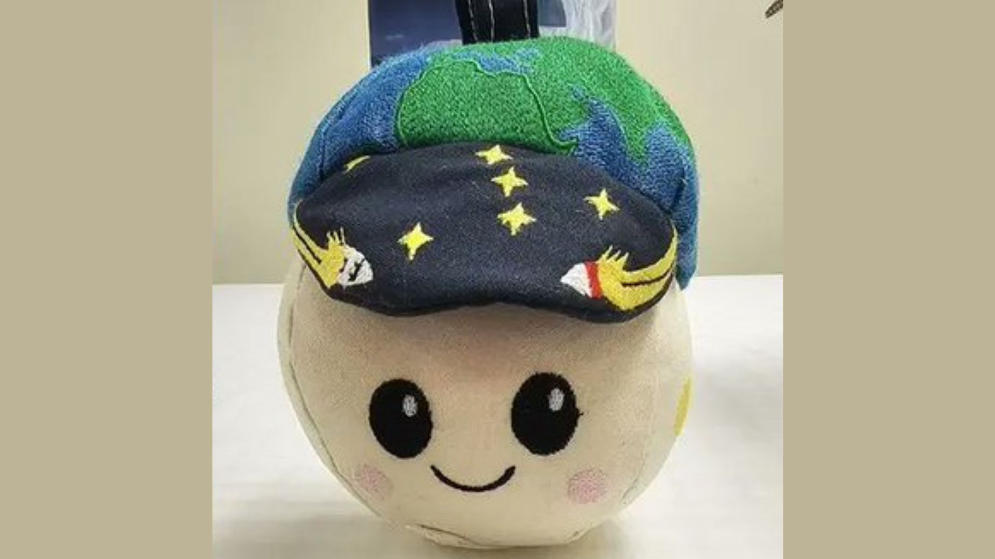
While global attention focused on the astronauts, the Orion capsule carried a unique fifth passenger—a small plush toy named “Rise.”
What Is ‘Rise’?
Rise is a zero-gravity indicator, a small object used in space missions to show when weightlessness begins. It floats freely once the spacecraft enters zero gravity.
The plush toy has a meaningful design. It pays tribute to the famous “Earthrise” image captured during the Apollo 8 mission.
Interestingly, Rise was not designed by scientists or engineers. An 8-year-old space enthusiast, Lucas Ye from Mountain View, California, created it as part of the Moon Mascot competition.
Design and Symbolism
Rise looks like a smiling white moon. It wears a hat that represents Earth, with a black visor and small spacecraft flying across a starry background.
During its unveiling on March 28 at Kennedy Space Center, Christina Koch explained its importance. “It is a mission that sort of mirrors our own," she said.
Role of the Zero-Gravity Indicator
Rise has an important role onboard. It helps astronauts identify when they enter zero gravity.
During the first eight minutes after launch, strong forces keep both astronauts and the toy pressed into their seats. Once the spacecraft reaches space, astronauts remain strapped in, but Rise begins to float freely, clearly indicating weightlessness.
A Symbolic Payload
The toy carries more than just meaning. Inside it, a small compartment holds a microSD card containing the names of millions of people who participated in the design challenge. This allows many to feel connected to the mission.
Commander Reid Wiseman highlighted the human element of such objects. “In a spacecraft filled with complex hardware to keep the crew alive in deep space, the indicator is a friendly and useful way to highlight the human element that is so critical to our exploration of the universe,” he said.
Global Competition Behind the Mascot
Rise was selected from thousands of entries submitted by participants from over 50 countries. NASA shortlisted 25 designs and then narrowed them down to five finalists before choosing the winner.
The other finalists included creative entries like “Big Steps of Little Octopus,” “Corey the Explorer,” “Creation Mythos,” and “Lepus the Moon Rabbit.”
Tradition of Zero-Gravity Indicators
The tradition of carrying zero-gravity indicators dates back to 1961. Yuri Gagarin first carried a small doll aboard Vostok 1.
Since then, astronauts have taken various symbolic items into space, including popular figures like Baby Yoda and Snoopy, to mark the moment of weightlessness.