
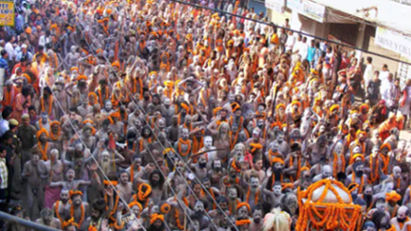

The final day of Mahakumbh 2025 began on Wednesday, February 26, with thousands of devotees rushing to Triveni Sangam for the last holy dip on Maha Shivratri. Since this was the last special ‘snan’, pilgrims gathered in large numbers to seek divine blessings. Consequently, the six-week-long festival, held in Prayagraj, Uttar Pradesh, concluded with this sacred event.
Maha Shivratri’s Importance in Kumbh Mela
Maha Shivratri is an important Hindu festival as it celebrates the divine union of Lord Shiva and Goddess Parvati. However, its significance in Mahakumbh is even greater. According to Hindu culture, Lord Shiva played a crucial role in the Samudra Manthan (churning of the ocean), which led to the emergence of Amrit Kumbh (the pitcher of nectar). Thus, the festival holds deep spiritual meaning for devotees.
Since its start on January 13, Maha Kumbh Mela featured six significant bathing days, each attracting millions of devotees:
- Paush Purnima (January 13)
- Makar Sankranti (January 14)
- Mauni Amavasya (January 29)
- Basant Panchami (February 3)
- Maghi Purnima (February 12)
- Maha Shivratri (February 26)
Tight Security and Crowd Management
Since early Wednesday, devotees rushed to the confluence of Ganga, Yamuna, and Saraswati for the final holy dip. As a result, authorities expected a massive crowd. To ensure safety, officials declared the entire Kumbh Mela area a "no vehicle zone."
Additionally, DIG (Kumbh) Vaibhav Krishna stated, "No VIP treatment will be given today." Meanwhile, the Uttar Pradesh government issued an advisory urging devotees to use nearby ghats. For instance, pilgrims entering from the Uttar Jhunsi route were advised to visit Harishchandra Ghat and Old GT Ghat. Similarly, those coming from Dakshini Jhunsi were directed to Arail Ghat.
Massive Deployment of Security Personnel
In light of the anticipated crowd surge, the government implemented strict security measures. As a precaution, officials deployed:
- 37,000 police personnel
- 14,000 home guards
- 2,750 AI-based CCTV cameras
- 50 watch towers
- Three Jal Police stations and 18 control rooms
Moreover, officials closely monitored social media platforms 24/7 to prevent any misinformation. As Krishna explained, the administration remained prepared to manage the situation effectively.
Special Trains for Devotees' Return
Since millions of devotees attended the last ‘snan’, Indian Railways made special arrangements to manage their departure. For this reason, authorities introduced over 350 additional trains from Prayagraj to various destinations.
Notably, during Mauni Amavasya, over 360 special trains transported 20 lakh passengers safely. Likewise, for Maha Shivratri, 60 regular and long-distance trains ran until 4 PM on Tuesday, while 25 additional special trains were scheduled on Wednesday.
To further prevent stampede-like situations, railway officials remained on high alert. Additionally, Union Railway Minister Ashwini Vaishnaw personally supervised the situation. Meanwhile, the Chairman of the Railway Board, Satish Kumar, coordinated with three major railway zones to ensure smooth operations.
Enhanced Fire Safety Measures
Since previous fire incidents had raised concerns, authorities implemented stringent fire safety measures. As a result, officials stationed 50 fire stations and 20 fire posts across the Kumbh Mela area. According to Chief Fire Officer Pramod Sharma, all necessary precautions were taken to handle emergencies.
CM Yogi Adityanath’s Message to Devotees
On Tuesday, Chief Minister Yogi Adityanath extended his greetings to devotees across India and the world. He remarked, "Maha Shivratri inspires people to work for the welfare of society. Lord Mahadev is universally revered. Festivals like Kumbh strengthen national unity."
Conclusion
With the final ‘Amrit snan’, the Maha Kumbh Mela 2025 concluded, leaving behind an experience of deep faith, devotion, and tradition. Going forward, millions of devotees will cherish the spiritual journey they undertook in Prayagraj, marking another historic Maha Kumbh.