
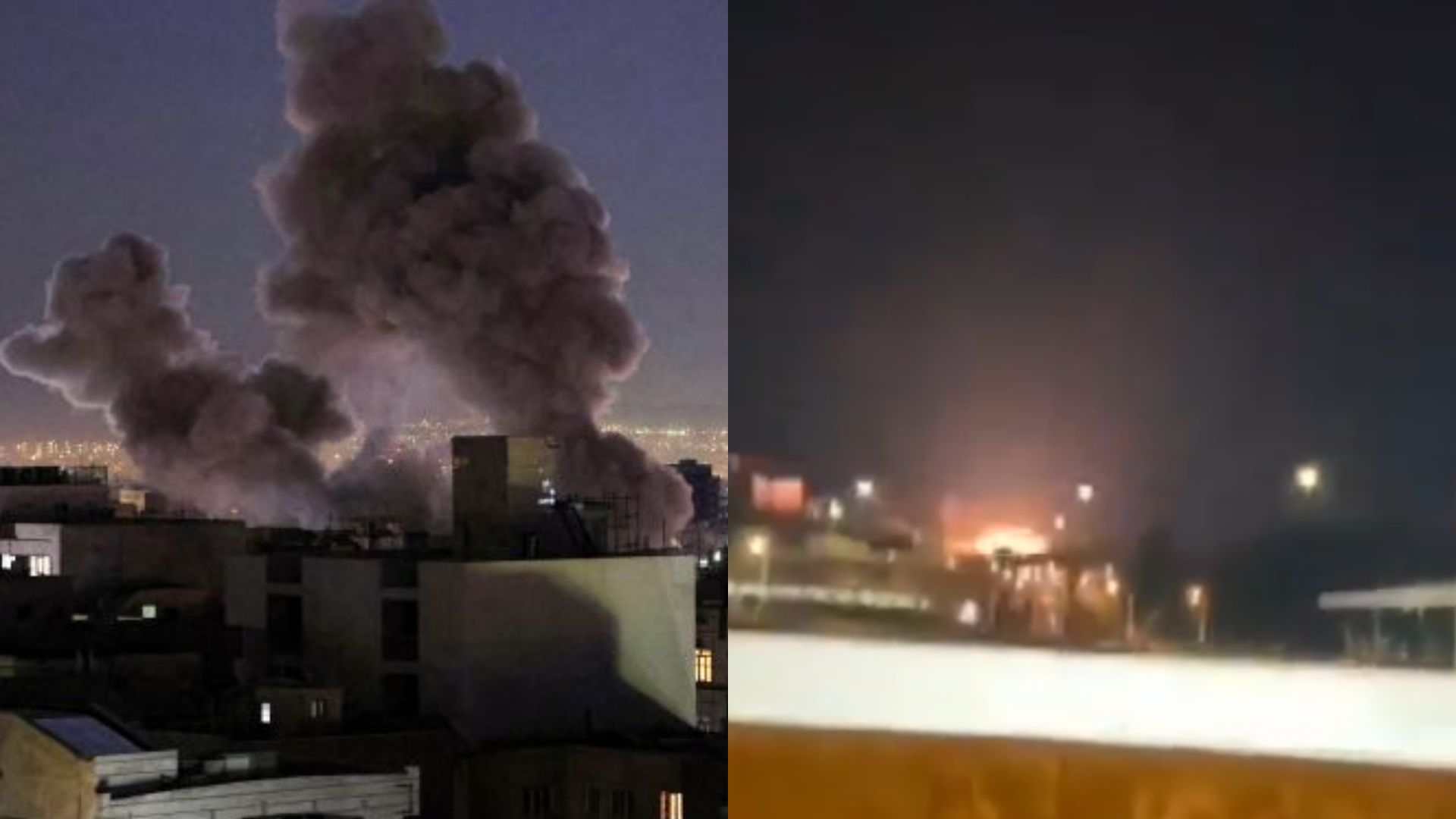

Explosions rocked several Iranian cities on Monday after Israel launched a surprise military strike against Iran. The attacks came despite repeated calls from US President Donald Trump urging Israeli Prime Minister Benjamin Netanyahu not to retaliate against Tehran.
Iranian state broadcaster IRIB reported multiple explosions in Tehran, Tabriz and Isfahan. The strikes are widely viewed as Israel’s response to Iran’s missile attack on Israel a day earlier.
Israel Responds After Iranian Missile Launch
The latest escalation follows Iran’s launch of 10 ballistic missiles toward northern Israel on Sunday. Iranian authorities described the missile attack as retaliation for continued Israeli military operations in southern Lebanon despite an existing ceasefire. The strike marked the first direct Iranian attack on Israel since Tehran agreed to a truce with the United States.
The exchange of attacks has raised fresh concerns about regional stability and weakened ongoing efforts to reduce tensions in West Asia.
Explosions Reported Across Iran
Iranian state television said residents heard explosions in several cities, including Tehran, Isfahan, Karaj and Tabriz. Authorities did not immediately provide details about the targets or report the extent of any damage.
In response to the security situation, Iran suspended air traffic around Tehran’s Imam Khomeini International Airport, the country's main international gateway.
Revolutionary Guard Blames Israel
Iran’s Islamic Revolutionary Guard Corps said Israel carried out the attack using air-launched ballistic missiles. The organisation did not release additional details about the operation or the locations that were hit.
Israeli Military Confirms Attack
The Israeli military later confirmed that it had launched strikes inside Iran. In a brief statement, it said: “A short while ago, the Israeli Air Force struck military targets belonging to the Iranian terror regime in western and central Iran.”
Israeli officials did not provide further information about the targets or the outcome of the operation.
Uncertainty Over US Involvement
The White House had not commented on the strikes at the time of reporting. As a result, it remains unclear whether the United States received advance notice of the operation. Before the attack, Trump publicly called for restraint. He said he wanted Iran to stop firing missiles and return to negotiations.
He also distanced Washington from Israel’s earlier military actions in Lebanon, saying they were not coordinated with the United States. “I’m not happy about it,” Trump said regarding those strikes.
Trump Had Urged Netanyahu Not to Retaliate
According to a report by Axios, Trump held a phone conversation with Netanyahu and urged him not to launch retaliatory strikes against Iran.
The report suggested that Netanyahu initially delayed any response after the discussion. However, Israel’s latest operation indicates that the military action eventually went ahead despite Trump's request.
Tensions Rise Across West Asia
The latest exchange of attacks has further intensified tensions between Israel and Iran. It also threatens diplomatic efforts aimed at preventing a wider regional conflict.
With both sides exchanging direct attacks, concerns are growing that the confrontation could expand and draw more countries into the crisis.