
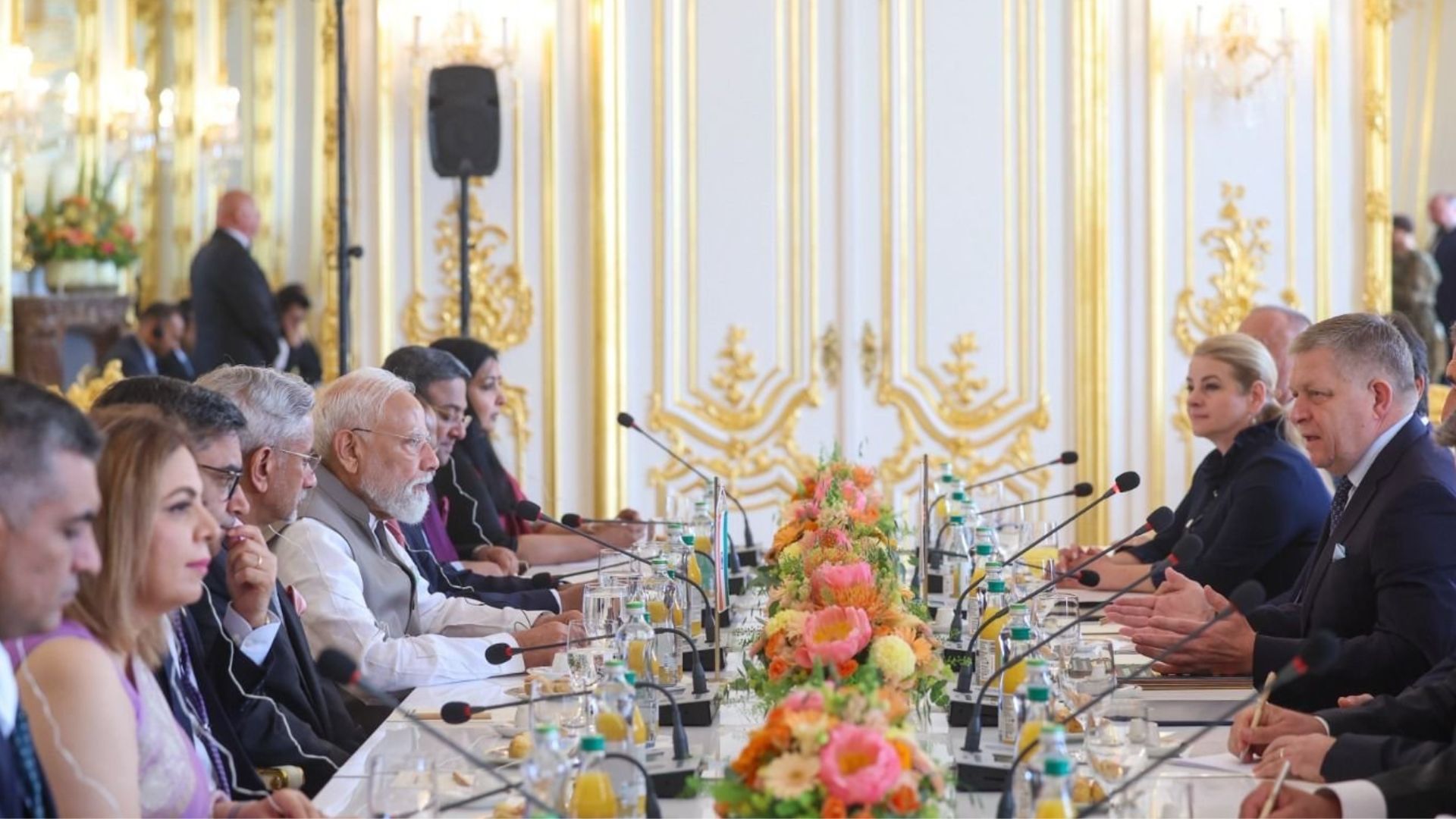

India and Slovakia elevated their bilateral relationship to a Comprehensive Partnership during the historic visit of Prime Minister Narendra Modi to Slovakia. This marks the first visit by an Indian Prime Minister since Slovakia gained independence in 1993.
Additionally, both sides signed 11 Memorandums of Understanding (MoUs) and agreements to expand cooperation across multiple sectors, including defence, digital technology, education, and labour mobility.
11 Agreements Boost India-Slovakia Cooperation
As part of the new framework, India and Slovakia signed 11 key agreements to deepen collaboration in strategic and economic areas. Moreover, both countries strengthened institutional ties to improve coordination in security and consular matters.
They also agreed to set up a Joint Working Group on Counter-Terrorism. Alongside this, they introduced a structured consular dialogue mechanism to improve visa processing, citizen services, and people-to-people exchanges.
Furthermore, both nations reaffirmed their commitment to defence cooperation and welcomed a Letter of Intent to expand collaboration in the defence sector.
S premiérom Ficom som absolvoval výborné stretnutie. Je to skutočne veľmi výnimočný moment pre priateľstvo medzi Indiou a Slovenskom. Vzhľadom na veľký potenciál našich vzťahov sme ich povýšili na úroveň Komplexného partnerstva. Naše rozhovory sa týkali spolupráce v oblastiach,… pic.twitter.com/XA2NfCABmG
— Narendra Modi (@narendramodi) June 15, 2026
AI and Digital Technology Take Center Stage
In addition, India and Slovakia placed strong emphasis on emerging technologies. They signed an MoU on Digital Technologies and another on Quantum Communication and Critical Infrastructure Protection.
These agreements aim to strengthen cybersecurity cooperation and develop next-generation communication systems. Meanwhile, both sides highlighted innovation as a key pillar of future engagement.
Significantly, they also launched the first-ever ICCR Chair in Artificial Intelligence at the Technical University of Košice in Slovakia. This step will promote AI research and academic exchange between the two countries.
Education and Research Collaboration Expands
Moreover, India and Slovakia expanded cooperation in higher education and scientific research. They signed an MoU on Higher Education and Research to promote student exchange programmes and institutional partnerships.
In a major development, IIT Delhi and Slovak Technical University signed an agreement to boost academic collaboration. This includes scholarships, joint research projects, and student exchange opportunities.
Similarly, the Indian National Science Academy and the Slovak Academy of Sciences agreed to strengthen scientific cooperation and joint research initiatives.
Labour, Culture and Tourism Ties Strengthen
Meanwhile, both countries also focused on improving people-to-people ties. They signed an MoU on Labour Migration to facilitate the movement of skilled professionals and improve coordination between authorities.
In the cultural space, they signed an agreement on Audio-visual Creation, which will encourage collaboration in film, media, and creative industries. Furthermore, tourism cooperation received a boost through an agreement between tour operator associations from both nations.
In healthcare, the National Institute of Naturopathy in Pune and Slovak Health Spa Piestany signed an MoU to promote wellness, naturopathy, and traditional healthcare systems.
India-Slovakia Relations Enter a New Growth Phase
Overall, the agreements reflect the growing depth of India-Slovakia relations. Both countries now aim to strengthen cooperation across defence, technology, education, culture, healthcare, and trade.
Finally, the visit is expected to accelerate bilateral engagement and open new opportunities as India and Slovakia begin implementing their newly established Comprehensive Partnership.