
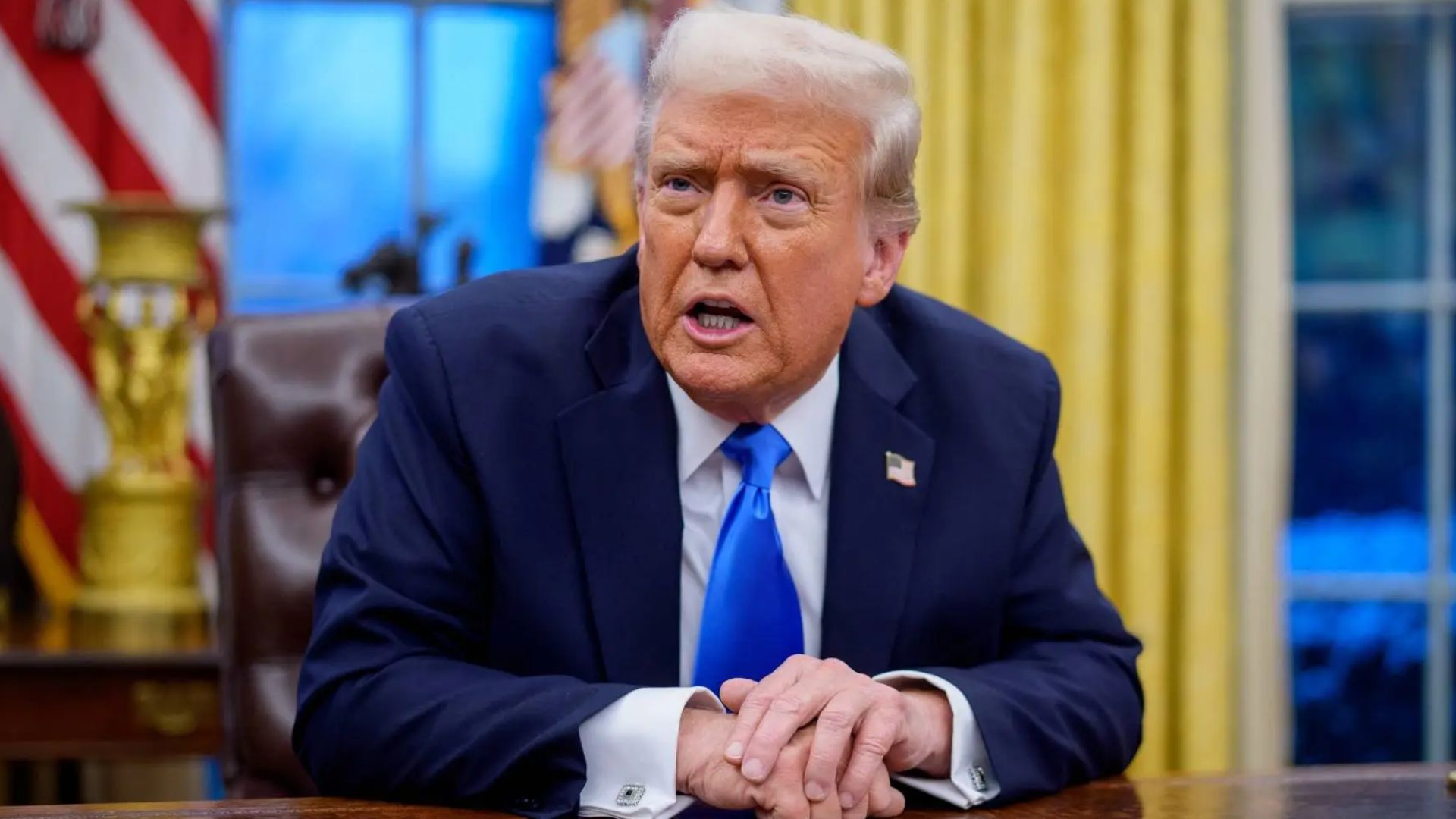

US President Donald Trump said on Saturday that ships passing through the Strait of Hormuz would not face any tolls, pushing back against reports that Iran could introduce maritime charges after a 60-day ceasefire period ends.
The remarks came as fresh uncertainty emerged over the future of one of the world's most important energy shipping corridors, while Iran reportedly announced another closure of the strategic waterway over alleged ceasefire violations.
Trump Says No Tolls Will Be Charged in Strait of Hormuz
In a post on Truth Social, Trump stated that vessels would continue to enjoy free passage through the Strait of Hormuz during and after the temporary ceasefire period. "There will be no tolls in the Hormuz Strait for 60 days during the cease fire period, and there will be no tolls after the 60 day period has expired, unless they are imposed by and for the US."
His statement appeared aimed at calming concerns in the shipping industry following reports that Iran was considering a future system of maritime fees for vessels using the waterway.
Iran Reportedly Closes Strait of Hormuz Again
Trump's comments came as Iran reportedly announced a renewed closure of the Strait of Hormuz. Iran's Khatam al-Anbiya Central Headquarters said vessel traffic would be suspended, citing what it described as Washington's failure to implement the first clause of an agreement designed to end the conflict.
Iran also accused Israel of continuing to violate a ceasefire in southern Lebanon and failing to withdraw from Lebanese territory. Tehran described the closure as a response to what it called ongoing breaches of commitments made under recent agreements.
Iran Previously Announced New Maritime Regulations
The latest developments follow Iran's announcement on Friday that it planned to introduce a new regulatory framework for ships using the Strait of Hormuz after a 60-day negotiation period linked to the recently signed memorandum of understanding between Tehran and Washington.
According to documents circulated among shipping industry officials, Iran's Persian Gulf Strait Authority (PGSA) said all vessels transiting the strait would be required to carry a valid insurance policy approved by the agency.
Initially, the insurance coverage would be provided without charge. However, the PGSA noted that it "reserves the right to introduce insurance fees in the future, which will be determined by the relevant insurer".
Peace Agreement Guarantees Free Passage for 60 Days
Under the interim US-Iran agreement, Tehran agreed to restore shipping traffic through the Strait of Hormuz to pre-conflict levels. The arrangement also included a commitment not to charge ships for passage during the first 60 days after the agreement took effect.
The Strait of Hormuz remains one of the world's most important maritime routes, historically carrying around 20 percent of global oil and liquefied natural gas shipments. Any disruption to traffic through the waterway can have significant consequences for global energy markets and international trade.
Shipping Industry Concerned About Future Charges
Although Iran has pledged not to collect fees during the ceasefire period, industry experts remain concerned about what could happen afterward. The proposed insurance requirements have raised fears that Tehran may be laying the groundwork for a system that effectively charges vessels for using the strait.
An Iranian official told the Financial Times, "The text of the memorandum of understanding is clear. For a period of 60 days from the date the MoU entered into force, vessel traffic will be carried out without any charges being collected." The official added that Iran and Oman would later determine a long-term arrangement that "will likely include fees related to service provision and safe passage".
Iran and Oman Discuss Future Administration of the Waterway
Iranian officials said discussions are continuing with Oman regarding the future management of the Strait of Hormuz. According to Tehran, any future framework would be developed in consultation with regional countries. Oman controls part of the western side of the strait through its territorial waters and plays a key role in ensuring navigation through the corridor.
While Muscat has previously indicated it would not impose tolls, reports suggest Omani officials are considering lawful service-related charges connected to environmental protection, navigation management, pilotage and maritime security.
Reports Claim Iran Issued Warnings to Ships
Separately, reports indicated that Iran fired warning shots near vessels operating in the Strait of Hormuz on Friday. Sources familiar with the situation also said Tehran broadcast a warning message to ships operating in the area.
"Given that the withdrawal of Israel from Lebanon, the complete lifting of the naval blockade, and the departure of American terrorist forces ... are core conditions for an agreement between Iran and the United States, the Strait of Hormuz will remain closed until these two conditions are met." The message further warned, "All vessels are hereby instructed to avoid approaching the Strait of Hormuz for their own safety and security. Any vessel that disregards this order will be targeted."
Future Hormuz Framework Still Under Negotiation
Iran had previously floated the idea of charging vessels up to $2 million in cryptocurrency for passage through the waterway. Neither Iran nor the United States is a signatory to the UN Convention on the Law of the Sea, adding another layer of complexity to discussions over navigation rights.
Under the current interim agreement, Iran is expected to continue negotiations with Oman and other Gulf states to determine how the Strait of Hormuz will be managed in the future. The agreement states that any permanent arrangement should remain "in line with the applicable international law and the sovereign rights of coastal states".
As negotiations continue, the future of shipping through the Strait of Hormuz remains one of the most closely watched issues in the broader US-Iran diplomatic process.