
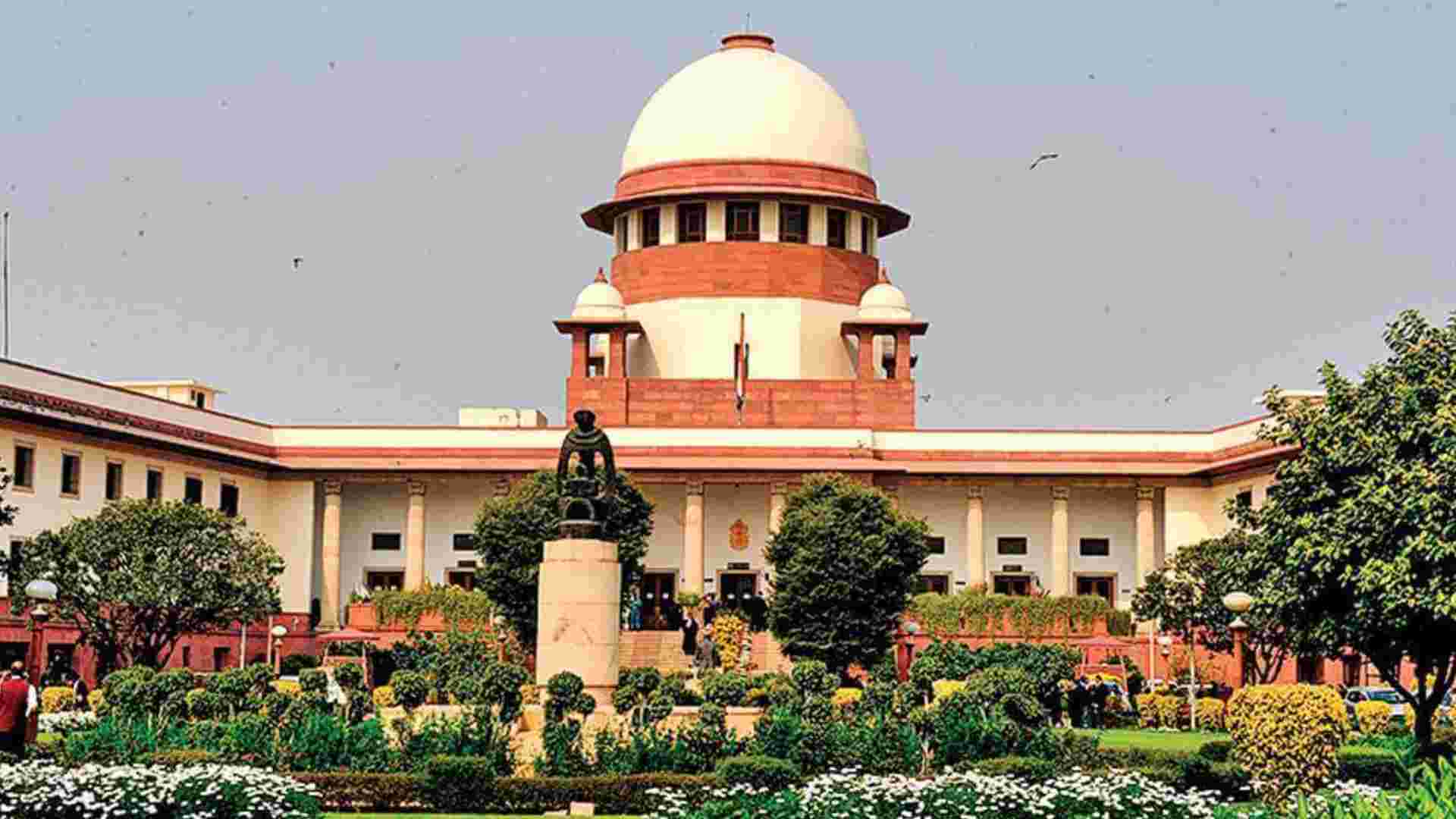

The Supreme Court on Friday ordered an immediate stop to the unauthorised extraction, editing, sharing and monetisation of audio and video recordings of court proceedings on social media and other digital platforms.
A bench comprising Chief Justice of India Surya Kant, Justice Joymalya Bagchi and Justice V Mohana passed the interim order while hearing a public interest litigation (PIL). The petition sought safeguards against the misuse of live-streamed court proceedings through selective editing, sensational content and commercial use.
Supreme Court Issues Interim Order
The bench directed that no one can extract, modify, upload, repost or monetise recordings of judicial proceedings without prior approval from the Secretary General of the Supreme Court or the Registrar General of the concerned High Court.
“As an interim measure, it is directed that there shall be no extraction, modification, monetisation, posting, reposting or uploading of audio-video recordings of judicial proceedings on social media or other platforms without permission of the secretary general of the Supreme Court or the registrar general of the jurisdictional high courts,” the bench directed.
News Reporting Remains Unaffected
The court clarified that the order does not restrict news organisations from reporting court proceedings. It also instructed the Supreme Court and all High Courts to upload the interim order on their official websites.
PIL Raises Concerns Over Misuse of Court Videos
Journalist Harshita Grover filed the petition. She requested guidelines to regulate the clipping, editing and monetisation of courtroom recordings.
The petition argued that live-streaming has improved transparency in the judicial system. However, it said the lack of safeguards has allowed people to edit courtroom exchanges, remove them from context and circulate them online for sensationalism and commercial profit.
Lawyer Highlights Social Media Misuse
Senior advocate Vikas Singh, appearing for the petitioner, said the case does not oppose live-streaming. Instead, it focuses on preventing the misuse of edited video clips on social media.
He referred to a recent disruption during proceedings before Justice KV Viswanathan, where people allegedly threw papers and used abusive language inside the courtroom. According to Singh, edited clips of the incident spread rapidly on social media and reduced the seriousness of judicial proceedings.
Court Flags Growing Digital Challenges
The bench agreed that regulating digital content has become a major challenge. The judges also noted that people often share links for virtual court hearings without proper authorisation, increasing the risk of misuse.
Centre Warns About AI Manipulation
Solicitor General Tushar Mehta supported the petition and warned that artificial intelligence has made it easier to manipulate courtroom videos.
“There are AI tools. With the same lip movement, my and your lordships’ words can be changed in our respective voices,” said Mehta. He cautioned that manipulated videos could create false narratives and spread misinformation.
CJI Raises Concern Over False Statements
Chief Justice Surya Kant also expressed concern over inaccurate reporting. He said that people had recently attributed statements to him that he had never made, highlighting the dangers of misinformation.
Court Seeks Reports From High Courts
The Supreme Court issued notices to all High Courts and asked them to submit reports on how they have implemented the court's live-streaming guidelines.
The bench also asked them to explain the impact of continuous live-streaming of court proceedings. In addition, the court directed the Union government to identify the ministries that would be responsible for implementing any future regulatory framework.
Petition Seeks Safeguards, Not Restrictions
The petition made it clear that it does not seek to limit open justice or fair reporting. Instead, it seeks safeguards to prevent the unauthorised clipping, editing, distortion and commercial exploitation of judicial recordings while preserving transparency in the justice system.