
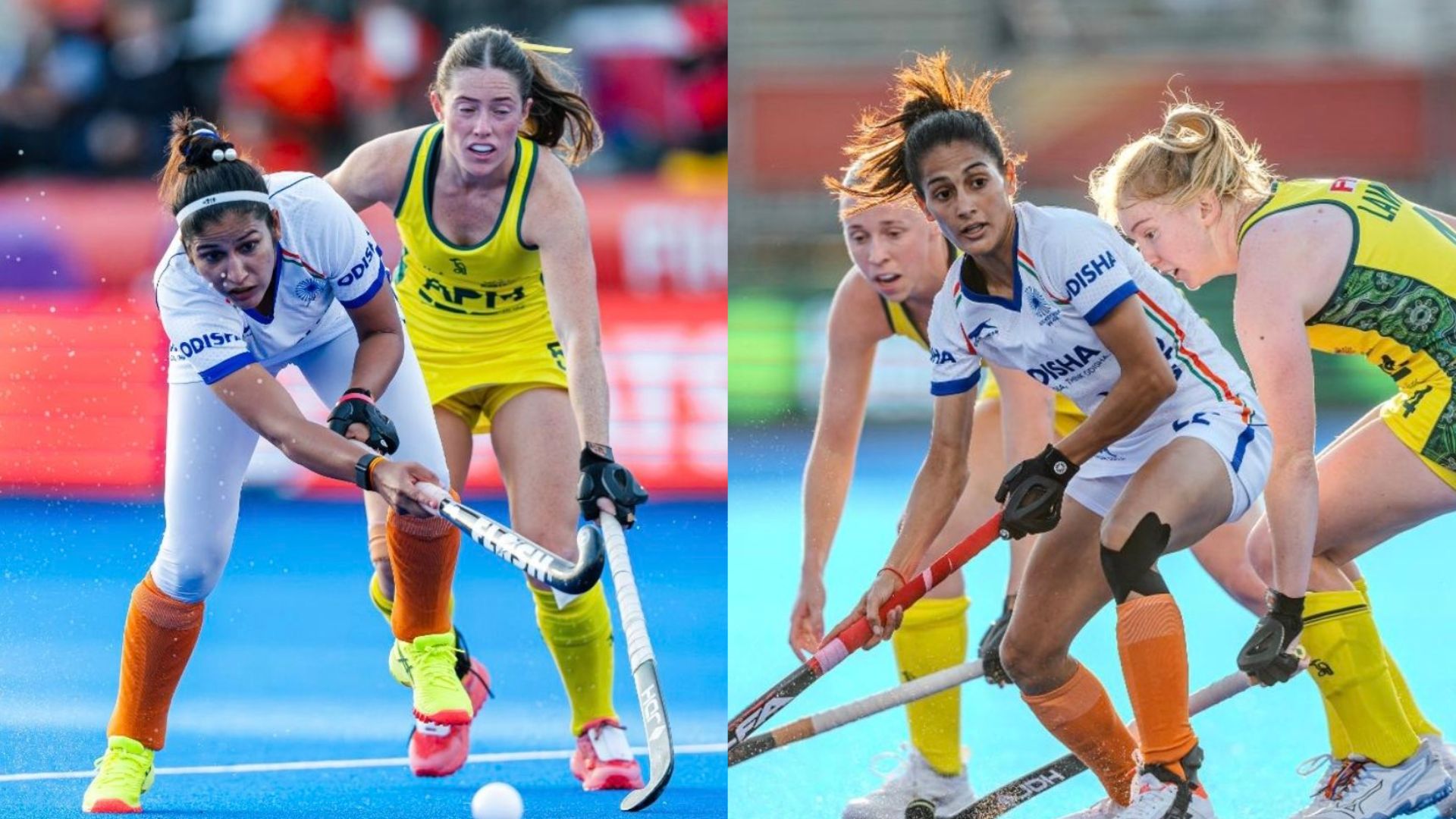

The Indian women's hockey team produced a determined campaign at the FIH Women's Hockey World Cup 2026 in Belgium and the Netherlands. India entered the tournament with renewed confidence after securing World Cup qualification and winning the FIH Nations Cup, which also earned the team promotion to the FIH Pro League. Led by captain Salima Tete and coached by Sjoerd Marijne, India made its eighth appearance at the Women's Hockey World Cup.
The 2026 World Cup introduced a new format. The traditional quarter-finals were removed, making the second phase particularly important. India's campaign eventually ended after a goalless draw against Australia, which allowed Australia to advance to the semi-finals on goal difference. India will now compete for fifth place.16 Teams Compete for the World Cup
The Women's Hockey World Cup 2026 features 16 teams. The tournament is being jointly hosted by Belgium and the Netherlands, with matches played in Amstelveen and Wavre. The women's final will be played in the Netherlands. The 16 teams were divided into four pools of four teams each.Pool A
- Netherlands
- Australia
- Chile
- Japan
Pool B
- Argentina
- Germany
- United States
- Scotland
Pool C
- Belgium
- Spain
- New Zealand
- Ireland
Pool D
- China
- England
- India
- South Africa
New World Cup Format
The 2026 edition has introduced a major change to the competition structure. In the first phase, the 16 teams are divided into four pools. Every team plays three matches against the other teams in its pool. The top two teams from each pool qualify for the second phase. The quarter-final stage has been removed. Instead, the eight qualifying teams are divided into two crossover pools, Pool E and Pool F. The teams carry forward their points and results from their first-round match against the other qualifier from the same pool. They then play two additional matches against teams from another pool. The top two teams from Pools E and F advance directly to the semi-finals. The teams that finish third and fourth in the opening pools enter Pools G and H for classification matches. These matches determine positions from ninth to 16th. This new system means teams have fewer chances to recover from a poor result. Every goal and every point can become important when teams are separated by goal difference.India Begins With a Draw Against China
India opened its World Cup campaign against China on August 16. The match ended 2-2. India showed attacking intent but could not secure all three points. The result meant that the team needed a strong performance against South Africa in its second pool match. The draw also made goal difference important because India was competing with England and China for the top two positions in Pool D.India Produces a Record 6-1 Win
India bounced back in spectacular fashion against South Africa on August 18. The Indian team dominated the contest and secured a commanding 6-1 victory. The result became India's biggest win of the tournament and pushed the team to the top of Pool D. The huge victory also improved India's goal difference significantly. It gave the team a major boost before its final pool match against England. India's attack looked much sharper, while the team also controlled possession and created repeated opportunities inside the South African circle.India Holds England to a Goalless Draw
India faced England in its final Pool D match on August 20. The match turned into a tense defensive battle. England needed a positive result, while India knew that a draw would be enough to secure progression. India eventually held England to a 0-0 draw. The English side created considerable pressure, especially towards the end. England even removed its goalkeeper in a desperate attempt to find a winner. However, India's defence remained organised and held firm. The draw ensured that India finished second in Pool D and advanced to the second phase. India therefore completed the opening stage unbeaten, with one win and two draws.India Moves Into Pool E
India's second-place finish in Pool D placed the team in Pool E alongside the Netherlands, Australia and China. The second-round pools were formed using the top two teams from different first-round pools. Pool E brought together the leading teams from Pools A and D. For India, this meant facing two of the world's strongest teams, the Netherlands and Australia, while carrying its result against China into the second phase.Netherlands End India's Unbeaten Run
India faced the Netherlands in its first Pool E match on August 21. The Dutch team won 2-0, ending India's unbeaten run in the tournament. Both Netherlands goals came from penalty corners, with Jansen and Matla finding the net. The defeat made India's final match against Australia a must-win encounter. India needed a victory to keep its semi-final hopes alive.India and Australia Play Out a Goalless Draw
India faced Australia on August 23 in a decisive Pool E match. Both teams knew that the result could determine the second semi-finalist from the pool. However, neither side managed to score. The match ended 0-0. India pushed for a winning goal but Australia's defence stood firm. The result left both teams level on points, but Australia advanced to the semi-finals because it had a better goal tally in the pool. For India, it was a heartbreaking end to its semi-final hopes.India's Journey Comes to an End
India's World Cup campaign ended without a defeat in its first-round matches, but the team could not convert its opportunities into enough goals during the second phase. The final record tells the story:| Stage | Opponent | Result |
|---|---|---|
| Pool D | China | India drew 2-2 |
| Pool D | South Africa | India won 6-1 |
| Pool D | England | India drew 0-0 |
| Pool E | Netherlands | India lost 0-2 |
| Pool E | Australia | India drew 0-0 |