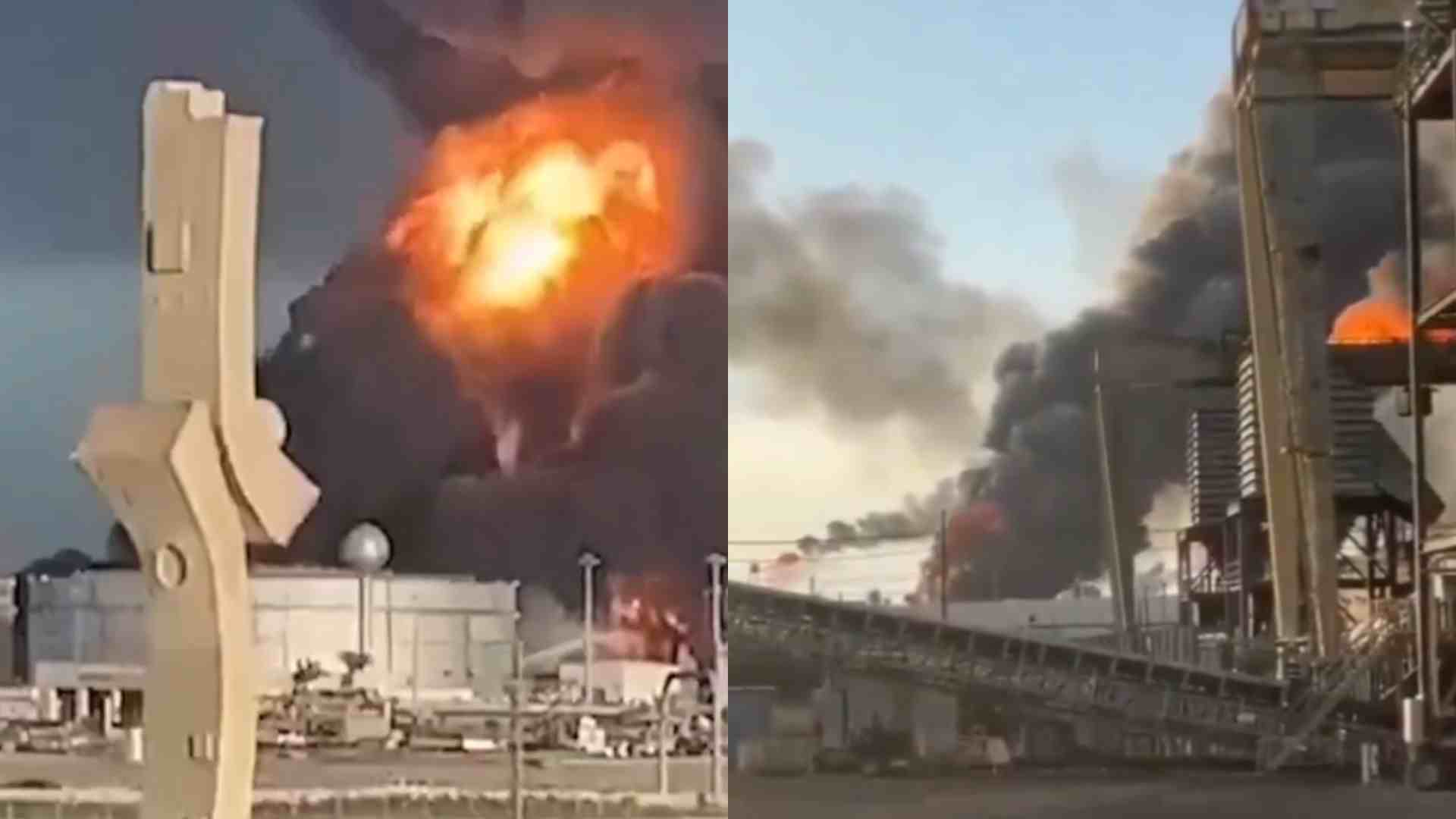
Yemen’s Iran-backed Houthi rebels have launched attacks on four cities in Saudi Arabia, injuring more than 70 people and setting several oil facilities on fire. The strikes appear to mark a major escalation in the wider Middle East conflict.
Saudi authorities said the overnight attacks involved dozens of drones and missiles. The strikes targeted several oil-related sites in southern Saudi Arabia. Saudi Arabia has warned that it will respond to the attacks.
Saudi Arabia vows retaliation
The Saudi Foreign Ministry said the kingdom would “take all necessary measures to defend its sovereignty”. It also demanded an immediate end to Houthi attacks on Saudi territory and oil tankers operating in the Red Sea.
Maj Gen Turki al-Malki, spokesperson for the Saudi-led coalition fighting in Yemen, also issued a warning to the Houthis. He said pro-government forces “will take all necessary operational measures to deter the terrorist Houthi militia with utmost resolve”. The statements indicate that Riyadh is preparing to take stronger military measures against the Houthi group.
Houthis claim attacks on key Saudi targets
The Houthis said they carried out a large-scale military operation deep inside Saudi territory. The group claimed that it used drones and missiles to attack an airbase in Khamis Mushait, a city in southern Saudi Arabia. It also said it targeted facilities linked to Saudi Arabia’s state-owned oil company in Abha and Najran.
Another target was an Aramco facility in Jizan, near the Yemeni border. Jizan hosts one of Saudi Arabia’s major oil refineries. The facility was also damaged in an attack several weeks ago. The Houthis control most of Yemen’s populated areas, including the capital, Sanaa.
At least 73 people injured
Saudi authorities said 73 people were wounded in the attacks. Women and children were reportedly among those injured. The scale of the casualties suggests that the strikes could rank among the most serious Houthi attacks on Saudi Arabia since the United States and Israel began their war against Iran in February. The reported attacks also raise concerns about the security of Saudi Arabia’s critical energy infrastructure.
Wider Middle East war raises tensions
The Houthis and Saudi Arabia have been involved in a long-running conflict connected to Yemen. However, the US-Israel war against Iran has added a new and more dangerous dimension to the regional crisis.
The region had experienced a period of relative calm in August. That calm has now ended as Iran and the US have resumed exchanges of fire. The renewed fighting has also affected global energy markets. Brent crude prices rose by more than 2 per cent on Tuesday, moving above $99 a barrel. Prices returned to levels last seen in July.
Houthi attacks threaten regional energy supplies
The latest Houthi strikes could increase the economic impact of the wider war. Attacks on southwestern Saudi Arabia could threaten energy infrastructure and disrupt oil supplies from the region. The risks extend beyond the Strait of Hormuz, a vital energy route that Iran has threatened to restrict.
Saudi Arabia has led an Arab coalition against the Houthis in Yemen for more than a decade. Fighting had eased significantly in recent years. However, a ceasefire has since collapsed. The Houthis have also threatened shipping near the entrance to the Red Sea. Any further attacks on oil facilities or commercial vessels could put additional pressure on global energy markets.
Houthis accuse Riyadh of escalating the conflict
Houthi spokesperson Yahya Saree accused Saudi Arabia of worsening the conflict by carrying out airstrikes in Yemen. He said the group would respond to those attacks. The exchange of accusations comes as the US and Iran also remain locked in a wider military confrontation.
Washington is seeking to maintain the flow of oil to global markets by helping ships navigate through the Strait of Hormuz. At the same time, the US has imposed a blockade aimed at restricting Iranian oil exports beyond the strategic waterway.
Iran threatens maritime exclusion zone
Iran has announced additional measures to tighten its control over the Strait of Hormuz. Tehran said it would soon provide details of a proposed “maritime exclusion zone”.
The planned zone would reportedly extend from the edge of the US blockade through the Strait of Hormuz and into the Persian Gulf. Such a move could further complicate commercial shipping and increase the risks facing vessels operating in the region.
US and Iran exchange attacks
The
confrontation between Washington and Tehran has also spread to maritime activity. The United States fired on Iranian tankers over the weekend. Washington said the action came in response to Iranian attacks on US warships.
Iran claimed it used new and more advanced ballistic missiles against American vessels. Mohsen Rezaei, secretary of Iran’s Supreme National Security Council, wrote on X: “In recent days, Washington has received a clear warning from Iran’s new missiles. Economic warfare will be met by a maritime exclusion zone across the Persian Gulf to the blockade perimeter. The operational posture toward US warships and bases has been fundamentally recalibrated.”
The statement signals that Tehran could take stronger measures against US military and economic interests in the region.
Saudi leadership faces difficult choices
The latest Houthi attacks could create a major challenge for Saudi Crown Prince Mohammed bin Salman, the kingdom’s de facto ruler. Andreas Krieg, a Gulf expert at King’s College London, said the attacks create an “extremely uncomfortable dilemma” for the Saudi leadership.
Saudi Arabia has spent years trying to reduce its involvement in the Yemen conflict. However, Krieg warned that continuing to show restraint could allow the Houthis to control the pace of the conflict.
After four years of efforts to withdraw from the Yemen war, “restraint now carries the risk of allowing the Houthis to dictate the spiral of escalation”, Krieg said. The latest attacks could therefore force Riyadh to reconsider its strategy as the Yemen conflict becomes increasingly linked to the wider confrontation involving Iran, the US and Israel.