US President Donald Trump has once again claimed that he helped prevent a military conflict between nuclear-armed India and Pakistan by threatening to impose tariffs of 250% on both countries. He said the warning over trade with the United States persuaded New Delhi and Islamabad to stop fighting.
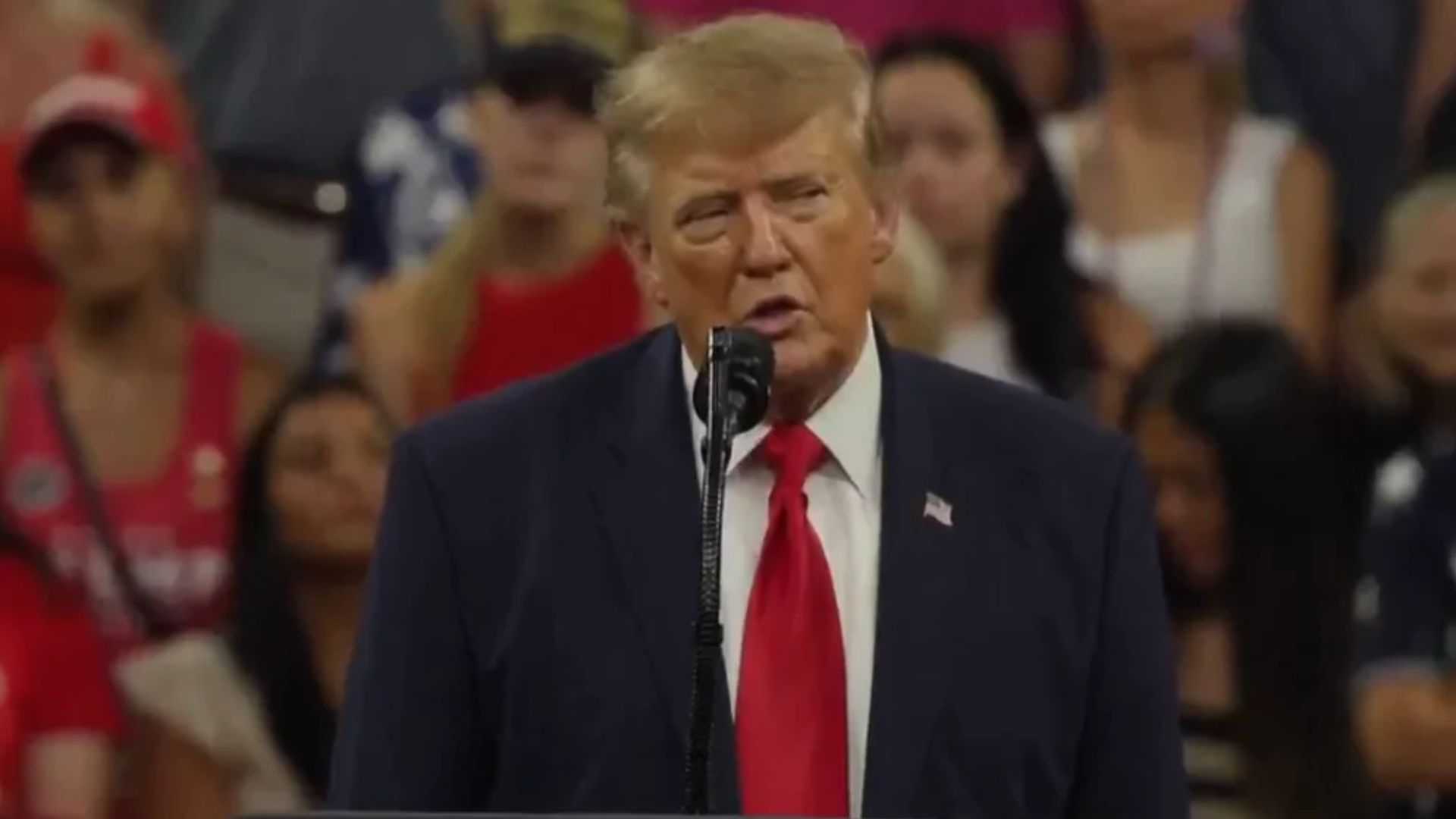
Speaking at a campaign rally in Florida, Trump described what he presented as his intervention during the conflict. He claimed that both countries were concerned about losing access to the American market and stopped hostilities after he threatened severe economic consequences.
"You stop India and Pakistan, two nuclear nations. I said, 'Fellas, if you guys are going to do that, you're not going to trade with the United States. I'm going to put massive tariffs on both of you, 250 percent, so you won't be able to do any business,” US President said.
Trump maintained that his warning helped end the fighting between the two neighbours. He also referred to aircraft losses during the confrontation while repeating his claim that he had helped prevent several wars.
“They got very upset, very angry; they stopped shooting, and the war was over. Eleven planes were shot. I stopped all these wars, and it's really an honour to do so."
The US president also expressed frustration over not receiving the Nobel Peace Prize for his claimed role in resolving international conflicts.
"I've settled eight wars. Did I get the Nobel Prize? No," he said. Trump has repeatedly taken credit for easing tensions between India and Pakistan. However, India has consistently rejected his claim that Washington mediated the understanding to stop military action.
India Rejects Trump's Claim of Mediation
India has maintained that the understanding between New Delhi and Islamabad to halt military action was reached directly between the two countries, without third-party mediation.
Petal Gahlot, first secretary at India's Permanent Mission to the United Nations, reiterated this position during India's right of reply at the 80th session of the UN General Assembly.
She stressed that India and Pakistan have a longstanding understanding that bilateral discussions remain the appropriate way to address outstanding issues.
“India and Pakistan have long agreed that any outstanding issue between them will be addressed bilaterally. There is no room for any third party in that regard. This is our longstanding national position.”
Gahlot also highlighted India's firm stance against terrorism. She said the country would hold both those responsible for terrorist attacks and those who support them accountable.
“There must be zero-tolerance for terrorism. Both terrorists and their sponsors will be held accountable. Nor will we allow terrorism to be practised under the cover of nuclear blackmail. India will never bow to such threats.”
India's response reflects its continued opposition to outside mediation in disputes with Pakistan. New Delhi has consistently argued that bilateral engagement should remain the basis for resolving issues between the two neighbours.
Operation Sindoor and the May 10 Ceasefire
The military confrontation followed the April 22, 2025, terrorist attack in Pahalgam, Jammu and Kashmir, which killed several people. In response, India launched Operation Sindoor on May 7, 2025. The operation targeted terrorist infrastructure in Pakistan and Pakistan-occupied Jammu and Kashmir (PoK).
Indian strikes hit several locations described by New Delhi as terrorist launchpads. Military action was subsequently paused on May 10 after Pakistan requested a halt, according to India's account of the developments.
Trump has repeatedly attributed the end of the fighting to his diplomatic intervention and tariff threats. India, however, has maintained that the understanding was reached directly between the Indian and Pakistani sides.
The competing accounts have kept the question of Trump's role in the ceasefire in focus, with New Delhi continuing to reject the suggestion that a third party brokered the arrangement.
Trump Says India-US Trade Deal Is 'Pretty Close'
Trump's latest remarks about India and Pakistan came as he also indicated that trade negotiations between Washington and New Delhi were nearing completion.
Earlier in the week, the US president said India wanted to reach a trade agreement with the United States and expressed confidence that the two countries would finalise a deal.
Speaking to reporters in the Oval Office alongside Vice President JD Vance, Trump was asked whether the negotiations were close to a conclusion.
"They want to make a deal. We're going to make a deal. Pretty close, yeah," Trump said, according to Bloomberg. He also suggested that the proposed agreement could differ substantially from earlier trade arrangements between the two countries.
The comments indicate that trade remains an important part of Trump's approach to relations with India. His latest claims about using tariff threats to stop the India-Pakistan fighting also highlight his continued emphasis on economic pressure as a tool of diplomacy.
However, India's position on the ceasefire remains unchanged: New Delhi says the understanding to stop military action was reached directly with Pakistan, without outside mediation.