

Tensions between India and Pakistan increased sharply after a terror attack on April 22 in Pahalgam, Jammu and Kashmir. Gunmen armed with assault rifles opened fire at a popular tourist spot, killing 26 people. The attack shocked the country and sparked widespread outrage.
In response, India took five strict actions against Pakistan, accusing it of backing cross-border terrorism. Soon after, Pakistan retaliated with its own set of countermeasures, including a surprising one—suspending the 1972 Simla Agreement.
What Is the Simla Agreement?
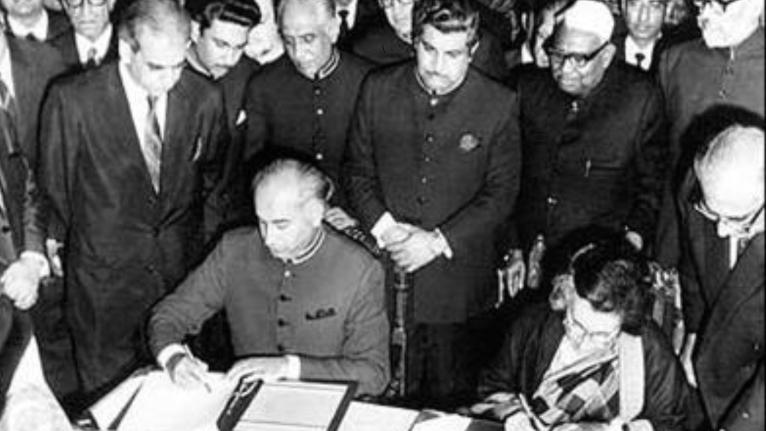
The Simla Agreement was signed in July 1972 between Indian Prime Minister Indira Gandhi and Pakistani President Zulfikar Ali Bhutto. It came after the 1971 war, which led to the birth of Bangladesh.
The agreement aimed to:
-
Resolve all India-Pakistan disputes peacefully and directly through talks.
-
Respect the Line of Control (LoC) in Jammu and Kashmir.
-
Prevent the use of force or any act that could disturb peace.
It also made sure both countries wouldn’t take Kashmir issues to international forums like the United Nations. The goal was to keep diplomacy between the two nations strictly bilateral.
Why Did Pakistan Suspend the Agreement?
After India’s strong steps following the Pahalgam attack, Pakistan’s National Security Committee held a high-level meeting led by Prime Minister Shehbaz Sharif. The country responded by:
-
Rejecting India’s suspension of the Indus Waters Treaty.
-
Closing its airspace to Indian aircraft.
-
Stopping trade with India, even via third countries.
-
Expelling Indian defence officials.
-
Closing the Wagah Border for regular traffic.
-
Suspending all bilateral agreements with India—including the Simla Agreement.
By doing this, Pakistan wanted to send a strong message. But experts say this move could end up giving India more freedom instead.
Three Big Advantages for India If Simla Agreement Is Gone
1. India Is No Longer Bound to the Line of Control (LoC)
Clause 4 of the Simla Agreement asked both countries to respect the LoC and not change it through force. With the agreement now suspended, this rule no longer applies.
This means India could now make moves in border areas if needed, especially in places that see frequent infiltration by terrorists.
Interestingly, Pakistan had already broken this part of the agreement in 1984. It tried to take control of the Siachen Glacier, but India responded with Operation Meghdoot and took full control of the area.
2. India Can Consider Military Options Without Breaking a Treaty
The Simla Agreement also said that both nations must solve problems peacefully and avoid the use of force. With the agreement now suspended, India is not bound by that rule.
This allows India to explore military strategies to respond to cross-border terrorism. For instance, it could take stronger defensive action in Jammu and Kashmir or respond militarily to any future attacks.
3. India Can Now Involve Global Powers
Previously, the agreement prevented both sides from involving other countries in their disputes. But Pakistan itself has often taken issues to the international stage—especially after India removed Article 370 in Jammu and Kashmir.
Now, India is free to use its strong global ties to raise its concerns or gain support. Today, India enjoys solid backing from countries like the United States, Russia, France, Israel, and many nations in West Asia.
Recently, after the Pahalgam attack, The New York Times referred to the gunmen as "militants." The US House Foreign Affairs Committee corrected it, calling them "terrorists." This shows India’s growing global support.
So, What Happens Next?
Pakistan’s move to suspend the Simla Agreement was meant to punish India. But it may actually help New Delhi by removing long-standing restrictions. Now, India can defend its interests more freely—militarily, diplomatically, and internationally.
At the same time, the decision also reflects the deepening mistrust between the two nations. The long-term impact will depend on how both sides handle the growing conflict and whether there’s any path back to peaceful dialogue.