
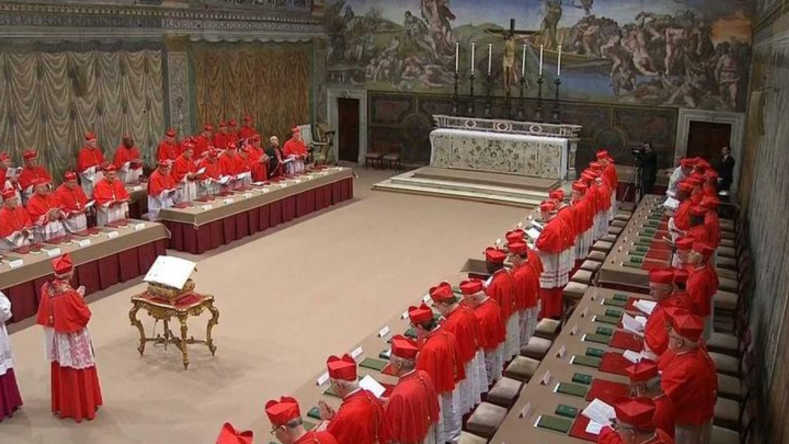

Pope Francis passed away on April 21. As a result, the Catholic Church has entered a time of mourning and change. Now, Church leaders must begin the process to elect a new pope. The Conclave will officially start on May 7.
Cardinals to Begin Voting
First, the cardinals will gather in the Sistine Chapel. Then, they will attend a special Mass. Later that day, they will cast their first vote. After that, they will vote four times a day—twice in the morning and twice in the afternoon. This continues until one candidate receives a two-thirds majority.
Each cardinal writes one name on a ballot. Next, three cardinals, known as scrutineers, collect and count the votes. Once they finish counting, they burn all the ballots.
If no pope is chosen, black smoke rises from the Sistine Chapel chimney. However, if a pope is elected, white smoke will signal the decision.
How Long Will It Take?
The time needed to choose a new pope can vary. For example, the longest conclave happened in the 13th century. That election lasted nearly three years, or 1,006 days.
In contrast, modern elections move faster. In 2013, Pope Francis was elected on the fifth vote. Likewise, Pope Benedict was chosen after the fourth vote in 2005. Therefore, how fast a new pope is elected depends on how united the cardinals are.
What If the Process Takes Too Long?
According to Universi Dominici Gregis, a document written in 1996, the process has a backup plan. If the cardinals cannot choose a pope after 33 rounds of voting, they must hold a run-off.
At that point, the two candidates with the most votes will move to the final vote. However, both are not allowed to vote for themselves. Still, the winner must receive a two-thirds majority to become pope.