
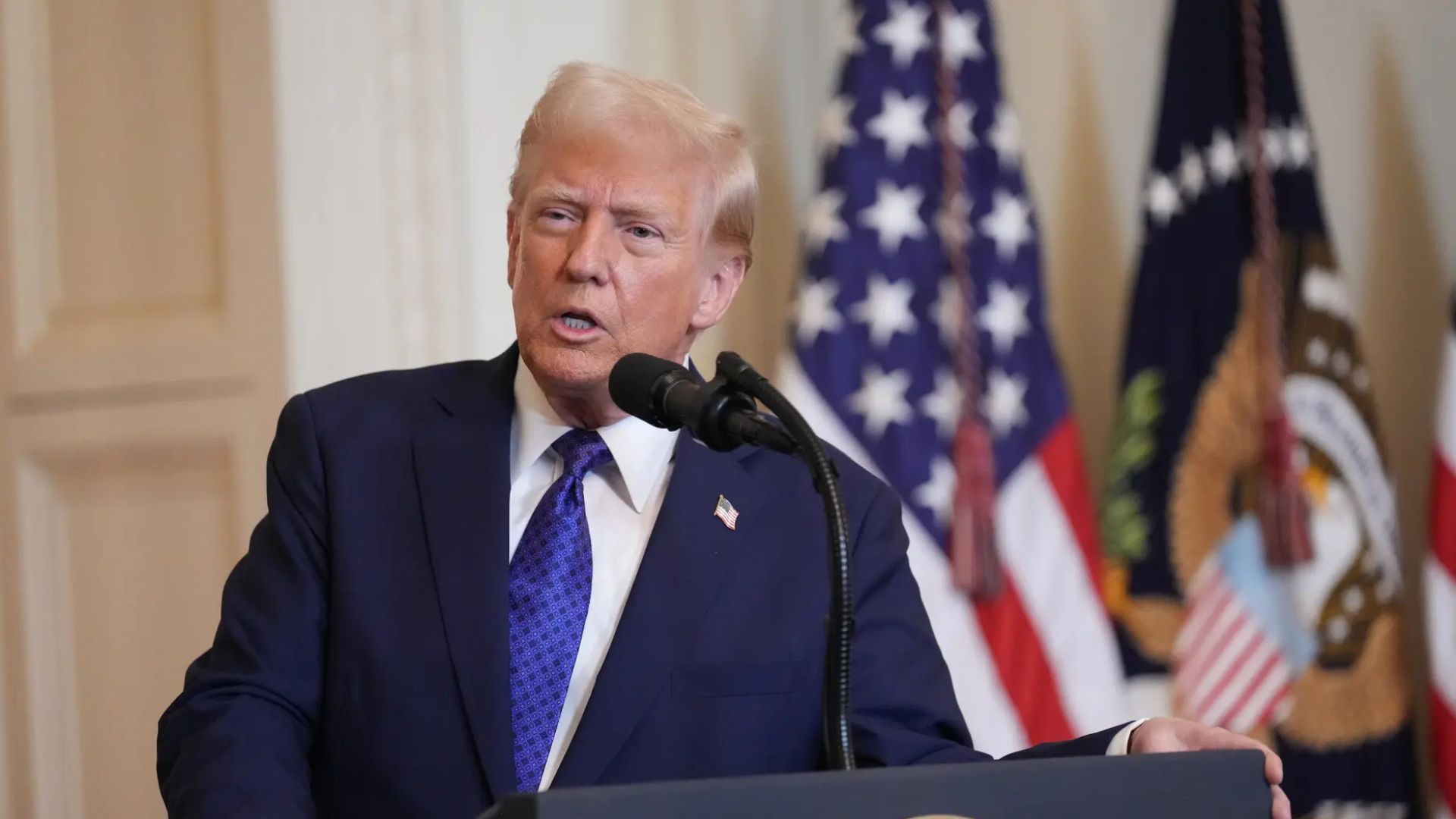

President Donald Trump has signed an executive order to lower tariffs on cars from the United Kingdom. This decision will activate parts of a trade agreement that both countries reached last month.
Speaking at the G7 summit in Canada, UK Prime Minister Sir Keir Starmer called it a “very important day” for both nations. The UK government hopes this deal will reduce the negative impact of Trump’s broader tariff policies on British companies.
Car Tariffs Dropped, Steel Charges Stay
The order allows up to 100,000 UK-made cars to enter the U.S. with only a 10% tariff. Earlier this year, Trump had raised that rate to 25% for all car imports. Now, this change brings it back in line with what the two sides agreed to in May.
Although the order mentions a similar system for steel and aluminium, it does not give details. When asked about it, Trump said, "We're gonna let you have that information in little while."
The UK responded by saying it would “continue to go further and make progress towards 0% tariffs on core steel products as agreed.”
The order also removes duties on certain aerospace products. Starmer praised this move and called it a “sign of strength” between the UK and the U.S. He added, “The deal implements on car tariffs and aerospace.”
Deal Follows Weeks of Talks
This agreement follows intense discussions in recent weeks. Though it is the first trade deal announced by the U.S. since Trump’s new wave of tariffs began, it does not include many UK goods. Most items still face a 10% levy. Crucially, the deal does not lift tariffs on steel—an important issue for British exporters.
Shortly after signing the order, the White House revealed that Trump would leave the G7 summit early because of growing tensions in the Middle East.
Over the past year, Trump has introduced tariffs on many imports. His goal is to encourage Americans to buy locally made goods. However, these actions have caused financial instability around the world. British carmakers and steel producers, who depend on the U.S. market, felt the impact strongly.
UK Business Reactions
Mike Hawes, head of the Society of Motor Manufacturers and Traders, welcomed the move. He said the deal would allow “many manufacturers to resume deliveries imminently.” He added, “We wait to see the full details of the deal... but this will be a huge reassurance to those that work in the sector and bolster the confidence of our important US customers.”
Business and Trade Secretary Jonathan Reynolds praised the announcement. He said, “The result of work happening at pace between both governments to lower the burden on UK businesses.”
He also noted that the UK will inform Parliament about how it plans to handle U.S. beef and ethanol quotas as part of the agreement.
US Beef Access Expanded, Food Standards Remain
Under the new terms, the UK will remove the 20% tariff on U.S. beef. It will also raise the import quota from 1,000 to 13,000 metric tonnes. However, British officials stressed that food safety standards will not change. Any imported U.S. beef must still meet the UK's strict regulations.
Not a Free Trade Agreement
Despite Trump calling it a “major trade deal,” the agreement is far more limited than a full free-trade deal. In fact, the U.S. president cannot sign such agreements without Congress’s approval.
Still, Trump praised Starmer’s efforts. “He's done what other people... haven't been able to do,” Trump said. “They've been talking about this deal for six years... and he's done what they haven't been able to do.”
Yet, critics in the UK remained unconvinced. Conservative Party leader Kemi Badenoch dismissed it as a “tiny tariff deal.”